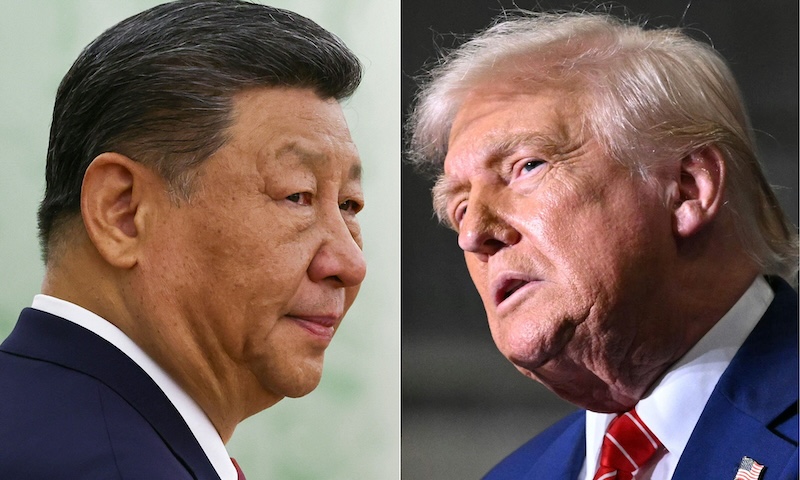
The White House has not issued a detailed readout of the call. Chinese state media reported that the discussion addressed bilateral relations, trade cooperation, and plans for further meetings. Trump said he would travel to China later this year and extended an invitation for Xi to visit Washington.
Trump described the conversation as “very good” and said the call ended with “a very positive conclusion for both countries.” He told reporters at a White House press event that Xi was “a smart guy” and expressed confidence that the two nations “will end up making a very good deal.”
In a post on social media, Trump wrote, “I have always liked President Xi of China, and will continue to do so, but he is extremely tough and very difficult to negotiate with!!!” Despite ongoing disagreements, he maintained that there was “potential for a very good deal.”
Trump again praised Xi’s leadership capabilities, calling him “one of the smartest people in the world.” He acknowledged Xi’s political endurance, referencing the Chinese leader’s absence of term limits. “Xi has an advantage in stability. He doesn’t face elections every four years,” Trump said during a radio interview.
While the exact outcomes of the conversation remain uncertain, major US and international media have described Trump’s tone as unexpectedly conciliatory. Reports from Reuters, CNN, Forbes, NBC News, and BBC noted that despite ongoing trade friction, Trump consistently avoided confrontational rhetoric during the exchange.
Financial markets responded positively following news of the call. The Dow Jones Industrial Average climbed 160 points in afternoon trading, while the Shanghai Composite Index closed 1.3 percent higher. Investors signalled cautious optimism that renewed dialogue could improve the economic climate between the two nations.
According to sources cited by Forbes, US and Chinese negotiating teams will meet again in the coming weeks to discuss key sticking points, including export controls, currency practices, and technology transfers. No schedule has been published, but both sides have indicated a desire to progress before the current ceasefire expires.
During the call, Xi reportedly raised concerns about ongoing US restrictions on Chinese technology companies, and the treatment of Chinese students under tightened visa policies. The Chinese Foreign Ministry later issued a statement confirming that the two leaders had agreed to keep communication channels open.
According to The Hill, US officials have been divided over how far to push Beijing on core demands, such as forced technology transfers and subsidies for state-owned enterprises. Trump has privately expressed interest in a swift resolution but remains wary of appearing weak on trade.
The meeting marks the most direct interaction between Trump and Xi since their last formal encounter in late 2024. At that time, escalating tariffs led to protests from business groups and mounting pressure from Congress for a diplomatic breakthrough.
The current situation reflects a delicate balancing act for Trump, who continues to impose tariffs of up to 125 percent on certain Chinese imports while expressing admiration for Xi’s negotiation skills.
In response to Trump’s remarks, Chinese officials have emphasised the importance of mutual respect and equal footing in future negotiations. “Constructive dialogue is possible when both parties work in good faith,” a spokesperson for the Chinese Commerce Ministry said.
Further details about future visits by either leader have not been confirmed. Observers expect Trump’s China visit to take place before the end of the year, depending on progress in ongoing trade talks.
Despite the unresolved issues, the length and tone of the conversation suggest both governments are seeking to stabilise the bilateral relationship. Trump’s decision to praise Xi personally, even while maintaining tariffs and raising concerns about trade imbalances, underscores the administration’s dual-track approach of pressure and engagement.
Reports from Al Jazeera and The New York Times noted that while the broader disagreements persist, the emphasis on personal rapport between Trump and Xi may provide space for incremental progress.
Following the call, US business leaders called for more transparency around the talks. The US Chamber of Commerce issued a statement urging both governments to prioritise predictability and market access.
“American businesses remain hopeful that sustained dialogue will result in fewer barriers and better protections for intellectual property,” the statement read.
The Economic Times reported that in private briefings to campaign donors, Trump said his relationship with Xi would be a key asset in shaping his foreign policy legacy.
The call came amid a broader context of global trade uncertainty, with the International Monetary Fund forecasting a potential slowdown in global growth if major powers fail to resolve outstanding disputes.
While no major agreements were announced, both leaders’ willingness to continue engagement appears to have reduced immediate concerns of further escalation.