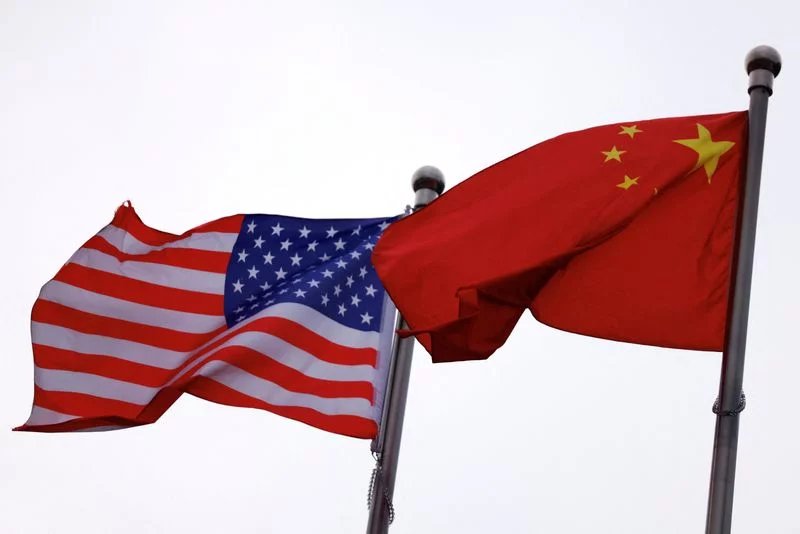
According to a recent report by Jefferies, quantum technologies are now viewed alongside artificial intelligence and semiconductors as critical pillars of geopolitical influence, News.Az reports, citing CNN.
Strategic race for technological dominance
Quantum computing has the potential to transform industries through applications ranging from advanced encryption and code-breaking to secure communications and next-generation defence systems.
China has adopted a highly centralised approach, embedding quantum technology into its national development strategy and allocating an estimated $16bn in public funding — significantly higher than US government investment to date.
The country also leads in several key indicators, including accounting for roughly 60% of global quantum patent filings and producing a large share of academic research output.
Contrasting innovation models
In contrast, the United States is pursuing a more decentralised model, supported by a broad ecosystem of private companies, universities, national laboratories and major technology firms.
Rather than selecting national champions, US policy has focused on funding, benchmarking and validation, allowing multiple approaches to develop simultaneously.
This diversity is seen as a potential long-term advantage, enabling faster experimentation and increasing the likelihood of breakthrough innovations.
Competition across research and scale
While China leads in scale and coordination, the competitive landscape varies across different subfields. In areas such as quantum sensors and computing architectures, both countries are considered broadly comparable.
More broadly, China has established a strong position in critical technologies, leading in the majority of globally tracked research categories, highlighting its expanding scientific influence.
However, analysts note that leadership in quantum computing remains fluid, with no clear winner at this stage.
Early commercialisation underway
Despite its strategic importance, quantum computing is already moving beyond the research phase.
Companies in both countries are generating early revenues through government contracts, enterprise pilot projects and cloud-based quantum services. In one example cited in the report, a large corporation achieved around a 20% improvement in optimisation performance using quantum-enabled systems.
Outlook shaped by policy and investment
Looking ahead, further policy support is expected to accelerate development. Potential measures in the United States and large-scale investment initiatives in China could shape the next phase of competition.
Jefferies forecasts that a broader commercial breakthrough could emerge between 2028 and 2030.
While China may hold a near-term advantage due to its scale and coordinated strategy, analysts suggest that the United States’ decentralised innovation ecosystem could prove decisive in determining long-term leadership in the global quantum computing race.