US naval blockade strands 69 million barrels of Iranian oil, straining Tehran’s economy


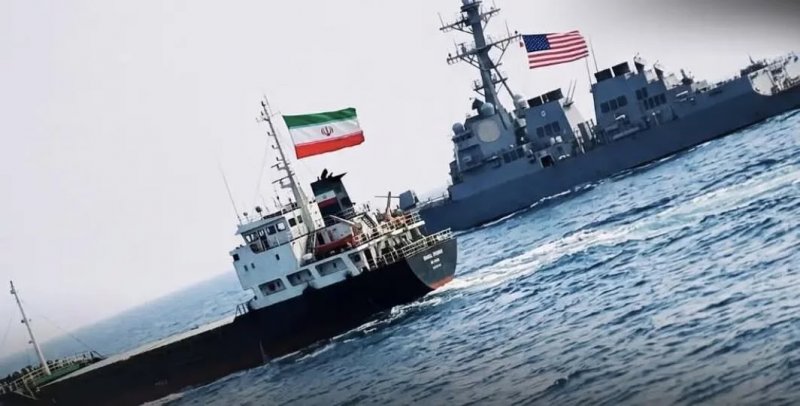
A U.S. naval blockade of Iranian ports has severely curtailed Tehran’s oil exports, leaving an estimated 69 million barrels of crude stranded on 41 tankers as domestic storage capacity reaches its limits.
Shipping data and analysts report that exports from the Gulf of Oman dropped by over 80% in late April compared to March levels. U.S. Central Command confirmed that the blockade is successfully denying the Iranian regime critical revenue, contributing to the Iranian rial falling to a record low against the U.S. dollar, News.Az reports, citing Indian Express.
The disruption has exacerbated global market tightness, with Benchmark Brent crude futures jumping approximately $50 a barrel since the conflict began on February 28. The International Energy Agency has characterized the situation as the world’s largest oil output disruption, affecting not only Iran but also regional exports from Saudi Arabia, the UAE, Kuwait, and Iraq due to the effective closure of the Strait of Hormuz. While satellite imagery shows tankers still loading at Kharg Island, U.S. forces have been intercepting vessels in both the Gulf and Asian waters.
RECOMMENDED STORIES
With onshore storage currently about 60% full and capacity totaling 86 million barrels, analysts warn that Iran may be forced to cut its crude production within weeks. Although the U.S. previously granted temporary sanctions waivers to cool prices, the current blockade marks a significant shift toward suffocating the oil-reliant economy. Experts note that because many vessels have switched off tracking systems, the exact volume of crude reaching customers like China remains difficult to measure, though verified movement out of the region has slowed to a fraction of its former volume.
By Leyla Şirinova


Similar news