US Supreme Court greenlights Virginia's noncitizen voter removal program ahead of election


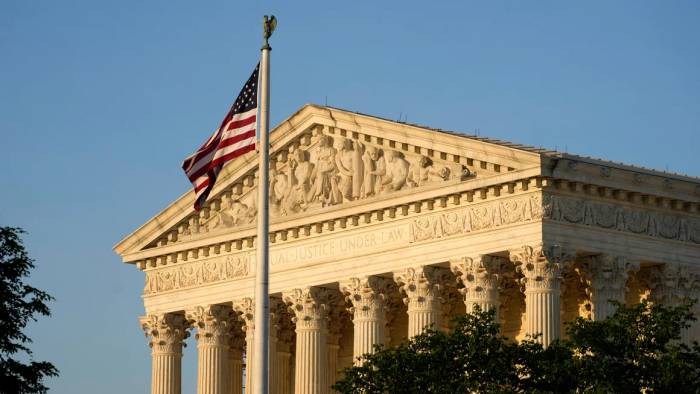
In a split decision on Wednesday, the US Supreme Court permitted Virginia to proceed with a program designed to eliminate suspected noncitizens from its voter registration rolls.
This ruling aligns with Republican interests just ahead of next week’s election, News.Az reports, citing CNN.The decision, issued without comment from a majority of conservative justices, will allow the state to keep off the rolls certain voters it suspects of being noncitizens.
Liberal Justices Sonia Sotomayor, Elena Kagan and Ketanji Brown Jackson dissented.
Republicans, including former President Donald Trump, framed the effort in Virginia as a commonsense way of ensuring noncitizens don’t vote. But the Biden administration, voting rights groups and lower courts said Virginia’s program also ensnared – and potentially disenfranchised – an unknown number of citizens.
Even though Virginia isn’t a battleground state, both the program and the legal fight took on sharply political overtones as Trump and other Republicans have fueled false narratives about widespread voting by noncitizens. At issue are about 1,600 voter registrations that Virginia said came from self-identified noncitizens but that a US District Court said hadn’t been fully vetted for citizenship status.
Noncitizens are not allowed to vote in federal elections; none of the lower court rulings had changed that fact.
Trump and other Republicans have seized on claims of illegal voting and that was part of the argument they made to explain the former president’s loss in 2020. But documented cases of noncitizens voting are extremely rare. A recent Georgia audit of the 8.2 million people on its rolls found just 20 registered noncitizens – only nine of whom had voted.
The Virginia case began with an order signed by Virginia Gov. Glenn Youngkin, a Republican, in August that required election officials to take more aggressive steps to match residents who self-identified as noncitizens at the Department of Motor Vehicles against voter rolls and to purge those matches.
The Biden administration and voting rights groups sued and a US District Court concluded last week that at least some eligible US citizens had their registrations culled under the program. District Judge Patricia Tolliver Giles said that none of the parties involved in the case knew for certain the citizenship status of the purged voters because the information wasn’t verified.
Those opposed to the program relied on a 1993 law, the National Voter Registration Act, which bars states from making “systematic” changes to voting rolls with 90 days of a federal election. The Biden administration said that Youngkin’s order created exactly that kind of systematic program within the so-called “quiet period” mandated by the federal law.
Virginia argued that the quiet period prohibitions applied only to eligible voters, not noncitizens.


Similar news