3I/ATLAS is a newly detected interstellar object that entered the solar system from outside our stellar neighborhood, News.Az reports.
The designation indicates that it is only the third confirmed interstellar visitor ever observed passing through the solar system. Unlike asteroids or comets that formed alongside the Sun, this object originated around another star and traveled for millions or even billions of years through interstellar space before being detected near Earth’s cosmic vicinity.
Why does the name “3I/ATLAS” matter?
The name carries important information. “3I” means “third interstellar object,” following the first two confirmed cases observed in recent years. “ATLAS” refers to the asteroid detection system that first identified it. This naming convention signals to scientists that the object is fundamentally different from typical near-Earth asteroids or long-period comets that come from the Oort Cloud.
Why are scientists calling this discovery shocking?
The shock comes from a combination of factors: how fast the object is moving, the angle at which it entered the solar system, and the unusual physical characteristics inferred from early observations. Each new interstellar object challenges existing theories about how common such wanderers are and how they form. The fact that three have now been detected in a relatively short astronomical timeframe suggests that interstellar objects may be far more abundant than previously believed.
How was 3I/ATLAS discovered?
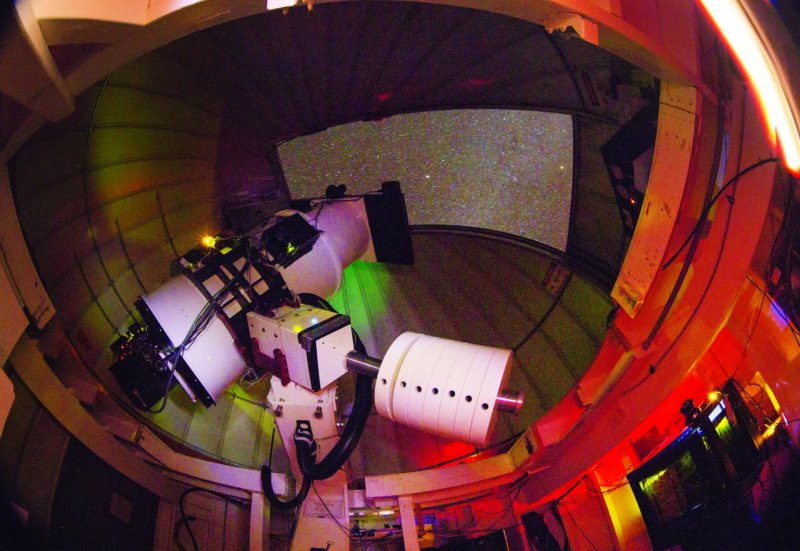
3I/ATLAS was detected by an automated sky survey designed to scan large portions of the sky every night. These systems look for faint points of light that move relative to background stars. When astronomers calculated the object’s trajectory, they realized its path was hyperbolic, meaning it was not gravitationally bound to the Sun. This instantly flagged it as an interstellar visitor.
What makes its trajectory unusual?
Most solar system objects follow elliptical orbits around the Sun. 3I/ATLAS follows a hyperbolic path, indicating it is passing through once and will never return. Its incoming velocity is significantly higher than that of typical comets entering from the outer solar system. This speed cannot be explained by solar gravity alone, confirming its origin beyond the Sun’s influence.
Is 3I/ATLAS an asteroid or a comet?
At the time of discovery, scientists could not immediately classify it with certainty. Early data suggest it may show comet-like behavior, such as releasing gas or dust as it warms near the Sun, but it could also be a rocky body with minimal volatile material. Determining whether it is asteroid-like or comet-like is crucial because it provides clues about the environment in which it formed.
Why does its composition matter so much?
Composition is the key to understanding planetary systems beyond our own. If 3I/ATLAS is rich in volatile ices, it suggests comet formation processes similar to those in the early solar system. If it is mostly rocky or metallic, it could indicate that planet formation elsewhere produces bodies unlike those we commonly see. Each possibility carries profound implications for comparative planetary science.
How big is 3I/ATLAS?
Estimating the size of such distant and fast-moving objects is difficult. Current estimates suggest it could range from tens to hundreds of meters in diameter, depending on its reflectivity and composition. Even small uncertainties in brightness can translate into large differences in size estimates, which is why scientists remain cautious.
Is 3I/ATLAS dangerous to Earth?
No. Despite its dramatic description, 3I/ATLAS poses no threat to Earth. Its trajectory does not intersect with Earth’s orbit at a dangerous distance. The excitement surrounding the object is purely scientific, not related to planetary defense.
Why are interstellar objects so rare to observe?
Interstellar space is vast, and objects traveling through it are small and faint. Detecting them requires sensitive instruments, wide-field surveys, and precise calculations. Until recently, astronomers lacked the technology and computing power to routinely identify such fast-moving, faint visitors.
Does the discovery suggest many more interstellar objects exist?
Yes. Many scientists believe that 3I/ATLAS is just the tip of the iceberg. The fact that three interstellar objects have been detected in a relatively short time implies that countless others pass through the solar system unnoticed. Improved detection systems are likely to reveal many more in the coming decades.
Where did 3I/ATLAS come from?
Its exact origin star system is unknown and may never be identified with certainty. Over millions of years, gravitational interactions with stars and molecular clouds alter trajectories, erasing precise origin signatures. However, its velocity and direction can provide statistical clues about the region of the galaxy it may have come from.
How old could 3I/ATLAS be?
It could be older than the solar system itself. Interstellar objects may have formed billions of years ago, possibly around stars that no longer exist in their original form. Studying such objects offers a rare glimpse into ancient planetary systems.
Why is this discovery important for astronomy?
3I/ATLAS provides a direct sample of material from another star system. Until recently, our understanding of exoplanetary materials was indirect, relying on spectroscopy of distant disks or planets. An interstellar object offers a tangible opportunity to study extrasolar material up close, even if only through telescopic observations.
Can spacecraft be sent to study 3I/ATLAS?
In theory, yes, but in practice it is extremely difficult. Interstellar objects move very fast relative to Earth, making rendezvous missions technologically challenging. While mission concepts exist, none can be executed quickly enough to intercept 3I/ATLAS during its brief visit.
What instruments are being used to study it now?
Ground-based telescopes across the world are tracking its motion and brightness. Spectroscopic instruments are analyzing the light reflected or emitted by the object to determine its composition. Space-based observatories may also contribute, depending on visibility and timing.
What have early observations revealed?
Early data suggest unusual surface properties compared to typical solar system objects. There are hints that its surface may have been altered by long exposure to cosmic radiation in interstellar space. Such “space weathering” could explain differences in color and reflectivity.
How does 3I/ATLAS compare to the first two interstellar objects?
Each interstellar object detected so far has been different. This diversity suggests that planetary systems across the galaxy produce a wide range of small bodies. 3I/ATLAS appears to add another distinct data point rather than fitting neatly into existing categories.
Does this change theories of planet formation?
It adds pressure to refine them. If interstellar objects are common, it implies that planetary systems efficiently eject material during their formation and evolution. This supports models in which gravitational interactions with giant planets scatter large numbers of small bodies into interstellar space.
What does this mean for the study of exoplanets?
Interstellar objects act as messengers from exoplanetary systems. By studying them, scientists can test whether the building blocks of planets elsewhere resemble those in our own system or differ significantly. This helps place the solar system in a broader galactic context.
Could interstellar objects carry organic material?
Potentially, yes. If 3I/ATLAS contains complex organic molecules, it would support the idea that the ingredients for life are widespread in the galaxy. However, confirming this remotely is extremely challenging and remains speculative.
Why are scientists so eager to observe it quickly?
Time is limited. As 3I/ATLAS travels through the solar system, it will eventually fade from view as it moves away from the Sun and Earth. The window for detailed observation may last only months, making rapid coordination essential.
How long will 3I/ATLAS remain observable?
This depends on its brightness, trajectory, and the capabilities of telescopes. It may be observable for several months, but the quality of data will decrease as it recedes. After that, it will continue its silent journey back into interstellar space.
What happens after it leaves the solar system?
It will continue traveling through the galaxy, potentially passing near other star systems over cosmic timescales. It may never be observed again, becoming just another unseen traveler among countless others.
Does this discovery affect public understanding of space?
Yes. Interstellar objects capture public imagination because they represent something truly alien yet physically present in our cosmic neighborhood. They make the vastness and interconnectedness of the galaxy more tangible.
Are scientists expecting more discoveries like this soon?
Absolutely. New survey telescopes and upgraded detection algorithms are coming online. Many astronomers expect the rate of interstellar object discoveries to increase significantly, transforming what was once a novelty into a regular field of study.
What is the biggest unanswered question about 3I/ATLAS?
Its true nature and origin. Whether it is icy or rocky, young or ancient, typical or exotic remains to be fully understood. Each answer will shape how scientists interpret not just this object, but all future interstellar visitors.
Why does 3I/ATLAS matter in the long run?
Because it represents a new class of observable objects that directly link our solar system to the broader galaxy. Every interstellar object is a natural probe of planetary systems beyond our own, offering insights that no telescope alone can provide.
What is the key takeaway for readers?
3I/ATLAS is not just a passing curiosity. It is evidence that the solar system is not isolated, but part of a dynamic, interconnected galaxy where material constantly moves between stars. Its discovery has shocked scientists because it suggests that such exchanges are far more common than once imagined, opening a new chapter in our understanding of the universe.