What is happening on day seven of US-Israel attacks on Iran?


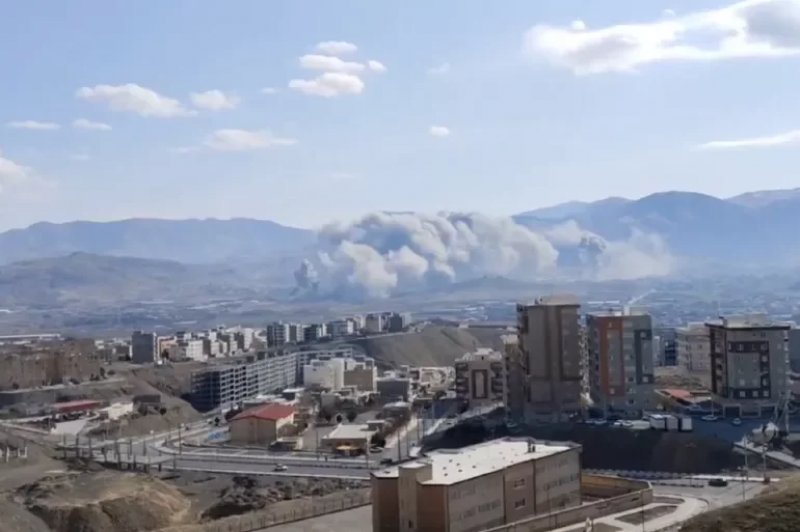
The war between the United States, Israel and Iran has entered its seventh day, marking one of the most dangerous escalations in the Middle East in decades.
The conflict, which began with a coordinated military campaign by Washington and Tel Aviv against Iranian military infrastructure, has now expanded across several countries and has begun to reshape regional security, diplomacy and global markets, News.Az reports.
RECOMMENDED STORIES
The operation launched by the United States and Israel is known as Operation Epic Fury. According to estimates from the Center for Strategic and International Studies, the first 100 hours of the campaign alone cost about 3.7 billion dollars, with most of that spending outside existing defense budgets. The scale of the operation, combined with Iran’s retaliation through missile and drone attacks, has transformed the conflict into a multi front crisis stretching from the Persian Gulf to the Mediterranean.
Below is a detailed FAQ style explainer answering the most important questions about what is happening on day seven of the war.
What triggered the current war between the United States, Israel and Iran?
The conflict began after the United States and Israel launched a coordinated military campaign targeting Iran’s military infrastructure, missile bases and air defense systems. The attacks were presented by Washington and Tel Aviv as a preemptive effort to neutralize what they described as an imminent threat from Iran’s missile and drone capabilities.
The situation escalated dramatically when an early strike in Tehran killed Iran’s Supreme Leader Ayatollah Ali Khamenei. His death created both a political shock inside Iran and a strategic shock across the region. For Tehran, the killing of its top leader was interpreted as an attempt to destabilize the state itself rather than simply degrade military capabilities.
Iran responded with waves of ballistic missile launches and drone attacks targeting Israeli territory and American military facilities across the Middle East. Within days the confrontation expanded into a regional crisis involving Gulf countries, Iraq, Lebanon and other states.
What is Operation Epic Fury?
Operation Epic Fury is the name given by US and Israeli officials to the joint military campaign targeting Iranian military infrastructure.
The campaign focuses primarily on destroying missile launch systems, air defense networks, command centers and naval capabilities in the Persian Gulf. According to Israeli military statements, the operation has already included thousands of air strikes and long range missile attacks.
Estimates suggest that roughly 2500 strikes have been conducted so far. Israeli officials claim these strikes have destroyed up to 80 percent of Iran’s air defense systems and severely weakened its ability to defend its airspace.
American military forces have also played a major role in the operation. US Central Command reports that about 200 targets were struck in the past 72 hours alone, including ballistic missile launchers and naval vessels.
The scale and intensity of the operation indicate that the campaign is designed not just as a short term strike but as a sustained effort to dismantle Iran’s military capabilities.
How many people have been killed so far?
The humanitarian toll of the conflict is rapidly increasing.
Estimates suggest that more than 1230 people have been killed inside Iran since the start of the attacks. These figures include military personnel, government officials and civilians caught in the strikes.
Casualties have also been reported in Israel and other countries affected by missile attacks and military operations. However, precise figures remain difficult to verify because many areas remain active conflict zones.
Humanitarian organizations warn that if the conflict continues to escalate, civilian casualties could rise dramatically in the coming weeks.
Has Israel gained air superiority over Iran?
Israeli military officials claim they have achieved near complete air superiority over Iranian airspace.
According to Israeli statements, the destruction of Iran’s air defense network has allowed Israeli aircraft and drones to operate more freely across Iranian territory. This would represent a significant strategic advantage because air superiority allows a military to conduct strikes with fewer risks of interception.
However, independent verification of these claims remains limited. Iranian officials insist that their remaining defense systems continue to operate and that their military capabilities have not been fully neutralized.
Nevertheless, analysts note that the intensity of US and Israeli strikes suggests that Iran’s air defense network has suffered substantial damage.
How has Iran responded militarily?
Iran’s primary response has been the launch of ballistic missiles and drones targeting Israel and US military positions across the Middle East.
Iran’s Revolutionary Guard has claimed responsibility for several coordinated attacks on Israeli cities, including Tel Aviv and surrounding areas. These attacks involve a combination of drones and missiles intended to overwhelm air defense systems.
Iran has also targeted American bases and allied infrastructure across the Gulf region. Oil facilities, military installations and air bases have all been potential targets.
Despite these retaliatory strikes, US officials say that Iran’s ability to launch missiles has decreased significantly since the first days of the war. According to Washington, ballistic missile launches have dropped by about 90 percent while drone attacks have fallen by more than 80 percent.
American officials interpret this decline as evidence that Operation Epic Fury is successfully degrading Iran’s military capabilities.
What is happening inside Iran politically after the death of the Supreme Leader?
The death of Ayatollah Ali Khamenei has created a major political crisis in Iran.
Khamenei served as the country’s Supreme Leader for decades and held ultimate authority over the political system, military strategy and foreign policy. His sudden death during wartime has left the leadership structure uncertain.
One of the most widely discussed possibilities is the succession of Mojtaba Khamenei, the late leader’s son. Reports indicate that some factions within Iran’s political and security establishment support this option.
However, the issue has become even more complicated after US President Donald Trump publicly stated that he intends to play a role in determining Iran’s future leadership. Trump explicitly described Mojtaba Khamenei as an unacceptable successor.
These remarks have further inflamed tensions and reinforced Tehran’s belief that the war is aimed at regime change.
Is the United States planning a ground invasion of Iran?
Iranian officials believe that a ground invasion remains possible.
Ali Larijani, secretary of Iran’s Supreme National Security Council, warned that Iranian forces are prepared for such a scenario. He stated that Iranian troops are waiting for any attempt by American forces to enter Iranian territory and warned that thousands of US soldiers could be killed or captured if such an invasion occurs.
So far, there has been no confirmation from Washington that a ground invasion is planned. Most military activity has focused on air strikes and naval operations.
However, analysts note that the continued destruction of Iran’s defenses could create conditions that might support a future ground operation if the conflict escalates further.
Are diplomatic negotiations taking place?
At this stage, diplomatic negotiations appear extremely unlikely.
Iran’s Foreign Minister Abbas Araghchi has stated that there is no reason to negotiate with the United States because Washington cannot be trusted.
From Tehran’s perspective, the killing of the Supreme Leader and the scale of the attacks demonstrate that the US and Israel are not seeking compromise but rather attempting to weaken or replace the Iranian government.
Western governments have called for diplomatic solutions, but the intensity of the fighting suggests that military dynamics currently dominate the situation.
How has the conflict affected Gulf countries?
The war has significantly expanded across the Persian Gulf region.
Iran has launched missile and drone attacks against several Gulf states hosting American military assets or supporting Western operations.
In Kuwait, the United States temporarily suspended operations at its embassy after Iranian strikes triggered air defense responses.
In Bahrain, an Iranian missile struck an oil refinery in an industrial town. Although the resulting fire was contained, the attack raised concerns about the vulnerability of energy infrastructure.
The United Arab Emirates reported intercepting multiple missiles and more than 120 drones. Qatar also reported missile and drone attacks targeting its capital, Doha.
These incidents show that the conflict is no longer limited to Iran and Israel but now involves a broader regional battlefield.
Why are Americans leaving the Middle East?
Security concerns have triggered a large scale evacuation of American citizens from the region.
The US State Department reports that about 20000 Americans have already left Middle Eastern countries since the war began. Many departed independently, while others are being evacuated through government organized flights.
Some evacuation operations have faced disruptions due to ongoing missile attacks. For example, a French evacuation flight attempting to rescue citizens stranded in the United Arab Emirates was forced to turn back because of missile activity in the region.
Governments across Europe and North America continue to advise their citizens to leave conflict zones as quickly as possible.
What is happening in Israel during the war?
Israel remains on high alert as it faces continued missile and drone attacks from Iran.
The Iranian Revolutionary Guard announced a combined drone and missile operation targeting Tel Aviv and central Israel. Israeli air defense systems have intercepted many incoming threats, but the constant attacks have forced the country to maintain strict security measures.
Authorities have also imposed closures in sensitive areas. All holy sites in Jerusalem’s Old City have been closed and Friday prayers were cancelled due to security concerns.
Violence has also increased in the West Bank, where tensions between Israeli forces and Palestinian groups have intensified during the conflict.
How has the war affected the United States domestically?
The war has triggered political debate and economic concerns inside the United States.
In Congress, the House of Representatives narrowly rejected an effort to halt the war and require formal authorization for military action against Iran. The vote highlighted deep divisions among lawmakers about the conflict.
Financial markets have also reacted strongly. Earlier in the week the Dow Jones index fell by more than 1000 points as oil prices surged amid fears of supply disruptions.
US Defense Secretary Pete Hegseth has rejected criticism that the war is destabilizing the region, insisting that American and Israeli operations are necessary to neutralize threats posed by Iran.
What role are other Middle Eastern countries playing?
Several countries across the region have become involved indirectly in the conflict.
In Iraq, military forces intercepted a drone targeting a base near Baghdad International Airport where US personnel are stationed. The drone was shot down before reaching its target.
Iran has also carried out attacks against Kurdish groups operating near the Iran Iraq border. Tehran accuses these groups of collaborating with foreign powers and supporting attacks against Iranian territory.
In Lebanon, Israel has expanded its military campaign with heavy bombardments and evacuation warnings in parts of Beirut and the Bekaa Valley. The escalation raises fears that Lebanon could become another major front in the conflict.
How is the war affecting Egypt and other regional economies?
Economic pressure is increasing across the region.
Egypt’s President Abdel Fattah el Sisi has warned that the country is facing a near emergency economic situation because the war threatens to drive up energy prices and disrupt trade routes.
Many Middle Eastern economies depend heavily on stable energy markets and tourism. The conflict is already disrupting both sectors.
Shipping routes through the Persian Gulf and surrounding waters have become more dangerous due to missile threats and military activity.
How are European countries responding?
Europe remains divided over how to respond to the conflict.
Some countries have taken defensive measures. The United Kingdom and France have deployed naval and air defense assets to the eastern Mediterranean to protect allied interests.
A drone attack earlier in the week targeted the British Royal Air Force base at Akrotiri in Cyprus, highlighting the risks facing European military facilities in the region.
Other European countries such as Germany, Ireland, Belgium and the Netherlands have focused primarily on diplomatic responses and calls for de escalation.
The differing approaches reflect broader divisions within Europe about how to handle the crisis.
What role does Azerbaijan play in the conflict?
Azerbaijan has also been affected by the war.
Authorities halted cross border truck traffic with Iran after an Iranian drone strike injured four civilians in the Nakhchivan exclave. The attack raised serious security concerns and prompted discussions about possible retaliatory measures.
The incident demonstrates how the conflict is already affecting countries beyond the immediate battlefield.
For Azerbaijan, which shares a long border with Iran and maintains complex diplomatic relations with regional powers, the war presents both security and geopolitical challenges.
What could happen next in the war?
The future trajectory of the conflict remains uncertain.
If US and Israeli forces continue to degrade Iran’s military capabilities, Tehran may seek new strategies including asymmetric warfare, cyber operations or attacks through allied groups across the region.
Another possibility is the expansion of the conflict into additional fronts, particularly in Lebanon, Iraq or the Gulf states.
Diplomatic pressure may eventually increase if global economic disruptions intensify, especially if energy supplies become threatened.
For now, however, the war shows few signs of slowing. With both sides continuing military operations and rejecting negotiations, the seventh day of the conflict may represent only the beginning of a much longer and more dangerous confrontation.
By Faig Mahmudov


Similar news