Who targeted the Imam’s family home in England, Bolton? What we know so far


A suspected firebomb attack on the home of a Muslim imam in Bolton, northwest England, has shocked local residents and drawn attention across the United Kingdom.
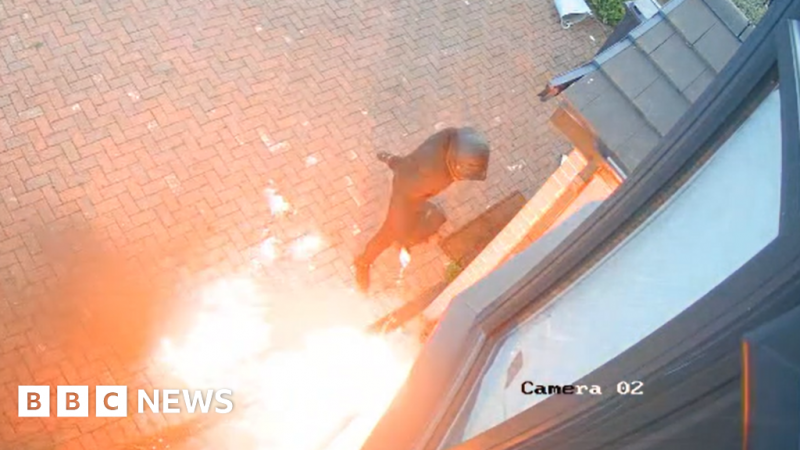
CCTV footage captured the moment a masked individual allegedly smashed a window and hurled a burning object into the property, causing a fire while the imam and several family members were inside, News.az reports.
Although nobody was injured, the attack has raised serious concerns about public safety, the protection of religious leaders, and the motives behind such acts of violence.
The incident has also reignited discussions about hate crimes, community relations, religious intolerance, and the challenges faced by law enforcement when investigating targeted attacks. As authorities continue their investigation, many questions remain unanswered. This explainer examines what happened, who was affected, why the case matters, and what it could mean for communities across Britain.
What happened in Bolton?
The attack took place in the town of Bolton, located in Greater Manchester, one of England’s most diverse urban regions. According to reports, a masked suspect approached the property during the evening, smashed a front window, and threw an incendiary device into the house before fleeing the scene.
The resulting fire spread rapidly through part of the property, creating a frightening situation for those inside. Emergency services responded quickly after receiving reports of the blaze. Firefighters managed to bring the fire under control before it engulfed the entire building, while police immediately launched an investigation into what appeared to be a deliberate act of arson.
The incident has attracted widespread attention because it was not simply an attack on a building. It was an attack on an occupied family home, with several people present inside at the time. Investigators believe the suspect deliberately targeted the property, making the case far more serious than an ordinary vandalism incident.
Who was inside the house during the attack?
One of the most alarming aspects of the incident is that multiple family members were inside the home when the firebomb was thrown.
The imam was reportedly at home with his wife, children, and other relatives. The family had little warning before the attack occurred and were forced to react quickly as flames spread through parts of the property.
Fortunately, everyone managed to escape safely. However, the psychological impact of experiencing such an attack is likely to be significant. Family members have described feelings of fear, shock, and uncertainty following the incident.
Security experts note that attacks on occupied homes are especially traumatic because they violate what people regard as their safest space. Even when no physical injuries occur, victims often suffer long-lasting emotional effects, including anxiety, sleep disturbances, and concerns about future safety.
What does the CCTV footage reveal?
The CCTV footage has become one of the most important pieces of evidence in the investigation.
The video reportedly shows a masked individual approaching the property while wearing dark clothing and concealing their identity. The suspect appears to move with purpose, suggesting prior knowledge of the location. After reaching the house, the individual allegedly smashed a window and threw a burning object inside before fleeing.
Investigators believe the footage indicates that the attack was premeditated rather than spontaneous. The suspect appears to have arrived prepared, carrying materials specifically intended to start a fire.
Modern CCTV technology often captures far more information than many people realize. Even if a suspect’s face is hidden, investigators can analyze body language, walking patterns, clothing, timing, travel routes, and nearby vehicles. Such details frequently help police identify suspects even when direct facial recognition is impossible.
The footage is expected to play a crucial role as detectives attempt to establish exactly how the attack was planned and carried out.
Why do police believe the attack was targeted?
Authorities have indicated that the attack does not appear to have been random.
Several aspects of the incident suggest deliberate targeting. The suspect reportedly traveled directly to the property, carried out the attack within a short period of time, and immediately fled the area. Such behavior is generally consistent with a planned operation rather than opportunistic vandalism.
Investigators are examining whether the suspect had prior knowledge of the occupants or whether the property itself was selected because of the imam’s public role within the local Muslim community.
Targeted attacks often require detectives to explore multiple possibilities. These may include personal disputes, ideological motivations, religious hostility, or other grievances. At this stage, authorities have not publicly identified a motive, but the belief that the property was specifically selected has significantly shaped the direction of the investigation.
Is the incident being treated as a hate crime?
One of the most frequently asked questions concerns whether the attack is being investigated as a hate crime.
At present, authorities have not publicly classified the incident as religiously motivated. However, investigators have not ruled out any possibilities and are examining all available evidence before reaching conclusions.
Hate crimes in the United Kingdom are offenses motivated by hostility toward characteristics such as religion, race, ethnicity, sexual orientation, disability, or transgender identity. If evidence emerges showing that the imam was targeted because of his faith or religious position, prosecutors could seek additional charges or sentence enhancements.
Experts caution against jumping to conclusions before evidence is available. Nevertheless, because the victim is a religious leader and the attack involved an occupied family home, many community members naturally want authorities to examine whether anti-Muslim prejudice played a role.
Why has the attack caused such concern among Muslim communities?
For many British Muslims, the incident resonates beyond a single family or a single town.
Imams often serve as religious leaders, teachers, counselors, and community representatives. As a result, attacks against them can be perceived as attacks against the wider community they serve.
Many Muslims view mosques and religious leaders as symbols of stability, guidance, and support. When those figures become targets of violence, concerns naturally arise about broader issues of safety and acceptance.
The attack has also reminded many people of previous incidents involving mosques, Islamic centers, and Muslim individuals across Europe. Even though authorities have not determined a motive in this case, the nature of the attack has generated anxiety among communities that remain sensitive to issues of religious discrimination and extremism.
What is an imam and what role do they play?
An imam is a Muslim religious leader who typically leads prayers and provides guidance on matters of faith.
However, the role extends far beyond religious rituals. In many communities, imams help resolve disputes, support families during difficult times, advise young people, and engage with local authorities on social issues.
Many British imams also participate in interfaith activities aimed at strengthening relations between different religious groups. They often act as bridges between communities and serve as important voices during times of tension or crisis.
Because of their visibility and influence, imams can sometimes become targets of threats or hostility. An attack against an imam may therefore have broader symbolic implications than an attack against an ordinary resident.
How serious is arson involving occupied homes?
Arson is considered one of the most serious criminal offenses because of its potential to cause loss of life.
Fire behaves unpredictably and can spread far more quickly than intended. Even small incendiary devices can produce devastating consequences when introduced into residential buildings.
When a property is occupied, the risks increase dramatically. Residents may become trapped, suffer smoke inhalation, or sustain serious burns while attempting to escape. Children, elderly individuals, and people with disabilities are particularly vulnerable during such emergencies.
Legal experts note that when suspects deliberately start fires in occupied properties, prosecutors often consider charges that go beyond ordinary criminal damage. The presence of occupants significantly increases the severity of the offense because lives are directly endangered.
Could the attack have resulted in fatalities?
Unfortunately, yes.
Fire investigators frequently emphasize that even a few seconds can determine whether people survive a house fire. If family members had been asleep, trapped, or unable to react quickly, the outcome could have been far more tragic.
Smoke inhalation alone can incapacitate victims within minutes. Many fire-related deaths occur not because of burns but because toxic smoke prevents occupants from escaping.
The fact that everyone escaped unharmed should not obscure the seriousness of the incident. Emergency responders and community leaders have repeatedly noted that the attack had the potential to cause multiple deaths.
What challenges do investigators face in solving cases like this?
Although CCTV footage provides valuable evidence, identifying suspects in cases involving masks and concealed clothing remains difficult.
Police must combine multiple investigative techniques, including witness interviews, forensic examinations, mobile phone analysis, vehicle tracking, and surveillance footage from surrounding areas.
Investigators often work to establish the suspect’s movements before and after the attack. They may examine nearby roads, public transportation routes, fuel purchases, communications records, and other digital evidence.
In many modern criminal investigations, suspects are identified not through a single piece of evidence but through the combination of dozens of separate clues that collectively reveal a clear picture of events.
What role can forensic evidence play?
Forensic science may prove crucial in determining who carried out the attack.
Investigators can analyze materials recovered from the scene to determine what type of incendiary device was used. They may also search for fingerprints, DNA traces, footwear impressions, fibers, or chemical residues.
Even small fragments of evidence can provide important breakthroughs. A discarded item, a trace of fuel, or microscopic biological material may connect a suspect to the scene.
Advances in forensic technology have significantly improved the ability of law enforcement agencies to solve arson cases. What once appeared to be an anonymous crime can often be reconstructed in remarkable detail through scientific analysis.
How do attacks like this affect local communities?
The impact of such incidents extends far beyond the immediate victims.
Residents often experience increased anxiety after learning that a violent attack occurred in their neighborhood. People may begin questioning their own safety, particularly if the motive remains unknown.
Community confidence can also suffer. When an attack appears targeted, local residents may worry that similar incidents could occur again.
Leaders frequently respond by encouraging unity and cooperation rather than fear. They emphasize the importance of supporting victims, sharing information with police, and avoiding speculation that could inflame tensions.
The long-term recovery process often involves rebuilding not only damaged property but also trust and a sense of security.
Are attacks on religious leaders common in Britain?
Such incidents remain relatively uncommon, but they do occur.
Religious leaders from various faiths have occasionally faced threats, harassment, vandalism, and acts of violence. These incidents may stem from ideological extremism, personal grievances, or broader social tensions.
The vast majority of religious leaders in Britain carry out their work without experiencing serious security threats. However, high-profile incidents attract attention because they challenge the expectation that places of worship and faith leaders should be protected from violence.
When attacks occur, authorities generally work closely with religious communities to provide reassurance and strengthen security measures.
What legal consequences could the attacker face?
If identified and convicted, the suspect could face severe penalties.
Arson involving an occupied property is treated extremely seriously under British law. Depending on the evidence, prosecutors may pursue charges relating to arson with intent to endanger life, criminal damage, or other serious offenses.
If investigators establish that the attacker intended to kill occupants, even more serious charges could potentially be considered.
The final legal outcome would depend on the evidence gathered during the investigation, the suspect’s intent, and the circumstances surrounding the attack.
What happens next?
The investigation is expected to continue for some time.
Detectives will review CCTV footage, gather forensic evidence, interview witnesses, and explore possible motives. They will also seek information from the public and analyze any intelligence that may help identify the suspect.
Community leaders are likely to remain in contact with police while efforts continue to reassure residents. Additional security measures may also be considered depending on the findings of the investigation.
For the family involved, recovery will involve both repairing physical damage and coping with the emotional consequences of the attack.
Why is this case attracting national attention?
Several factors have combined to make the incident a major news story.
First, the CCTV footage provides a dramatic visual record of the attack. Second, the target was a religious leader rather than an ordinary property owner. Third, multiple family members, including children, were reportedly inside the house when the fire started.
The incident also touches on broader issues that resonate across British society, including religious tolerance, community relations, public safety, and the prevention of extremist violence.
These factors ensure that the case is being closely watched not only in Bolton but throughout the United Kingdom.
The Bottom Line
The firebomb attack on an imam’s home in Bolton is more than a local crime story. It is a case that raises important questions about security, community relations, religious freedom, and public safety. While the family escaped unharmed, the incident could easily have resulted in tragedy.
As investigators work to identify the suspect and establish a motive, the attack serves as a reminder of the devastating consequences that targeted violence can have on individuals, families, and entire communities. The outcome of the investigation will be closely monitored, not only because of the seriousness of the crime itself, but also because of what it may reveal about the forces that led to such a dangerous act.
By Faig Mahmudov


Similar news