Why conflicts in the 21st century are becoming “hybrid”


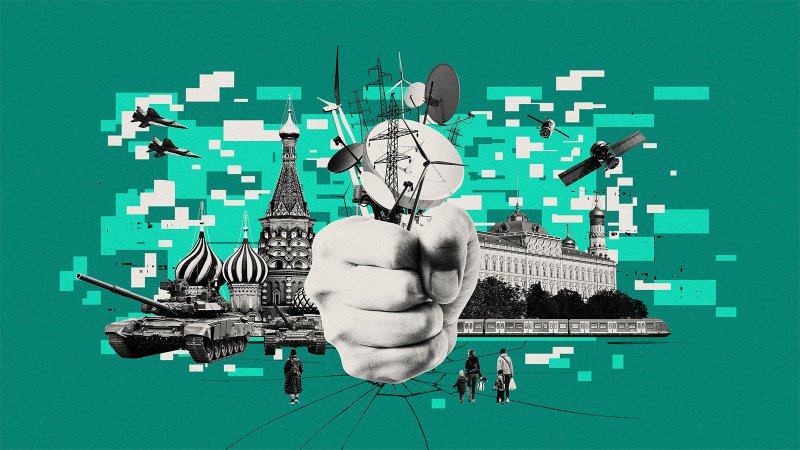
In recent decades, the nature and character of armed and non-armed confrontations have undergone significant transformation. The traditional model of warfare — clearly defined belligerents, armed forces engaging in open pitched battles, declared war and peace — is no longer dominant. Instead, what we increasingly observe is what is called hybrid warfare: conflicts that blend military, informational, economic, cyber and diplomatic tools. Why has the 21st century ushered in this shift to hybrid methods — and which factors underpin its rise? In this article I analyse the nature, causes, features and implications of this change.
Definition and features of hybrid conflict
The term “hybrid warfare” was first popularised by Frank G. Hoffman in 2007 to describe a situation in which an adversary simultaneously employs conventional forces and methods, as well as irregular, asymmetric, informational and cyber tools. Википедия+2marshallcenter.org+2
According to NATO the phenomenon refers to the “interplay or fusion of conventional and unconventional instruments of power and tools of subversion.” nato.int+1
Key characteristics include:
-
A combination of different forms of force or influence (conventional military, irregular warfare, cyber and information operations) in a blended fashion. smallwarsjournal.com+1
-
Employment of non-military or semi-military means: informational campaigns, disinformation, economic pressure, legal and diplomatic tools (so-called lawfare). cepa.org+1
-
Blurred boundaries between war and peace, between combat operations and political/informational pressure. nato.int+1
-
Difficulty of attribution: identifying who is the aggressor, which instruments are used, and whether the situation constitutes war. nato.int+1
Why the 21st century is fertile for hybrid conflicts
Several inter-linked factors have made hybrid forms of conflict increasingly attractive and effective:
-
Globalisation and interdependence. The modern world is highly interconnected — economically, technologically and informationally. This means that pressure can be exerted not only via front-line battles but through supply-chains, financial flows, cyber networks and the media. globalsecurityreview.com+1
-
Advancement of information and communication technologies. Digital networks, social media, cyberattacks, drones and other tech innovations enable states (and non-state actors) to act more covertly, quickly, with lower cost and potentially large impact. cepa.org+1
-
Lowering the entry barrier for non-traditional actors. States, but also non-state actors, can operate through proxies, cyber-hackers, irregular formations, which makes classical full-scale war less the only option. marshallcenter.org+1
-
Rising cost and risk of traditional warfare. Open military operations are increasingly costly — politically, economically and in human lives. Hybrid measures allow achieving objectives with fewer costs and more plausible deniability. globalsecurityreview.com
-
Changing nature of objectives. Goals are less often simply territorial conquest or regime change, and more often the sub-version of stability, influence over society, manipulation of opinion, disruption of infrastructure — objectives more suitable to hybrid methods. csis.org+1
Forms and tools of hybrid conflict
Let us examine how hybrid methods manifest in practice:
-
Informational and psychological warfare: Disinformation campaigns, fake news, manipulation of public opinion, influencing via social media. These undermine trust in institutions and deepen internal divisions. cepa.org
-
Cyber-attacks and cyber-espionage: Attacks on government networks, infrastructure, banking systems, communication channels — enabling interference without visible “boots on the ground”. nato.int+1
-
Economic, financial and legal pressure: Sanctions, trade embargoes, controlling access to resources, debt-leverage, legal mechanisms used for strategic influence. cepa.org+1
-
Irregular and proxy formations: Use of armed groups, mercenaries, “volunteers”, covert detachments often backed externally, but not officially declared. smallwarsjournal.com
-
Infrastructure sabotage and “grey zone” operations: Disruption of energy networks, transport, logistics, communications systems — operations that do not look like conventional war, but have large impact. globalsecurityreview.com
What hybrid approaches offer to an aggressor
Why do states increasingly turn to hybrid methods? Key motivations include:
-
Reduced risk and cost. Full-scale war involves high political risk, large casualties, domestic dissension, economic blowback. Hybrid actions allow pursuing objectives at lower cost and often with plausible deniability.
-
Exploiting the “grey zone” between war and peace. An aggressor can act where the opponent is uncertain whether an act constitutes war — making response harder. nato.int+1
-
Difficulty of response and attribution. If the attacking state’s role is obscured (via proxies, cyber-tools, plausible deniability) then retaliation becomes politically and legally more complex. nato.int
-
High effect for lower investment. For example, an information operation or cyber-attack can yield an outsized effect without large troop deployments.
-
Undermining opponent from within. Instead of fighting across the frontline, hybrid tactics aim to destabilise the opponent internally — eroding the will, legitimacy and cohesion.
The special difficulties for defence and international law
Hybrid conflicts pose distinct challenges:
-
Unclear legal frameworks. Wars traditionally declared, with known belligerents and clear rules; hybrid actions often operate below the threshold of recognised war, complicating legal and normative response.
-
Blurred responsibility. Which actor is the aggressor? When proxies or non-state actors are used, attribution becomes difficult — international law struggles to keep up.
-
Comprehensive defence required. Traditional armies alone cannot defend against cyber-attacks, disinformation, economic coercion. Defence spans multiple domains: military, cyber, information, economic, legal. csis.org
-
Societal resilience (“resilience” is key). Hybrid conflict targets not only armies, but societies: critical infrastructure, media, civic trust. Building resilience in these domains becomes critical. nato.int+1
Illustrations and trends
Recent conflicts show that hybrid approaches are no longer marginal but increasingly normative. For example, the 2014 events in Crimea and Ukraine – combining military presence, “little green men”, information operations, energy pressure – are a textbook hybrid form. marshallcenter.org+1
Analysts also note that hybrid methods are now being used globally, not just regionally. For example, influence operations by major powers, economic coercion, cyber campaigns. csis.org
What this means for states and the international order
-
States must re-think their security strategies: the emphasis shifts from purely military preparedness to an integrated approach including cyber defence, information operations, economic resilience.
-
In the international environment, competition intensifies, as hybrid methods allow “weaker” actors to influence “stronger” ones by non-military means.
-
Trust between states, and trust between citizens and institutions, becomes a frontline. Disinformation campaigns, cyber-breaches and economic coercion degrade that trust, weakening resilience.
-
International cooperation must evolve: sharing information, joint responses, establishing norms for new domains (cyber, information, economic coercion).
Conclusion
Hybrid conflicts have become characteristic of the 21st century because they reflect the realities of a globalised, technologically advanced, inter-dependent world. The use of diverse tools — from cyber-attacks and disinformation to economic pressure and irregular warfare — allows an actor to operate efficiently, flexibly and often covertly. This changes not just “how we fight” but also “what we fight for”: it is less about seizing territory in the classic sense, more about subverting the opponent’s stability, resilience, legitimacy and will.
For states, the bottom line is clear: adapt or become vulnerable. In the era of hybrid warfare, victory is no longer measured solely by tanks and missiles, but by the robustness of systems, reliability of institutions, awareness of populations and agility in multiple domains.


Similar news