Why did the CIA chief visit Cuba amid the worsening energy crisis?


A rare high level meeting between the United States and Cuba has drawn global attention after John Ratcliffe visited Havana during one of the most severe energy crises in modern Cuban history.
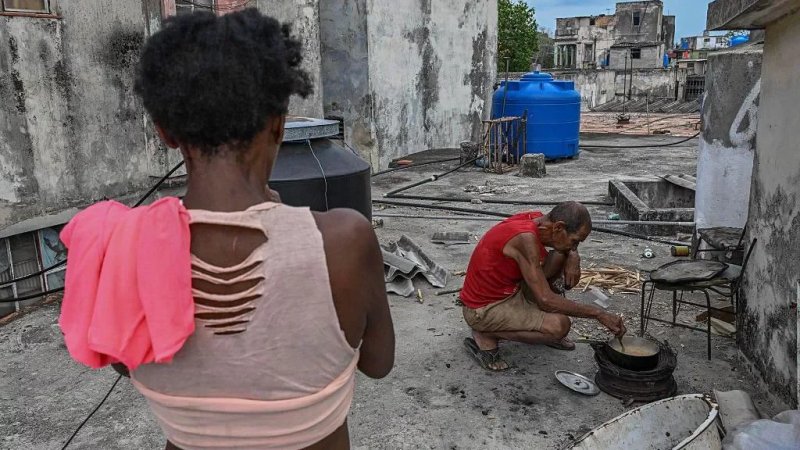
The visit came as Cuba struggles with nationwide fuel shortages, prolonged blackouts, economic deterioration, and growing public unrest. At the same time, Washington renewed an offer of $100 million in humanitarian assistance aimed at easing the island’s worsening humanitarian conditions.
RECOMMENDED STORIES
The discussions signal a potentially important moment in U.S. Cuba relations under the administration of Donald Trump, even as tensions remain high over sanctions, energy restrictions, and political disagreements.
The meeting also highlights how the Cuban crisis is increasingly becoming both a humanitarian issue and a geopolitical concern for the United States.
While the two countries remain adversaries after decades of hostility, the scale of Cuba’s energy collapse appears to have created pressure for at least limited dialogue.
However, deep disagreements remain over sanctions, aid distribution, political reforms, and the future direction of bilateral relations.
Who participated in the meeting in Havana?
The meeting reportedly took place at Cuba’s Interior Ministry in Havana.
On the American side, the delegation was led by CIA director John Ratcliffe.
According to U.S. officials, Ratcliffe personally delivered a message from President Donald Trump.
Senior Cuban officials also attended the talks, including Interior Minister Lázaro Álvarez Casas and representatives from Cuba’s intelligence services.
Reports also indicated the participation of Raúl Rodríguez Castro, the grandson of former Cuban leader Raúl Castro.
The composition of the meeting demonstrates the seriousness of the discussions, particularly because intelligence and security officials from both countries were directly involved.
Such meetings between senior American and Cuban intelligence representatives are relatively rare and usually occur only during periods of significant diplomatic or security concern.
Why is Cuba facing such a severe energy crisis?
Cuba is currently experiencing one of the worst energy shortages in decades.
The crisis stems from multiple overlapping problems including fuel shortages, aging infrastructure, economic sanctions, declining foreign investment, and reduced oil imports.
Cuba has historically relied heavily on imported fuel, particularly from Venezuela and, to a lesser extent, Mexico.
However, both countries significantly reduced oil supplies after the Trump administration threatened tariffs and penalties against nations sending fuel to Cuba.
This dramatically worsened shortages across the island.
Cuba’s electricity infrastructure is also outdated and vulnerable to breakdowns.
Frequent power plant failures and insufficient fuel supplies have led to repeated nationwide blackouts.
Hospitals, schools, government offices, factories, and transportation systems have all been severely affected.
Some hospitals reportedly cannot function normally due to electricity shortages.
The government has been forced to close schools and public institutions periodically because of the crisis.
Fuel shortages have additionally affected food distribution, transportation, industrial production, and water systems.
The situation has become so severe that Cuba’s energy minister recently acknowledged the country had effectively run out of diesel and fuel oil.
Why does Cuba blame the United States?
Cuba argues that the worsening crisis is primarily caused by U.S. sanctions and what Havana describes as an “energy blockade.”
The Cuban government says American restrictions make it extremely difficult for Cuba to purchase fuel, secure financing, or conduct normal international trade.
President Miguel Díaz-Canel accused the United States of intensifying economic pressure to unprecedented levels.
He argued that Washington’s sanctions policy directly contributed to the collapse of Cuba’s energy system.
The Trump administration has pursued a particularly hard line approach toward Cuba, reimposing and expanding sanctions that had been partially eased during the Obama administration.
These measures targeted tourism, remittances, shipping, banking access, and fuel supplies.
The administration also threatened penalties against countries and companies helping Cuba acquire oil.
Cuban officials argue that lifting or easing sanctions would immediately improve the country’s energy and economic situation more effectively than humanitarian aid alone.
What is the U.S. position on the crisis?
The United States says it is willing to provide humanitarian assistance but insists Cuba must make significant political and economic changes.
According to a CIA official, Washington is “prepared to seriously engage on economic and security issues, but only if Cuba makes fundamental changes.”
The Trump administration argues the Cuban government is responsible for decades of economic mismanagement, political repression, and corruption.
American officials also accuse Havana of allowing adversarial actors to maintain influence within the Western Hemisphere.
The United States has renewed an offer of approximately $100 million in aid intended to support the Cuban population during the crisis.
However, Washington wants the aid distributed independently through organizations such as the Catholic Church and humanitarian groups rather than through the Cuban government itself.
This reflects longstanding American concerns that the Cuban state could politicize or control aid distribution.
The Cuban government, however, sees this condition as an attempt to bypass state authority and undermine the regime internally.
Did Cuba reject the U.S. aid offer?
The situation surrounding the aid proposal remains disputed.
Earlier, U.S. Secretary of State Marco Rubio claimed Cuba had rejected a previous humanitarian aid offer.
Cuban officials denied this allegation.
Foreign Minister Bruno Rodríguez Parrilla later stated that Havana was willing to hear details about the proposal and how it would be implemented.
Rodríguez emphasized that Cuba does not normally reject genuine humanitarian assistance offered in good faith.
However, he also argued that removing sanctions would provide far greater relief than aid packages.
One key issue involves control and distribution mechanisms.
The United States insists aid should bypass the Cuban government, while Havana views such conditions with suspicion.
This disagreement reflects broader mistrust that has defined U.S. Cuba relations for decades.
Why is the CIA involved instead of traditional diplomats?
The involvement of the CIA underscores how the crisis intersects with national security concerns.
The United States increasingly views instability in Cuba not only as a humanitarian issue but also as a geopolitical and security matter.
Washington worries that severe economic collapse could produce migration crises, political instability, organized crime expansion, or greater influence from rival states.
The meeting reportedly included discussions on intelligence cooperation, regional security, and law enforcement collaboration.
According to American officials, the United States wants to ensure Cuba does not become a “safe haven for adversaries in the Western Hemisphere.”
This likely reflects broader U.S. concerns regarding Russian, Chinese, Venezuelan, or Iranian influence in the Caribbean region.
Historically, Cuba occupied a highly sensitive role in U.S. national security calculations dating back to the Cold War and the Cuban Missile Crisis.
Although ideological tensions have evolved since then, Cuba still holds strategic significance because of its geographic proximity to the United States.
How serious are the protests inside Cuba?
Public frustration in Cuba has intensified sharply as blackouts and shortages worsen.
Recent demonstrations in Havana reportedly marked the largest single night of protests since the energy crisis began earlier this year.
Residents blocked roads using burning rubbish bins and shouted anti government slogans demanding electricity restoration.
In neighborhoods such as San Miguel del Padrón, protesters reportedly shouted “turn on the lights.”
The protests reflect broader social frustration over deteriorating living conditions, inflation, food shortages, transportation problems, and declining public services.
Power cuts have become a particularly emotional issue because many Cubans now experience repeated outages lasting several hours or longer.
The energy crisis affects nearly every aspect of daily life.
Businesses struggle to operate, refrigeration systems fail, transportation slows, and communication networks become unreliable.
The demonstrations are especially sensitive politically because Cuba has historically maintained tight control over public dissent.
Large scale protests remain relatively uncommon compared to many other countries due to the government’s centralized political system.
Could the crisis threaten the Cuban government?
While the Cuban government remains firmly in power, the energy crisis presents one of the most serious domestic challenges faced by the leadership in years.
Economic hardship, prolonged blackouts, and public frustration create political pressure even within tightly controlled systems.
However, the Cuban state still maintains strong security institutions and centralized political authority.
The government also continues blaming sanctions and external pressure for much of the crisis, a narrative that still resonates with portions of the population.
The leadership may attempt to stabilize conditions through foreign negotiations, fuel imports, aid arrangements, or limited economic adjustments.
Nevertheless, continued deterioration could increase social unrest and emigration pressures.
Cuba has already experienced significant outward migration in recent years as many citizens seek economic opportunities abroad.
A worsening humanitarian situation could intensify migration flows toward the United States and neighboring countries.
Why are sanctions against Cuba so controversial?
U.S. sanctions against Cuba have remained controversial internationally for decades.
Supporters argue sanctions pressure the Cuban government over political repression, human rights concerns, and lack of democratic reforms.
Critics argue sanctions mainly harm ordinary civilians rather than political elites.
Many countries and international organizations have repeatedly criticized the American embargo, arguing it worsens humanitarian conditions and economic isolation.
The Cuban government consistently portrays sanctions as the central cause of economic hardship.
American officials counter that internal economic policies and political restrictions bear primary responsibility.
The debate remains deeply politicized both internationally and within U.S. domestic politics.
Cuba policy has historically carried significant political importance particularly among Cuban American communities in Florida.
What is the significance of the reported possible indictment involving Raúl Castro?
Separate reports suggest the United States may be preparing indictments connected to the 1996 shooting down of planes operated by the humanitarian organization Brothers to the Rescue.
The potential case reportedly involves former Cuban leaders Raúl Castro and Fidel Castro.
The incident involved Cuban fighter jets shooting down civilian aircraft over international waters, killing several people.
The event became one of the most controversial episodes in U.S. Cuba relations during the post Cold War era.
If indictments proceed, they would further escalate tensions between the two countries despite ongoing dialogue surrounding the humanitarian crisis.
The reports suggest Washington may simultaneously pursue limited engagement while maintaining broader pressure on the Cuban leadership.
Could U.S. Cuba relations improve from here?
The future of U.S. Cuba relations remains highly uncertain.
The Havana meeting demonstrates that both sides still recognize the importance of communication during periods of severe crisis.
However, fundamental disagreements remain unresolved regarding sanctions, political reforms, governance, and sovereignty.
The United States wants structural political and economic changes in Cuba.
The Cuban government wants sanctions relief and greater respect for its sovereignty.
Both countries also continue approaching the relationship through deeply rooted historical mistrust shaped by decades of confrontation.
Still, the scale of Cuba’s current crisis may create incentives for limited cooperation in areas such as humanitarian aid, migration management, security coordination, and energy stabilization.
Whether such cooperation expands into broader diplomatic normalization remains unclear.
For now, the meeting between CIA chief John Ratcliffe and Cuban officials represents a rare but significant moment of direct engagement during one of the most difficult periods Cuba has faced in decades.
By Faig Mahmudov


Similar news