Why does Brussels find it difficult to sanction Patriarch Kirill? What is behind the dors reasons?


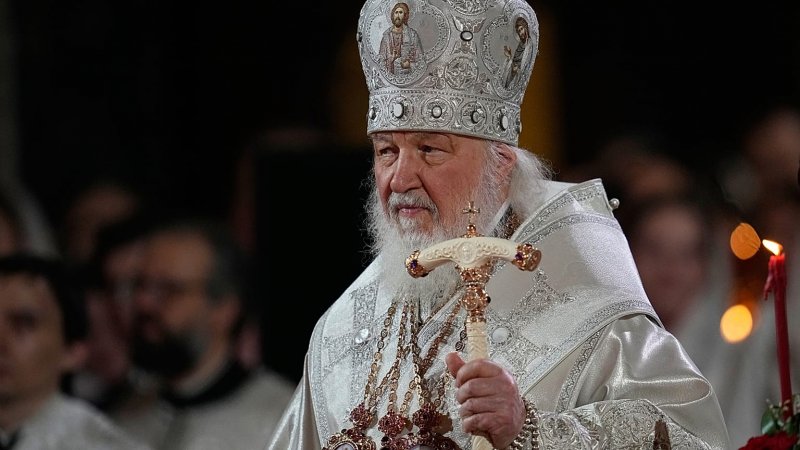
The possibility of European Union sanctions against Patriarch Kirill, the head of the Russian Orthodox Church, has once again emerged as a subject of debate within European political circles.
Although the EU has imposed unprecedented sanctions on Russian political leaders, military officials, business figures, and state institutions since the start of the war in Ukraine, the influential religious leader has so far avoided inclusion on the bloc's sanctions lists.
RECOMMENDED STORIES
The discussion reflects broader questions about the intersection of religion and politics, the role of religious institutions during wartime, and the legal and diplomatic challenges involved in sanctioning one of the world's most prominent Orthodox Christian leaders. While some European governments and Ukrainian officials argue that Patriarch Kirill's public support for Russian policies justifies restrictive measures, others remain cautious because of concerns about religious freedom, legal complications, and the potential impact on Orthodox communities across Europe.
As debates continue, many observers are asking whether sanctions against Patriarch Kirill are likely, why they have not yet been approved, and what consequences such a move could have for Russia, the Orthodox Church, and European diplomacy.
Who Is Patriarch Kirill?
Patriarch Kirill is the leader of the Russian Orthodox Church, one of the largest Christian institutions in the world. As Patriarch of Moscow and All Russia, he occupies the highest position within the Russian Orthodox hierarchy and serves as a spiritual leader for millions of believers both inside Russia and abroad.
Since assuming the patriarchate in 2009, Kirill has become one of the most influential religious figures in Eastern Europe. His role extends beyond purely religious matters. He frequently comments on social issues, national identity, morality, international affairs, and Russia's place in the world.
Because of the historical relationship between the Russian state and the Russian Orthodox Church, Patriarch Kirill is often viewed as an important public figure whose statements carry political as well as religious significance.
His influence therefore extends far beyond church administration, making him a prominent actor within Russian public life.
Why Is the EU Considering Sanctions Against Him?
The primary reason concerns his public support for Russia's actions in Ukraine.
European officials and Ukrainian authorities have repeatedly criticized Patriarch Kirill for statements that they argue provide moral and ideological justification for Russian policies. Critics contend that his public positions align closely with Kremlin narratives and contribute to the political legitimacy of Russia's actions.
Supporters of sanctions argue that influential individuals who actively endorse policies associated with the conflict should face the same scrutiny applied to political figures, military officials, and business elites.
From this perspective, the issue is not Kirill's religious position but rather his public political role and perceived support for policies opposed by the European Union.
Advocates of sanctions therefore argue that religious status should not provide immunity if an individual is considered to be actively supporting actions targeted by EU sanctions policy.
Has the EU Previously Tried to Sanction Patriarch Kirill?
Yes.
Patriarch Kirill's name has appeared in sanctions discussions before. At various stages of the EU's sanctions process, proposals reportedly included restrictions targeting the Russian Orthodox leader.
However, achieving consensus among EU member states has proven difficult.
European sanctions require unanimous approval from all member countries. Even when broad agreement exists regarding the overall direction of sanctions policy, individual measures can face objections from one or more governments.
In Kirill's case, concerns raised by several member states contributed to his exclusion from final sanctions packages despite pressure from supporters of tougher measures.
The situation illustrates the complexity of EU decision making, particularly when sensitive religious issues become intertwined with geopolitical disputes.
Why Haven't Sanctions Been Imposed Yet?
Several factors help explain why sanctions have not yet been approved.
One of the most significant concerns involves religious freedom.
Some European governments worry that sanctioning a major religious leader could create a precedent raising difficult legal and political questions. Critics of such measures argue that restrictions directed at a church leader may be interpreted as interference in religious affairs rather than a purely political action.
Others fear that sanctions could be portrayed by Moscow as evidence of hostility toward Orthodox Christianity itself, potentially strengthening anti-Western narratives within Russia.
Legal considerations also play an important role.
EU sanctions must withstand judicial scrutiny and comply with European legal standards. Any sanctions package targeting a religious figure would likely face careful examination regarding evidence, justification, proportionality, and legal basis.
Governments therefore seek to minimize the risk of successful legal challenges that could undermine the credibility of sanctions policy.
Political considerations further complicate the situation. Some member states maintain strong Orthodox Christian traditions and remain cautious about measures that could affect relations with religious communities.
Together, these factors help explain why sanctions have been debated repeatedly without being adopted.
What Would EU Sanctions Actually Mean?
If imposed, sanctions would likely resemble measures already applied to numerous Russian officials and public figures.
Potential restrictions could include:
• Asset freezes within EU jurisdictions
• Travel bans preventing entry into EU countries
• Restrictions on financial transactions
• Prohibitions on making funds available to sanctioned individuals
Such measures are designed to limit access to European financial systems and signal political disapproval.
However, sanctions are primarily symbolic when applied to individuals who possess limited assets or conduct limited activities within EU territory.
In Kirill's case, the political message might prove more significant than any direct financial impact.
Would Sanctioning a Religious Leader Be Unprecedented?
Not entirely.
Governments have previously imposed sanctions on religious figures in various parts of the world when authorities believed those individuals were involved in political activities, incitement, human rights violations, or support for sanctioned organizations.
Nevertheless, sanctioning the head of a major global religious institution remains relatively rare and carries unique sensitivities.
Religious leaders occupy positions that combine spiritual authority, public influence, and institutional leadership. As a result, governments often approach such cases cautiously.
The potential consequences extend beyond politics into questions involving faith communities, religious diplomacy, and international perceptions.
How Does Russia View the Issue?
Russian officials have strongly criticized discussions about sanctions targeting Patriarch Kirill.
Moscow argues that such proposals represent interference in religious matters and an attack on the Russian Orthodox Church. Russian authorities frequently portray criticism of Kirill as part of broader efforts to undermine Russian cultural and spiritual traditions.
The Russian Orthodox Church itself has similarly rejected allegations that its leadership should be subject to sanctions.
Supporters of Kirill maintain that he is a religious leader expressing views on moral and social issues rather than a political decision maker responsible for state policy.
This fundamental disagreement lies at the heart of the controversy.
European critics emphasize political influence and public statements. Russian officials emphasize religious leadership and freedom of belief.
How Important Is the Russian Orthodox Church in Russia?
The Russian Orthodox Church occupies a highly significant position within Russian society.
Following the collapse of the Soviet Union, the Church experienced a major revival and became increasingly influential in public life. It plays a prominent role in cultural identity, historical memory, education, charitable activities, and national symbolism.
The Church maintains close relations with state institutions while preserving its separate religious identity.
Many Russians view Orthodoxy as an important component of national heritage and cultural continuity. Consequently, developments involving the Church often attract considerable public attention.
Because Patriarch Kirill leads such an influential institution, his statements frequently receive scrutiny both inside and outside Russia.
Could Sanctions Affect Orthodox Communities in Europe?
Potentially, yes.
Orthodox Christian communities exist throughout Europe, including both Russian Orthodox congregations and churches linked to other Orthodox traditions.
Some analysts worry that sanctions targeting a major religious leader could generate confusion or concern among believers who may interpret the move through a religious rather than political lens.
Others argue that carefully designed sanctions would target an individual rather than a faith community and therefore would not affect ordinary worshippers.
The challenge for policymakers is ensuring that any measures are understood as responses to specific actions or statements rather than opposition to religious beliefs.
Managing that distinction would be crucial to avoiding unintended consequences.
What Arguments Do Supporters of Sanctions Make?
Those favoring sanctions generally advance several arguments.
First, they contend that influential public figures should be held accountable if they actively support policies targeted by international sanctions regimes.
Second, they argue that religious status should not exempt individuals from scrutiny when they engage in political advocacy.
Third, supporters maintain that failing to sanction certain influential figures creates inconsistencies within sanctions policy.
From this perspective, sanctions would reinforce the principle that public support for controversial state actions carries consequences regardless of professional or institutional position.
Advocates also emphasize that measures would target specific individuals rather than religious institutions.
What Arguments Do Opponents Present?
Opponents generally focus on legal, political, and religious concerns.
Many argue that sanctioning a major religious leader risks blurring the line between political accountability and religious freedom.
Others question whether sanctions would achieve meaningful practical results beyond symbolic messaging.
Some policymakers worry that such measures could strengthen narratives portraying Europe as hostile toward traditional religious institutions.
There are also concerns regarding precedent. Once governments begin sanctioning religious leaders, determining where to draw boundaries could become increasingly difficult.
For these reasons, some EU members favor maintaining pressure on political and economic actors while avoiding measures directed at senior religious figures.
Could the EU Eventually Approve Sanctions?
The possibility remains open.
The European Union periodically reviews and expands sanctions packages in response to developments related to Russia and Ukraine. Future political circumstances could alter the balance of opinion among member states.
If consensus emerges and legal concerns are addressed, sanctions could theoretically be adopted at a later stage.
However, unanimous approval would still be required, meaning that any member state could effectively block the proposal.
As a result, predicting future outcomes remains difficult.
The debate reflects broader tensions within European policymaking between political objectives, legal standards, diplomatic considerations, and commitments to religious freedom.
What Does the Debate Reveal About Modern Sanctions Policy?
The controversy surrounding Patriarch Kirill highlights how modern sanctions increasingly target influence rather than merely economic power.
Traditional sanctions often focused on governments, industries, or financial institutions. Contemporary sanctions regimes increasingly encompass political figures, media personalities, military leaders, business executives, and other individuals viewed as shaping public narratives or supporting government policies.
This evolution raises difficult questions about accountability, freedom of expression, institutional roles, and international law.
The discussion surrounding Patriarch Kirill represents one of the clearest examples of these challenges.
Conclusion
The debate over possible EU sanctions against Patriarch Kirill reflects the complex intersection of religion, politics, diplomacy, and international law. Supporters argue that influential figures who publicly support controversial policies should not be exempt from sanctions simply because they hold religious office. Opponents counter that sanctioning a major spiritual leader risks creating legal complications, political backlash, and concerns regarding religious freedom.
For now, the European Union has stopped short of imposing restrictions on the Russian Orthodox patriarch. Yet the issue remains alive within broader discussions about Russia, Ukraine, and the future direction of European sanctions policy.
Whether sanctions are ultimately adopted or not, the controversy underscores a larger reality: in today's geopolitical environment, religious leaders can become central actors in international political debates, and their influence may increasingly place them within the scope of diplomatic and economic pressure traditionally reserved for political figures.
By Faig Mahmudov


Similar news