Why Gaza remains at the center of Middle East tensions


Gaza Strip is one of the most closely watched and debated territories in international affairs, News.az reports.
Despite its small geographic size, Gaza occupies an outsized place in regional politics, security calculations, and humanitarian discussions.
For decades, it has been shaped by conflict, blockade, political fragmentation, and repeated cycles of escalation and ceasefire. Understanding Gaza requires looking beyond headlines to the structural realities that define life there and the strategic factors that keep it at the center of global attention.
Geography and demographic profile
Gaza is a narrow coastal enclave along the eastern Mediterranean, bordered by Israel and Egypt. It is one of the most densely populated areas in the world, home to more than two million people living in a limited space. The majority of Gaza’s population consists of Palestinian refugees or descendants of refugees displaced during earlier Arab–Israeli wars. This demographic reality has had a lasting impact on Gaza’s political identity and social structure.
The territory’s dense urban environment shapes every aspect of daily life, from housing and infrastructure to healthcare and education. Limited land availability, combined with years of restrictions on construction materials, has created chronic challenges in urban planning and basic services.
Political control and governance
Since 2007, Gaza has been governed by Hamas, following its takeover of the territory after violent clashes with the rival Fatah movement, which dominates the Palestinian Authority in the West Bank. This political split has fractured Palestinian governance and complicated efforts toward unified representation.
Hamas presents itself as both a resistance movement and a governing authority. While it runs civil institutions in Gaza, its armed wing remains engaged in conflict with Israel. This dual role has shaped international policy toward Gaza, including sanctions, diplomatic isolation, and security measures aimed at containing militant activity.
Blockade and movement restrictions
One of the defining features of Gaza’s modern history is the blockade imposed by Israel, with Egypt also controlling its border crossing. Introduced after Hamas took control, the blockade restricts the movement of people and goods in and out of the territory. Israel argues that these measures are necessary to prevent weapons smuggling and protect its citizens, while critics describe the blockade as collective punishment.
The restrictions have had far-reaching economic and social consequences. Exports are limited, access to raw materials is constrained, and residents face severe difficulties traveling abroad for work, education, or medical treatment. Over time, these conditions have contributed to high unemployment and widespread poverty.
Humanitarian conditions
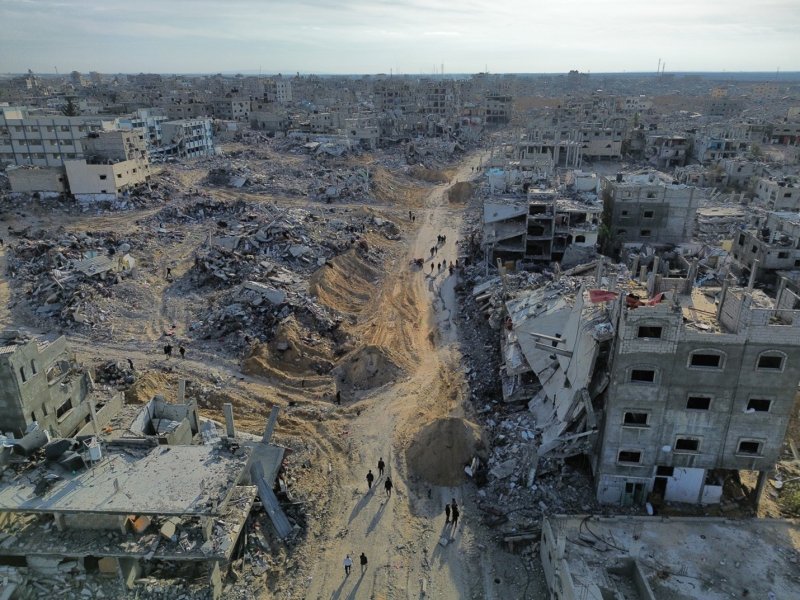
Humanitarian conditions in Gaza are frequently described as fragile. The territory relies heavily on international aid to sustain basic services. Electricity supply is inconsistent, clean water is scarce, and healthcare systems operate under constant strain. Repeated rounds of conflict have damaged infrastructure, while limited reconstruction capacity slows recovery.
International organizations continue to warn that Gaza’s living conditions are unsustainable without significant political and economic change. Despite these warnings, improvements have been incremental and vulnerable to reversal whenever hostilities resume.
Cycles of conflict
Gaza has experienced multiple rounds of conflict with Israel over the past two decades. These escalations typically involve airstrikes, rocket fire, and short ground operations, followed by ceasefires brokered by regional mediators. Each cycle leaves behind destruction, casualties, and unresolved political grievances.
For Israel, Gaza represents a persistent security challenge due to rocket attacks and cross-border threats. For Palestinians in Gaza, these conflicts deepen a sense of siege and isolation. The absence of a long-term political settlement means that ceasefires often function as temporary pauses rather than steps toward lasting peace.
Regional and international dimensions
Gaza’s situation cannot be separated from broader regional dynamics. Countries such as Egypt and Qatar play key roles in mediation efforts, facilitating ceasefires and channeling humanitarian assistance. Regional politics, including rivalries among Middle Eastern powers, influence how Gaza is supported or pressured.
At the international level, Gaza features prominently in debates at the United Nations and in the foreign policies of major powers. Human rights organizations closely monitor developments, while donor countries fund aid programs to prevent total collapse. However, diplomatic consensus on how to resolve Gaza’s status remains elusive.
Economic structure and challenges
Gaza’s economy is severely constrained. Agriculture and fishing, once important sources of income, are limited by access restrictions and environmental degradation. Manufacturing operates on a small scale, hampered by shortages of electricity and raw materials. As a result, the public sector and aid-related employment play an outsized role in sustaining livelihoods.
Youth unemployment is particularly high, fueling frustration and emigration aspirations. Many young Gazans have never traveled outside the territory, reinforcing a sense of isolation from global economic opportunities.
Society, resilience, and daily life
Despite the hardships, Gaza’s society is marked by resilience. Families and communities rely on strong social networks to cope with uncertainty. Education remains highly valued, and literacy rates are relatively high compared to regional averages. Cultural life persists through art, music, and media, often reflecting themes of identity and resistance.
At the same time, prolonged stress has significant psychological impacts. Recurrent violence, economic insecurity, and restricted mobility affect mental health, particularly among children and adolescents who have grown up amid conflict.
Information and media narratives
Gaza is also a focal point of intense media attention and competing narratives. Coverage often emphasizes either security concerns or humanitarian suffering, depending on the perspective. Social media has amplified voices from within Gaza, allowing residents to share real-time experiences with a global audience.
This visibility influences international public opinion and diplomatic pressure. However, it can also oversimplify complex realities, reducing Gaza to a symbol rather than a living society with diverse viewpoints and aspirations.
Why Gaza remains unresolved
The persistence of Gaza’s crisis reflects deeper structural problems in the Israeli–Palestinian conflict. The lack of a comprehensive peace process, internal Palestinian divisions, and mutual distrust between the parties have all contributed to stagnation. Short-term arrangements focus on managing the conflict rather than resolving its root causes.
Without changes in governance, security arrangements, and economic integration, Gaza is likely to remain trapped in cycles of crisis. International actors face the challenge of balancing immediate humanitarian needs with long-term political objectives.
Future outlook
Looking ahead, Gaza’s future depends on factors both inside and outside the territory. Internal reconciliation among Palestinians, shifts in regional politics, and changes in Israeli policy could all alter the trajectory. Economic development and improved living conditions are widely seen as essential for stability, but they require sustained access, investment, and security guarantees.
For now, Gaza remains a symbol of unresolved conflict and human endurance. Its story continues to shape regional politics and global debates, serving as a reminder that protracted crises demand more than temporary fixes.
Conclusion
Gaza is far more than a flashpoint in the news cycle. It is a densely populated territory shaped by history, politics, and human resilience under pressure. Understanding Gaza means recognizing the interconnected challenges of governance, security, and humanitarian need that define everyday life there.
As long as these issues remain unresolved, Gaza will continue to command international attention. Its future will depend not only on ceasefires and aid deliveries, but on whether meaningful political solutions can finally take root.


Similar news