Why has the semiconductor industry become the world's most important geopolitical battlefield?


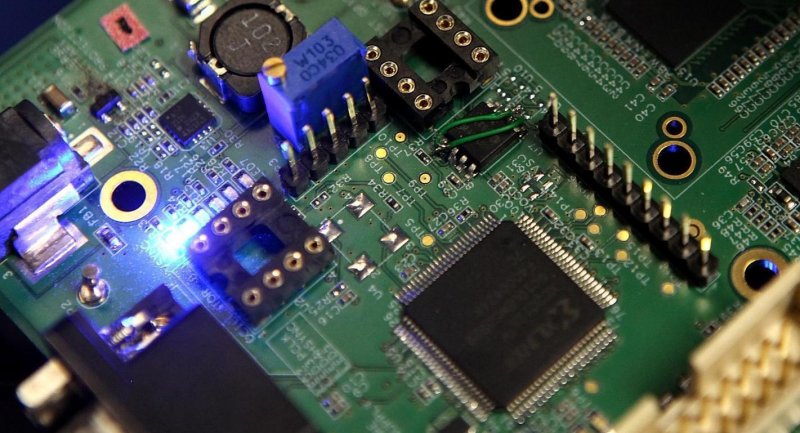
Few industries have become as strategically significant in the 21st century as semiconductors. Often referred to as the "brains" of modern technology, semiconductor chips power everything from smartphones and computers to automobiles, satellites, artificial intelligence systems and advanced military equipment. Without them, the modern digital economy would simply not function.
What was once viewed primarily as a commercial and technological sector has evolved into one of the most important arenas of global geopolitical competition. Governments are investing hundreds of billions of dollars to secure chip supplies, build domestic manufacturing capacity and reduce dependence on foreign producers. At the same time, export controls, technology restrictions and industrial policies are reshaping international trade and supply chains.
RECOMMENDED STORIES
In 2026, the semiconductor industry sits at the center of strategic competition among major powers, particularly the United States and China, while countries across Europe and Asia seek to strengthen their own positions in a market that has become essential to economic growth, technological leadership and national security.
What exactly are semiconductors?
Semiconductors are materials used to manufacture microchips that process, store and transmit information inside electronic devices.
Modern chips perform billions of calculations every second and serve as the foundation of virtually every advanced technology.
They are found in:
-
Smartphones
-
Personal computers
-
Data centers
-
Telecommunications networks
-
Medical equipment
-
Industrial machinery
-
Consumer electronics
-
Electric vehicles
-
Aircraft
-
Satellites
-
Military systems
-
Artificial intelligence platforms
As societies become increasingly digital, demand for advanced semiconductors continues to rise across nearly every sector of the economy.
Why are semiconductors so strategically important?
Semiconductors have become essential because they determine technological capability.
Countries with access to advanced chips can develop more powerful computers, faster communications systems, more capable artificial intelligence applications and increasingly sophisticated military technologies.
Modern economies rely heavily on digital infrastructure. Financial systems, transportation networks, energy grids, healthcare systems and manufacturing facilities all depend on semiconductor powered technologies.
A disruption in chip supplies can affect entire industries and significantly impact economic performance.
Governments increasingly view semiconductor production not merely as an economic activity but as a matter of national security and strategic autonomy.
How did semiconductors become a geopolitical issue?
For decades, the semiconductor industry developed through global specialization.
Different countries focused on specific stages of production.
The United States became a leader in chip design and software.
Taiwan emerged as the world's most important advanced manufacturing hub.
South Korea developed major memory chip production capabilities.
Japan became a key supplier of specialized materials and manufacturing equipment.
European companies established important positions in equipment manufacturing and industrial technologies.
China became a major electronics manufacturing center and a large consumer of semiconductor products.
This highly interconnected system delivered efficiency and innovation but also created vulnerabilities.
Recent geopolitical tensions exposed the risks associated with concentrated supply chains and dependence on a limited number of production centers.
As a result, semiconductors moved from being a commercial concern to becoming a strategic priority.
Why is Taiwan so important?
Taiwan occupies a uniquely important position in the global semiconductor industry.
The island hosts some of the world's most advanced chip manufacturing facilities and produces a substantial share of cutting edge semiconductors used in high performance computing, artificial intelligence and advanced electronics.
Many of the most sophisticated chips designed by global technology companies are manufactured in Taiwan.
This concentration of production has made Taiwan a critical component of the global technology ecosystem.
Governments and businesses worldwide closely monitor developments affecting Taiwan because disruptions could have significant consequences for global supply chains.
Its strategic importance has therefore become a central consideration in international economic and security planning.
Why are the United States and China competing over chips?
The semiconductor industry lies at the heart of broader technological competition between the United States and China.
Both countries recognize that leadership in advanced technologies increasingly depends on access to powerful semiconductors.
For the United States, maintaining advantages in areas such as artificial intelligence, advanced computing, defense technologies and innovation remains a strategic priority.
For China, reducing dependence on imported semiconductor technologies and strengthening domestic production capabilities have become major national objectives.
The competition involves manufacturing capacity, research and development, talent acquisition, supply chain security and access to critical technologies.
As a result, semiconductors have become one of the most important dimensions of contemporary geopolitical rivalry.
What are export controls and why do they matter?
Export controls are restrictions placed on the sale or transfer of certain technologies, equipment or products.
Governments use these measures to protect national security interests and prevent sensitive technologies from being used in ways that could threaten strategic advantages.
In the semiconductor sector, export controls often focus on advanced manufacturing equipment, specialized software and high performance chips.
These restrictions can significantly influence global supply chains because modern chip production depends on highly specialized tools and technologies that are available from only a limited number of suppliers.
Supporters argue that export controls protect national security and technological leadership.
Critics contend that excessive restrictions may increase fragmentation and reduce efficiency within global markets.
Why are governments investing billions in domestic chip production?
The disruptions experienced during the global semiconductor shortages earlier in the decade highlighted the vulnerability of highly concentrated supply chains.
Automobile manufacturers, electronics producers and industrial companies faced production delays due to chip shortages, demonstrating the economic importance of reliable semiconductor supplies.
In response, governments launched major initiatives designed to strengthen domestic manufacturing capabilities.
Programs in the United States, Europe and Asia aim to attract investment, support research and encourage construction of new fabrication facilities.
Policymakers hope these efforts will improve supply chain resilience, create high value jobs and enhance national competitiveness.
Building advanced semiconductor facilities requires enormous financial resources, making government support an important factor in many projects.
How expensive is chip manufacturing?
Semiconductor production is among the most capital intensive industries in the world.
Constructing a state of the art fabrication plant can require investments measured in tens of billions of dollars.
Manufacturing advanced chips also demands:
-
Specialized equipment
-
Highly skilled engineers
-
Complex supply chains
-
Ultra clean production environments
-
Continuous research and development
The technical complexity involved is extraordinary. Modern chips contain billions of transistors packed into extremely small spaces, requiring manufacturing precision measured in nanometers.
Only a limited number of companies possess the expertise and resources necessary to operate at the industry's technological frontier.
What role does artificial intelligence play?
Artificial intelligence has dramatically increased the strategic importance of semiconductors.
Advanced AI systems require enormous computing power for both training and operation. This demand has created intense competition for high performance chips capable of handling complex calculations.
As governments and businesses invest heavily in AI development, demand for advanced processors continues to grow rapidly.
The connection between AI and semiconductors has further elevated the industry's geopolitical significance because access to cutting edge chips increasingly influences technological competitiveness.
Many experts believe that future leadership in artificial intelligence will depend heavily on semiconductor capabilities.
Why is Europe strengthening its semiconductor sector?
The European Union recognizes the importance of reducing vulnerabilities within critical technology supply chains.
European policymakers are encouraging investment in research, manufacturing and advanced technology development to strengthen the continent's semiconductor ecosystem.
The objective is not necessarily complete self sufficiency but rather greater resilience and strategic flexibility.
Europe already possesses strengths in areas such as semiconductor equipment, industrial technologies and specialized manufacturing.
Additional investment aims to expand these capabilities while attracting new production facilities.
How important is South Korea?
South Korea remains one of the world's leading semiconductor producers.
The country hosts globally significant companies specializing in memory chips and advanced electronics.
South Korea's manufacturing expertise, technological capabilities and substantial research investments make it a critical player within the global semiconductor ecosystem.
The country's success demonstrates how semiconductor leadership can contribute significantly to national economic growth and international competitiveness.
As demand for advanced computing and artificial intelligence expands, South Korea's role is likely to remain highly important.
What challenges does China face?
China has invested heavily in developing domestic semiconductor capabilities.
However, building a complete semiconductor ecosystem presents significant challenges.
Advanced chip production requires expertise across numerous specialized fields, including equipment manufacturing, materials science, software development and process engineering.
While China has made substantial progress in several areas, achieving leadership at the most advanced technological levels remains a long term objective.
Continued investment, research and talent development are expected to remain central components of China's semiconductor strategy.
Could global semiconductor supply chains become fragmented?
One of the major concerns among industry leaders is the possibility of increasing fragmentation.
Historically, globalization allowed different countries to specialize in particular stages of semiconductor production, creating highly efficient supply chains.
Growing geopolitical competition may encourage greater localization of production and reduced dependence on foreign suppliers.
While diversification can improve resilience, excessive fragmentation could increase costs, reduce efficiency and slow innovation.
Governments therefore face the challenge of balancing security concerns with the economic benefits of international cooperation.
What does the future look like?
Demand for semiconductors is expected to continue expanding throughout the coming decade.
Artificial intelligence, cloud computing, 5G and future telecommunications technologies, autonomous vehicles, advanced manufacturing and digital infrastructure will all require increasingly powerful chips.
At the same time, geopolitical competition is likely to remain intense.
Governments will continue investing in domestic capabilities, strengthening supply chains and protecting strategic technologies.
Innovation will remain essential because technological leadership can provide significant economic and strategic advantages.
The industry is therefore expected to remain a focal point of both technological progress and international competition.
Why should ordinary consumers care?
Although semiconductor policy may appear highly technical, its effects influence everyday life.
The availability and cost of electronic devices, automobiles, internet services and countless consumer products depend on semiconductor supply chains.
Disruptions can lead to shortages, higher prices and slower technological innovation.
Conversely, continued investment and innovation help support economic growth, job creation and technological advancement.
The semiconductor industry affects far more than technology companies. It increasingly influences the broader global economy and modern society itself.
The bottom line
The semiconductor industry has become the world's most important geopolitical battlefield because control over advanced chips increasingly determines economic competitiveness, technological leadership and national security. Governments recognize that semiconductors power the technologies shaping the future, from artificial intelligence and telecommunications to defense systems and critical infrastructure.
As competition intensifies among major powers and countries invest heavily in domestic production capabilities, semiconductors will remain at the center of global strategic discussions. The outcome of this competition could influence the balance of technological power, economic growth and international relations for decades to come.
By Faig Mahmudov


Similar news