What would successful reconstruction in Gaza look like?


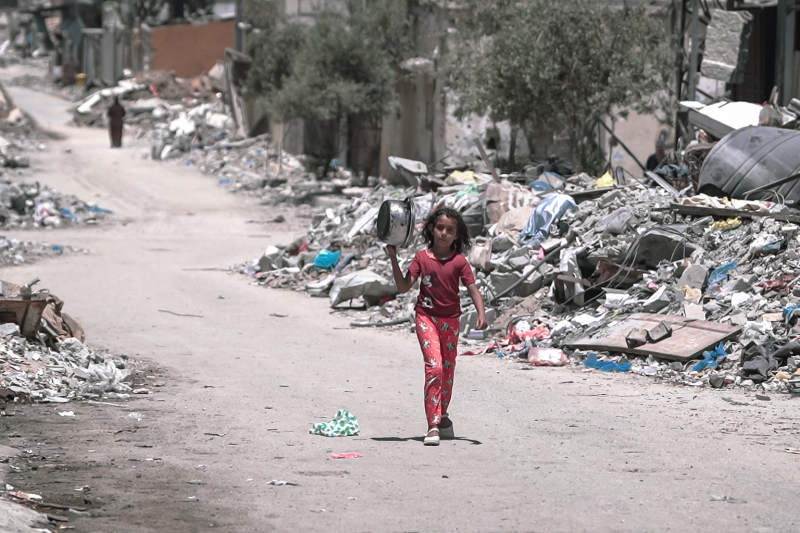
The reconstruction of Gaza has become one of the most complex humanitarian, political and economic challenges facing the international community. Years of conflict, repeated military confrontations, infrastructure destruction and economic hardship have left large parts of the territory facing enormous reconstruction needs.
As discussions continue regarding Gaza's future, governments, international organizations, development institutions and regional actors are increasingly focused on a fundamental question: what would successful reconstruction actually look like?
RECOMMENDED STORIES
Rebuilding Gaza involves far more than replacing damaged buildings. Sustainable recovery requires restoring infrastructure, reviving the economy, improving public services, ensuring security, creating employment opportunities and establishing governance mechanisms capable of supporting long term development. Without addressing these interconnected issues, reconstruction efforts risk becoming temporary solutions rather than foundations for lasting stability.
The challenge is immense, but many experts argue that a comprehensive and coordinated reconstruction strategy could transform living conditions for millions of people while contributing to broader regional stability.
Why is reconstruction in Gaza such a major challenge?
The scale of reconstruction needs is exceptionally large.
Housing, roads, schools, hospitals, water networks, electricity systems and public facilities have suffered extensive damage over multiple years of conflict. Many communities face shortages of essential services, while economic activity has been severely disrupted.
Reconstruction is complicated by several factors.
Political uncertainty can affect planning and implementation. Security concerns influence the movement of people, materials and investment. Limited resources and competing priorities create additional difficulties.
Furthermore, rebuilding physical infrastructure alone is insufficient. Economic recovery, institutional capacity and social development are equally important components of long term reconstruction.
The combination of humanitarian needs and structural challenges makes Gaza one of the most demanding reconstruction efforts in the contemporary world.
What does reconstruction actually involve?
Reconstruction is often misunderstood as simply rebuilding damaged structures.
In reality, successful post conflict recovery usually involves multiple phases.
The first phase focuses on emergency humanitarian assistance, including shelter, healthcare, food distribution and restoration of essential services.
The second phase involves repairing critical infrastructure such as electricity networks, water systems, transportation routes and healthcare facilities.
The third phase emphasizes economic development, investment, job creation and institutional strengthening.
Long term reconstruction seeks to create conditions that support sustainable growth and improved quality of life rather than merely restoring pre existing conditions.
Many experts argue that rebuilding offers an opportunity to modernize infrastructure and improve resilience rather than simply replacing what was lost.
Why is housing such a priority?
Housing represents one of the most visible and urgent reconstruction needs.
Large numbers of families have experienced displacement and require safe, stable accommodation.
The availability of housing affects many other aspects of recovery, including education, employment, healthcare access and community stability.
Successful housing reconstruction involves more than constructing buildings. Urban planning, transportation access, utility connections and public services must also be considered.
Modern housing projects increasingly incorporate resilience measures designed to withstand future environmental and infrastructural challenges.
Ensuring adequate housing is therefore a cornerstone of broader recovery efforts.
How important is infrastructure reconstruction?
Infrastructure forms the foundation of economic and social recovery.
Electricity networks support homes, businesses, hospitals and schools. Water and sanitation systems are essential for public health. Roads and transportation networks facilitate commerce and mobility.
Without functioning infrastructure, economic activity remains constrained and living conditions remain difficult.
Infrastructure investments can also generate employment opportunities and stimulate economic growth.
Many development specialists emphasize that restoring critical infrastructure should occur alongside broader planning efforts to ensure long term sustainability and efficiency.
The quality of infrastructure reconstruction will significantly influence future development prospects.
Why does economic recovery matter so much?
Physical reconstruction alone cannot create lasting stability.
Economic opportunities are essential for supporting livelihoods, reducing poverty and strengthening communities.
Businesses require reliable infrastructure, access to markets and investment capital. Workers need employment opportunities and skills development programs.
A functioning economy generates tax revenues, encourages private sector investment and reduces dependence on external assistance.
Successful reconstruction strategies therefore place strong emphasis on economic revitalization.
Potential priorities include support for small businesses, industrial development, digital technologies, logistics services, construction activities and workforce training programs.
Long term prosperity depends on creating sustainable sources of economic growth.
What role could international assistance play?
International support is likely to remain a critical component of reconstruction efforts.
Governments, development banks, humanitarian agencies and international organizations can provide financial resources, technical expertise and institutional support.
Large scale reconstruction projects often require funding that exceeds local capacities.
International partners may contribute through grants, loans, investment guarantees, infrastructure financing and development programs.
Technical assistance can also help improve planning, project management and implementation.
However, experts frequently stress that external support should complement locally driven priorities rather than replace them.
Successful reconstruction typically depends on cooperation between international partners and local stakeholders.
How important are healthcare and education?
Healthcare and education are essential pillars of long term recovery.
Hospitals, clinics and medical facilities provide critical services while contributing to overall societal resilience.
Educational institutions play an equally important role. Schools and universities help develop human capital, support social stability and create opportunities for future economic growth.
Children and young people often face significant disruptions during periods of conflict. Restoring access to education therefore becomes an important component of rebuilding communities.
Investment in healthcare and education helps ensure that reconstruction benefits extend beyond physical infrastructure to broader social development.
What governance challenges must be addressed?
Governance is one of the most important aspects of successful reconstruction.
Effective institutions are necessary to manage projects, allocate resources, maintain infrastructure and deliver public services.
Transparent administration can help improve efficiency, strengthen public confidence and encourage investment.
Investors and development partners generally seek predictable regulatory environments and accountable institutions before committing substantial resources.
Governance arrangements also influence security, economic management and long term planning.
Many analysts argue that institutional capacity is just as important as financial resources in determining reconstruction outcomes.
How does security affect reconstruction?
Security conditions directly influence reconstruction efforts.
Construction projects require safe operating environments. Infrastructure investments depend on confidence that facilities can function effectively over the long term.
Businesses are more likely to invest when they perceive stability and predictability.
Humanitarian organizations also require secure access to deliver assistance and implement programs.
As a result, discussions regarding reconstruction frequently emphasize the relationship between development and security.
While economic recovery can contribute to stability, stable conditions are often necessary for successful economic development.
This interdependence makes security considerations central to reconstruction planning.
Could reconstruction create economic opportunities?
Reconstruction projects often generate substantial economic activity.
Construction, engineering, transportation, manufacturing and professional services can all benefit from rebuilding efforts.
Large infrastructure projects create demand for labor, materials and technical expertise.
Workforce development programs can help equip individuals with skills needed for emerging industries and reconstruction activities.
In addition to immediate employment opportunities, improved infrastructure may attract future investment and support private sector growth.
If managed effectively, reconstruction can serve as a catalyst for broader economic transformation.
What lessons can be learned from other post conflict regions?
Experiences from various post conflict societies provide valuable insights.
Successful reconstruction efforts often share several characteristics:
-
Clear long term planning
-
Strong institutional capacity
-
Reliable funding mechanisms
-
Community participation
-
Infrastructure modernization
-
Economic development strategies
-
International cooperation
-
Transparent governance
Conversely, reconstruction can encounter difficulties when planning is fragmented, institutions are weak or political uncertainty persists.
Historical examples demonstrate that rebuilding physical structures is often easier than creating sustainable economic and social systems.
The most successful cases typically integrate development, governance and economic recovery into a comprehensive strategy.
Why is urban planning important?
Urban planning plays a critical role in reconstruction.
Rebuilding cities presents opportunities to improve transportation networks, utility systems, public spaces and housing design.
Modern planning approaches can enhance efficiency, environmental sustainability and resilience.
Well designed urban development contributes to economic activity, social cohesion and quality of life.
Infrastructure investments can be coordinated to support future population growth and economic expansion.
Many experts emphasize that reconstruction should focus not only on replacing damaged structures but also on building more functional and sustainable communities.
What role could regional cooperation play?
Regional cooperation may contribute significantly to reconstruction efforts.
Neighboring countries and regional organizations can support trade, investment, infrastructure connectivity and development initiatives.
Improved transportation links and economic integration could create new opportunities for growth and employment.
Regional cooperation can also facilitate technical assistance, financing and knowledge sharing.
Many reconstruction specialists argue that long term prosperity is more achievable when local economies are connected to broader regional markets and development networks.
What would success look like in practical terms?
Successful reconstruction would involve measurable improvements across multiple sectors.
Potential indicators could include:
-
Rebuilt housing and infrastructure
-
Reliable electricity and water services
-
Functioning healthcare facilities
-
Accessible educational institutions
-
Growing employment opportunities
-
Increased private sector investment
-
Improved public services
-
Enhanced economic activity
-
Greater institutional capacity
-
Improved living standards
Success would ultimately be reflected in the ability of residents to live, work and plan for the future with greater security and opportunity.
What obstacles could hinder progress?
Numerous challenges remain.
Funding requirements are substantial. Political uncertainty can complicate planning and implementation. Security concerns may affect investment and project execution.
Administrative capacity, regulatory frameworks and infrastructure constraints may also present difficulties.
Additionally, reconstruction is a long term process rather than a short term project.
Managing expectations and maintaining sustained commitment over many years can prove challenging for both domestic stakeholders and international partners.
Addressing these obstacles requires coordination, flexibility and long term planning.
What is the outlook for the future?
The future of Gaza's reconstruction will depend on political developments, security conditions, financial commitments and the effectiveness of implementation strategies.
Most experts agree that rebuilding efforts will require substantial international support and long term engagement.
At the same time, reconstruction presents opportunities to modernize infrastructure, strengthen institutions and improve living conditions.
If reconstruction is approached comprehensively and sustainably, it could contribute not only to recovery but also to broader economic and social development.
The path forward remains complex, but the potential benefits of successful reconstruction are considerable.
The bottom line
Successful reconstruction in Gaza would involve much more than rebuilding damaged structures. It would require restoring infrastructure, revitalizing the economy, strengthening public services, improving governance and creating opportunities for long term development. Housing, healthcare, education, employment and institutional capacity must all form part of a comprehensive recovery strategy.
While significant challenges remain, reconstruction also presents an opportunity to build more resilient communities and improve quality of life for future generations. Ultimately, success will depend not only on financial resources but also on effective planning, cooperation and a sustained commitment to long term development and stability.
By Faig Mahmudov


Similar news