How is Europe preparing for a new era of security challenges?


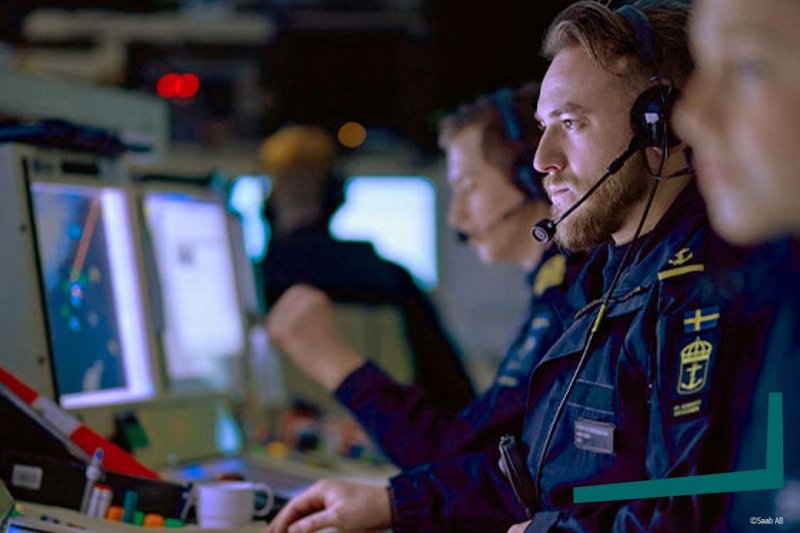
Europe is undergoing one of the most significant security transformations since the end of the Cold War. Governments across the continent are reassessing defense strategies, increasing military spending, modernizing armed forces and strengthening cooperation within NATO and the European Union in response to a rapidly changing international environment.
From conventional military threats and cyberattacks to energy security concerns and emerging technologies, European policymakers face a broad spectrum of challenges that are reshaping the continent's security architecture.
RECOMMENDED STORIES
The debate is no longer limited to how Europe should respond to specific crises. Instead, leaders are increasingly asking a broader question: how can Europe ensure long term security in an era marked by geopolitical competition, technological disruption and growing uncertainty?
The answer is driving major investments, policy reforms and strategic initiatives across the continent.
Why is security becoming a top priority in Europe?
For much of the period following the Cold War, many European countries focused on economic integration, trade expansion and social development while reducing military expenditures. The perception that large scale interstate conflict in Europe had become unlikely allowed governments to prioritize other policy areas.
However, developments over the past decade have fundamentally altered that assumption.
Armed conflicts near Europe's borders, increasing geopolitical tensions, cyber threats, hybrid warfare tactics and concerns about critical infrastructure vulnerability have highlighted the need for stronger defense capabilities.
European leaders increasingly argue that security can no longer be taken for granted and that governments must invest in resilience, preparedness and deterrence.
As a result, defense policy has returned to the center of political and strategic discussions throughout the continent.
What role does NATO play in Europe's security?
The North Atlantic Treaty Organization remains the cornerstone of European collective defense.
Founded in 1949, NATO was created to provide mutual security guarantees among its member states. The alliance operates under the principle that an attack against one member is considered an attack against all.
In recent years, NATO has significantly expanded efforts to strengthen deterrence and readiness. Member states have increased troop deployments, enhanced military exercises and improved coordination across land, air, maritime, cyber and space domains.
The alliance has also emphasized rapid response capabilities, enabling forces to react more quickly to emerging crises.
Many European governments view NATO as indispensable for maintaining stability and ensuring credible collective defense in an increasingly uncertain security environment.
Why are European countries increasing defense spending?
Defense budgets across Europe have risen substantially in recent years.
For decades, many countries spent below NATO's guideline of allocating at least two percent of gross domestic product to defense. Today, an increasing number of governments are meeting or exceeding that benchmark.
Several factors explain this trend.
First, policymakers believe stronger military capabilities are necessary to deter potential threats and protect national sovereignty.
Second, aging equipment requires modernization. Many armed forces are replacing older platforms with advanced aircraft, naval vessels, missile defense systems and armored vehicles.
Third, governments recognize the importance of investing in emerging technologies such as artificial intelligence, autonomous systems and cyber defense capabilities.
Defense spending is therefore increasingly viewed not only as a military necessity but also as an investment in national resilience and technological competitiveness.
What military capabilities are being modernized?
European countries are pursuing modernization across multiple domains.
Air forces are acquiring next generation fighter aircraft, advanced drones and enhanced surveillance systems.
Navies are investing in submarines, frigates, maritime patrol aircraft and underwater monitoring technologies to secure strategic waterways and critical infrastructure.
Ground forces are upgrading armored vehicles, artillery systems and battlefield communication networks.
Missile defense has also become a major priority. Governments are seeking to improve their ability to detect, track and intercept various types of airborne threats.
These modernization efforts aim to ensure that European militaries remain capable of responding effectively to both traditional and emerging security challenges.
Why is cyber security receiving so much attention?
Cyber threats have become one of the fastest growing security concerns facing Europe.
Government agencies, businesses, financial institutions, transportation networks and healthcare systems increasingly depend on digital infrastructure. This dependence creates vulnerabilities that can be exploited by malicious actors.
Cyberattacks can disrupt services, compromise sensitive information, damage infrastructure and undermine public confidence.
European governments are responding by strengthening cyber defense capabilities, expanding information sharing mechanisms and increasing cooperation between public and private sectors.
Many countries have established specialized cyber commands within their armed forces and are investing heavily in digital security technologies.
Protecting cyberspace is now considered an essential component of national defense.
What is hybrid warfare and why does it matter?
Hybrid warfare refers to the use of multiple tools and tactics below the threshold of conventional military conflict.
These may include cyber operations, disinformation campaigns, economic pressure, political influence activities and attacks on critical infrastructure.
Unlike traditional warfare, hybrid tactics often seek to create instability without triggering a direct military confrontation.
European policymakers increasingly view hybrid threats as a significant challenge because they can exploit vulnerabilities in open societies and democratic institutions.
Governments are therefore developing strategies to improve societal resilience, strengthen information security and enhance coordination among security agencies.
Countering hybrid threats has become a central element of contemporary European security planning.
How important is energy security?
Energy security has emerged as a critical strategic issue.
Reliable access to energy resources is essential for economic stability, industrial production and public welfare. Disruptions can have widespread consequences for households, businesses and national economies.
European countries are pursuing diversification strategies to reduce dependence on single suppliers and improve resilience against potential disruptions.
Investments in renewable energy, liquefied natural gas infrastructure, electricity interconnections and energy storage systems are expanding throughout the continent.
The objective is not only to support climate goals but also to strengthen national security by reducing vulnerability to external shocks.
Energy policy and security policy are increasingly viewed as interconnected priorities.
What role does the European Union play?
The European Union has assumed a growing role in security and defense cooperation.
While NATO remains responsible for collective defense, the EU supports initiatives aimed at improving military mobility, defense industrial cooperation and crisis management capabilities.
Programs promoting joint procurement, research and technological development are helping member states coordinate investments and reduce duplication.
The EU also plays an important role in cyber security, border management, counterterrorism and sanctions policy.
Many European leaders argue that stronger defense cooperation complements NATO and contributes to broader regional stability.
Why is the defense industry expanding?
The defense sector is experiencing renewed growth across Europe.
Governments are placing large orders for military equipment, creating demand for advanced manufacturing, engineering and technological innovation.
Defense companies are expanding production capacities to meet rising procurement requirements.
This trend is generating economic opportunities, including job creation, research investment and industrial development.
At the same time, policymakers emphasize the importance of maintaining secure supply chains and reducing dependence on external sources for critical defense technologies.
The strengthening of Europe's defense industrial base is increasingly viewed as a strategic necessity.
How are emerging technologies changing security planning?
Technological innovation is transforming the nature of warfare and security.
Artificial intelligence, autonomous systems, quantum computing, advanced sensors and space based technologies are reshaping military operations and strategic planning.
European governments are investing heavily in research and development to ensure competitiveness in these fields.
Artificial intelligence can improve intelligence analysis, logistics and decision making processes. Autonomous systems offer new operational capabilities across air, land and maritime environments.
Space assets play an increasingly important role in communications, navigation and surveillance.
The integration of these technologies is becoming a central focus of long term defense modernization efforts.
What challenges does Europe still face?
Despite significant progress, several challenges remain.
Defense budgets continue to vary considerably among countries, creating disparities in military capabilities.
Procurement processes can be lengthy and complex, delaying modernization efforts.
Interoperability between different military systems remains an ongoing concern.
Cyber threats continue evolving rapidly, requiring constant adaptation.
Additionally, balancing security investments with other economic and social priorities presents political challenges for many governments.
Addressing these issues will require sustained commitment and cooperation over the coming years.
Could Europe become more strategically autonomous?
The concept of strategic autonomy has become a major topic of discussion.
Supporters argue that Europe should strengthen its ability to act independently when necessary while maintaining close cooperation with allies.
This does not imply replacing NATO but rather enhancing Europe's capacity to contribute more effectively to its own security.
Investments in defense industries, technological innovation and military capabilities are often viewed as steps toward greater strategic autonomy.
Critics caution that duplication should be avoided and that transatlantic cooperation remains essential.
The debate is likely to continue shaping European security policy throughout the coming decade.
How might security priorities evolve in the future?
Future security challenges are expected to become increasingly complex and interconnected.
Governments will need to address conventional military threats alongside cyber risks, technological competition, critical infrastructure protection and economic security concerns.
Climate related disruptions, migration pressures and resource competition may also influence strategic planning.
As a result, security policy is becoming more comprehensive, encompassing military, economic, technological and societal dimensions.
Preparedness and resilience are likely to remain key themes in future policy discussions.
What is the overall outlook?
Europe is entering a new era in which security considerations play a far greater role than they did during much of the post Cold War period.
Rising defense expenditures, military modernization, technological investment and enhanced international cooperation reflect a growing recognition that the strategic environment has changed.
While challenges remain, governments are taking significant steps to strengthen deterrence, improve readiness and enhance resilience against a wide range of threats.
The pace of these efforts suggests that security will remain one of the defining policy priorities across Europe for years to come.
The bottom line
Europe is preparing for a new era of security challenges through higher defense spending, military modernization, stronger NATO cooperation, expanded cyber defenses and investments in advanced technologies. Governments increasingly view security as a multidimensional issue that extends beyond traditional military threats to include cyberattacks, hybrid warfare, energy resilience and technological competitiveness.
As geopolitical uncertainty continues to shape international affairs, Europe's efforts to strengthen its defense capabilities and strategic resilience are likely to become one of the most important developments in global security during the remainder of the decade.
By Faig Mahmudov


Similar news