Yandex metrika counter
Why is Brussels banning shared E-Scooters by 2027?
Source: BBC

Brussels has announced that shared electric scooters will disappear from the city's streets beginning in January 2027, marking one of the most significant urban mobility policy shifts in Europe in recent years.

The decision follows years of debate over road safety, public nuisance, pedestrian accessibility, and growing concerns from law enforcement agencies about the misuse of shared scooters by criminal groups, News.az reports.

Under the new policy, the licenses of the remaining shared scooter operators will not be renewed when they expire at the end of 2026. Future shared mobility services will focus on bicycles rather than electric scooters.

The move places Brussels alongside a growing number of European cities that have reassessed the role of shared e-scooters in urban transportation. While supporters of micromobility argue that scooters offer a sustainable alternative to cars, authorities in Brussels increasingly concluded that the disadvantages outweighed the benefits. The decision has sparked debate among transport experts, environmental advocates, technology companies, and residents who rely on scooters for short-distance travel.

This explainer examines why Brussels reached this decision, what concerns drove the ban, and what it could mean for the future of urban mobility across Europe.

What Exactly Has Brussels Decided?

The Brussels-Capital Region has confirmed that it will not renew the operating licenses of the city's remaining shared e-scooter companies when their permits expire at the end of 2026. As a result, shared electric scooters will no longer be legally available on Brussels streets from January 2027 onward. Authorities have indicated that future mobility permits will focus on shared bicycles rather than scooters.

The decision specifically targets shared scooter services rather than privately owned scooters. Companies that currently rent electric scooters through mobile applications will be required to remove their fleets once the licenses expire.

Officials describe the measure as part of a broader strategy aimed at improving road safety, reducing clutter in public spaces, and addressing security concerns linked to scooter misuse.

The announcement represents the culmination of years of increasingly strict regulation. Brussels had already reduced the number of permitted scooters and operators in previous years before ultimately deciding that a complete phase-out of shared scooters was necessary.

Why Did Brussels Decide to Ban Shared E-Scooters?

The decision emerged from a combination of safety concerns, public complaints, and law enforcement warnings.

Authorities argue that shared scooters have created persistent problems throughout the city despite multiple attempts at regulation. Policymakers believe the vehicles contribute to accidents, obstruct sidewalks, complicate mobility for pedestrians, and create enforcement challenges for local authorities.

Brussels officials emphasize that the ban was not based on a single incident or trend. Instead, it reflects years of accumulated concerns about how scooters interact with urban environments.

The government also concluded that previous measures—including parking restrictions, fleet reductions, speed limits, and designated drop zones—had failed to solve many of the underlying problems.

For policymakers, the issue ultimately became a question of whether the benefits provided by shared scooters justified the growing social and safety costs associated with their use.

How Serious Is the Road Safety Problem?

Road safety appears to have been one of the most important factors behind the decision.

Regional authorities reported a significant increase in accidents involving electric scooters. Hundreds of people were injured in scooter-related incidents during recent years, with injury rates continuing to rise rather than decline. Officials noted that injuries involving scooters often affect the head, face, and upper body because riders have less protection than cyclists.

Unlike bicycles, scooters have smaller wheels and a higher likelihood of becoming unstable when encountering potholes, curbs, tram tracks, or uneven surfaces. Riders are also more vulnerable to sudden falls because of the vehicle's design and riding position.

Emergency services have repeatedly highlighted the burden created by scooter-related accidents. Hospitals in several European cities have reported growing numbers of injuries linked to electric scooters, particularly among younger riders.

Brussels authorities concluded that despite safety campaigns and regulations, accident figures remained sufficiently concerning to justify stronger intervention.

Why Do Authorities Believe Scooters Are More Dangerous Than Bicycles?

Officials argue that the design characteristics of scooters contribute to higher injury risks.

The small wheel size makes scooters more sensitive to road imperfections. A minor obstacle that would barely affect a bicycle can cause a scooter rider to lose control. The standing riding position also provides less stability and fewer options for regaining balance during emergencies.

When accidents occur, scooter riders are often thrown forward. This increases the likelihood of impacts involving the face, head, shoulders, and arms. Many riders also do not wear protective equipment, which can worsen injury outcomes.

Bicycles, by contrast, generally offer greater stability, larger wheels, better braking characteristics, and a seated riding position that provides more control in difficult situations.

These differences have led some policymakers to conclude that bicycles represent a safer form of micromobility for urban environments.

How Did Public Nuisance Complaints Influence the Decision?

One of the most visible controversies surrounding shared scooters involves parking behavior.

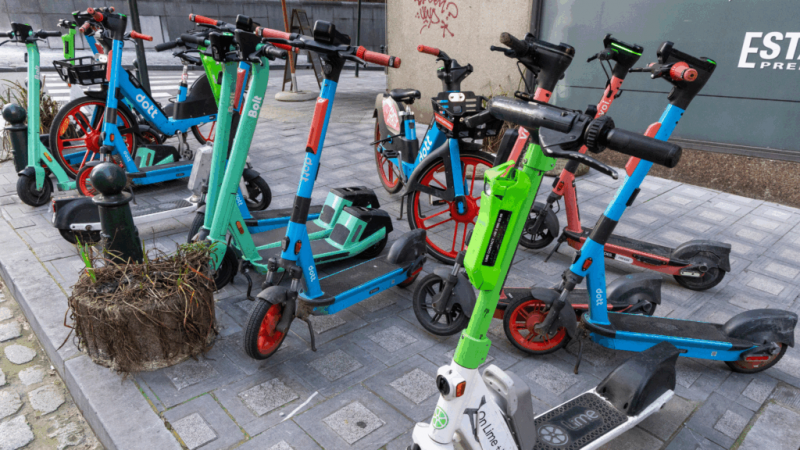
Residents have frequently complained about scooters being left on sidewalks, near entrances, beside public transport stops, and in locations that obstruct pedestrian movement. People with disabilities, parents pushing strollers, and elderly residents have often reported difficulties navigating public spaces cluttered with improperly parked scooters.

Although operators introduced designated parking zones and technological restrictions, complaints persisted. Authorities found themselves devoting considerable resources to monitoring compliance and removing improperly parked vehicles.

Urban planners increasingly questioned whether shared scooters were compatible with densely populated city centers where public space is already limited.

The issue became particularly sensitive because it affected vulnerable road users who depend on clear and accessible sidewalks.

What Role Did Crime Play in the Decision?

One of the most controversial aspects of the government's announcement concerns criminal misuse of shared scooters.

Brussels authorities cited warnings from prosecutors and law enforcement agencies who reported that shared scooters had increasingly been used by organized criminal groups. Officials noted that scooters were allegedly involved in a number of violent incidents, including shootings and drug-related activities.

Criminals are believed to favor shared scooters because they provide rapid mobility, require no ownership registration, and can be abandoned quickly after use. The ability to rent vehicles anonymously or through temporary accounts has also created challenges for investigators.

While critics argue that banning scooters will not eliminate criminal activity, supporters contend that removing an easily accessible transportation tool may reduce operational advantages currently enjoyed by offenders.

The crime-related arguments significantly strengthened political support for the ban.

Have Shared Scooters Been Controversial for Years?

Yes.

The debate surrounding shared scooters has been ongoing since the vehicles first appeared in major European cities.

Initially, scooters were celebrated as an innovative solution to urban congestion and pollution. They were viewed as environmentally friendly alternatives to cars for short journeys and an important component of modern mobility systems.

However, concerns emerged almost immediately. Complaints about sidewalk clutter, reckless riding, parking violations, and pedestrian safety became common in many cities. Governments across Europe responded with increasingly strict regulations.

Brussels itself spent years attempting to regulate rather than prohibit the vehicles. Authorities reduced fleet sizes, limited the number of operators, introduced designated parking areas, and implemented additional enforcement measures. Yet officials ultimately concluded that these efforts had not resolved the underlying problems.

Why Are Shared Bicycles Being Allowed to Stay?

The Brussels government has made a clear distinction between bicycles and scooters.

Officials believe bicycles provide many of the same environmental and mobility benefits while generating fewer safety and nuisance concerns. Shared bicycles are generally regarded as more stable, easier to regulate, and less likely to create pedestrian hazards.

Cycling also plays a central role in Brussels' broader transportation strategy. Significant investments have been made in cycling infrastructure, dedicated bike lanes, and bicycle-sharing programs.

Authorities hope that users who currently rely on scooters will transition toward shared bicycles rather than private cars. This approach allows Brussels to maintain support for sustainable transportation while addressing concerns specific to scooters.

The government's objective is therefore not to eliminate micromobility altogether but to reshape it around transportation modes considered safer and more manageable.

Could the Ban Affect Environmental Goals?

This question remains a subject of debate.

Supporters of shared scooters argue that they reduce car use, lower emissions, and encourage sustainable urban transportation. They warn that removing scooters could push some commuters back into private vehicles, increasing traffic congestion and pollution.

Critics respond that evidence regarding scooter-related environmental benefits remains mixed. Studies in several cities have suggested that many scooter trips replace walking, cycling, or public transport journeys rather than car journeys.

Brussels authorities appear to believe that shared bicycles can provide similar environmental benefits without the problems associated with scooters. The government expects bicycle-sharing programs to continue supporting climate and sustainability objectives after the scooter phase-out.

Whether the policy ultimately helps or hinders environmental goals will depend largely on how residents adapt their travel behavior.

Which Other Cities Have Banned Shared E-Scooters?

Brussels is not the first city to move in this direction.

Several major European cities have already introduced bans, severe restrictions, or substantial fleet reductions in response to safety and public space concerns.

These decisions reflect a broader reassessment of micromobility policies across Europe. Many cities initially welcomed scooters with minimal regulation but later introduced stricter controls after encountering operational challenges.

The Brussels decision is therefore part of a wider trend rather than an isolated case.

How Are Scooter Companies Responding?

Operators argue that modern technology can address many of the concerns raised by governments.

Companies have invested heavily in geofencing systems, parking enforcement tools, artificial intelligence, speed control technologies, and rider education programs. Some newer scooters are capable of automatically detecting sidewalk riding and reducing speed accordingly.

Industry representatives contend that outright bans ignore technological improvements and penalize responsible users. They argue that better regulation rather than prohibition would provide a more balanced solution.

The sector also warns that removing shared scooters could reduce consumer choice and undermine innovation within urban transportation systems.

However, Brussels authorities appear convinced that technological improvements alone cannot fully address the broader concerns surrounding scooter use.

What Happens Next?

Shared scooter operators will continue functioning in Brussels until the expiration of their current licenses at the end of 2026. After that date, shared scooters will disappear from the city's public mobility system.

Authorities are expected to focus increasingly on bicycle-sharing services and other forms of sustainable transport. Investments in cycling infrastructure, public transport, and alternative mobility solutions may accelerate as the transition approaches.

The decision will also be closely watched by policymakers across Europe. If Brussels experiences improvements in safety, public space management, and crime prevention following the ban, other cities may consider similar measures.

At the same time, the debate over micromobility is unlikely to disappear. New technologies, changing transportation habits, and evolving urban planning priorities will continue shaping discussions about how people move around cities.

The Bottom Line

Brussels' decision to phase out shared e-scooters by 2027 marks a major turning point in the European micromobility debate. Authorities argue that rising accident rates, persistent public nuisance complaints, pedestrian accessibility concerns, and growing criminal misuse have made the vehicles more problematic than beneficial. While supporters of scooters view the move as a setback for sustainable transportation, policymakers believe shared bicycles can provide many of the same advantages with fewer risks.

As Brussels joins a growing list of cities reassessing scooter policies, the outcome of this experiment could influence urban mobility decisions across Europe for years to come. The success or failure of the policy will likely shape how governments balance innovation, sustainability, public safety, and urban accessibility in the future.


News.Az 

By Faig Mahmudov

Similar news

Archive

Prev Next
Su Mo Tu We Th Fr Sa
  1 2 3 4 5 6
7 8 9 10 11 12 13
14 15 16 17 18 19 20
21 22 23 24 25 26 27
28 29 30 31