Why Russian military aircraft lands in Cuba?


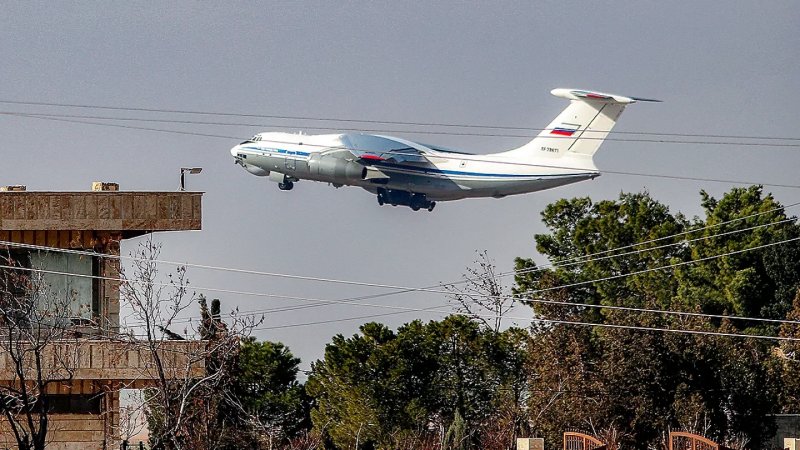
A Russian military aircraft has landed in Cuba after following what officials and analysts describe as an unusual and largely unpublicised flight path, News.Az reports.
The arrival has drawn international attention because of the lack of prior public announcements, the geopolitical context surrounding Russia and the United States, and Cuba’s strategic location just south of the US mainland.
RECOMMENDED STORIES
Neither Moscow nor Havana initially provided detailed explanations about the purpose of the flight, the nature of the aircraft’s mission, or how long it would remain on the island. This silence has fuelled speculation among observers, particularly given heightened global tensions involving Russia, the West, and NATO.
While Russian military aircraft have visited Cuba before, such movements are rare and closely watched. The secrecy surrounding the route and timing has raised questions about whether the flight was routine, symbolic, or part of a broader strategic signal.
This explainer answers the key questions surrounding the incident, placing it in historical, political and military context.
What type of aircraft landed in Cuba
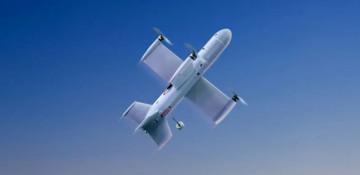
Russian officials have not publicly released full technical details, but the aircraft is believed to be a long-range military platform used either for transport, intelligence gathering, or strategic coordination.
Russia operates several categories of military aircraft capable of long-distance flights, including transport planes, command aircraft and intelligence or surveillance platforms. These aircraft are designed to travel thousands of kilometres without refuelling and are often used for missions that combine logistics with strategic messaging.
In past cases, similar aircraft have been used to transport personnel, deliver equipment, or conduct training-related activities with allied or partner states. Some models are also capable of carrying advanced communications or electronic systems.
The lack of transparency about the aircraft’s exact configuration has contributed to uncertainty about its mission.
Why the flight route is being described as secretive
Flight tracking data suggests that the aircraft avoided common commercial corridors and either disabled or limited publicly visible transponder signals during parts of its journey. While this is not unusual for military aircraft, it contrasts with previous Russian flights to the Caribbean that were announced in advance or followed more predictable paths.
Military aircraft often reduce electronic visibility for security reasons. However, the timing of this flight, combined with geopolitical tensions, has led analysts to interpret the secrecy as deliberate rather than routine.
A low-profile route can serve multiple purposes. It can reduce early detection, test response times of foreign monitoring systems, or simply limit public attention until the aircraft has already arrived at its destination.
Has Russia sent military aircraft to Cuba before
Yes, but infrequently.
Russia and Cuba have a long history of military and intelligence cooperation dating back to the Cold War. During that period, Soviet aircraft and naval vessels regularly visited Cuban territory. After the collapse of the Soviet Union, such activity declined sharply.
In recent years, Russia has occasionally resumed limited military engagements with Cuba, including port calls by naval vessels and visits by military aircraft. These events are typically framed as routine cooperation or training missions.
However, each visit tends to attract attention because of the historical legacy of the Cold War and Cuba’s proximity to the United States.
Why Cuba is strategically significant
Cuba lies less than 150 kilometres from the southern coast of the United States. Its location gives it enduring strategic importance in any discussion involving military presence or influence in the Western Hemisphere.
During the Cold War, Cuba became the focal point of one of the most dangerous confrontations in modern history, when the Soviet Union placed nuclear missiles on the island, leading to the Cuban Missile Crisis of 1962.
Since then, any military activity involving foreign powers in Cuba is viewed through the lens of that history, even if the current circumstances are very different.
While Cuba today does not host foreign nuclear weapons, its geography continues to make it symbolically and strategically sensitive.
What Russia might be trying to signal
Analysts generally agree that the landing of a Russian military aircraft in Cuba is as much about messaging as it is about logistics.
At a time when Russia faces pressure and sanctions from Western countries, demonstrating the ability to project power or maintain relationships beyond its immediate region can be politically valuable.
The move may be intended to show that Russia still has global reach and partners willing to engage with it. It may also serve as a reminder to the United States that Russia can operate in areas close to American territory, even if such operations are limited and non-permanent.
However, signalling does not necessarily mean escalation. In many cases, such actions are calibrated to attract attention without crossing thresholds that would provoke a direct response.
Is this a military threat to the United States
Most experts say no, at least not in a direct or immediate sense.
There is no evidence that the aircraft carried weapons or equipment intended for offensive operations against the United States. There have also been no indications that Russia plans to establish a permanent military presence in Cuba.
US officials typically monitor such movements closely but differentiate between symbolic gestures and actions that materially change the security environment.
That said, even symbolic gestures can contribute to mistrust and heightened alertness, particularly in periods of strained relations.
How the United States is likely to respond
The United States has not publicly indicated that it plans to respond militarily or diplomatically in a dramatic way.
In similar situations in the past, Washington has relied on intelligence monitoring, diplomatic channels and public messaging to emphasise that it is aware of the activity and does not view it as a crisis.
Privately, US officials may seek clarification from Cuba or Russia regarding the purpose of the visit. Publicly, the response is likely to be measured, aimed at avoiding escalation while reaffirming US security interests in the region.
What Cuba gains from allowing the aircraft to land
For Cuba, maintaining relations with Russia provides political, economic and strategic benefits.
Cuba has faced decades of economic pressure and sanctions, primarily from the United States. Partnerships with countries such as Russia offer alternative diplomatic and economic avenues.
Allowing a Russian military aircraft to land may reinforce political ties and demonstrate that Cuba retains sovereign control over its foreign relations.
At the same time, Cuban authorities are likely careful not to provoke unnecessary confrontation with Washington. Any cooperation with Russia is therefore usually framed as limited, lawful and defensive.
Could this involve intelligence gathering
It is possible, but unconfirmed.
Some Russian military aircraft are equipped for intelligence, surveillance and reconnaissance missions. These platforms can collect signals, communications or electronic data.
However, there is no public evidence that this particular flight involved active intelligence operations. Even if it did, intelligence gathering is a routine part of military activity worldwide and does not necessarily imply hostile intent.
Both Russia and the United States conduct intelligence operations globally, often without public acknowledgment.
Is this connected to Russia’s broader military strategy
Potentially, yes.
Russia has increasingly emphasised global reach in its military doctrine. This includes naval deployments, long-range aviation missions and military diplomacy in regions outside Europe.
Visits to Latin America, Africa and Asia serve to reinforce Russia’s image as a global actor rather than a regional power.
The landing in Cuba fits within this pattern, even if its immediate purpose remains unclear.
How often do such incidents happen
They are relatively rare, which is why they attract attention.
Most military cooperation between Russia and Cuba occurs quietly and without high-profile movements. When aircraft or ships do visit, it is often announced or framed as a routine event.
What makes this case different is the combination of secrecy, timing and broader geopolitical tension.
What international law says about such flights
Under international law, states are generally free to conduct military flights and visits to partner countries, provided they respect airspace regulations and host-nation consent.
There is nothing inherently illegal about a Russian military aircraft landing in Cuba, assuming it received permission from Cuban authorities.
International law does not prohibit military cooperation or visits unless they violate specific treaties or agreements.
Does this violate any existing agreements
There is no public evidence that the flight violated any treaties or agreements.
Current arms-control frameworks focus primarily on nuclear weapons and strategic systems, not conventional aircraft visits.
Unless additional information emerges, the landing appears to fall within normal international practice.
How the media has interpreted the event
Media coverage has ranged from cautious reporting to more dramatic interpretations.
Some outlets have framed the landing as a symbolic challenge to the United States. Others have emphasised the lack of concrete details and urged restraint in drawing conclusions.
The difference in coverage reflects broader divisions in how Russia’s actions are interpreted globally.
Why secrecy itself attracts attention
In international politics, secrecy often generates more interest than transparency.
When governments do not explain their actions, observers tend to fill the gaps with speculation. This can amplify the perceived significance of events that might otherwise pass with little notice.
In this case, the absence of detailed statements from Moscow and Havana has made the flight more newsworthy than it might have been if it were openly announced.
Could this lead to more Russian military activity in the Caribbean
It is too early to say.
One aircraft landing does not indicate a sustained or expanded presence. However, if similar visits occur more frequently, analysts may begin to see a pattern.
For now, most experts caution against overinterpreting a single event.
How this fits into global tensions
The incident comes at a time of strained relations between Russia and Western countries over a range of issues, including security, sanctions and diplomatic disputes.
In such an environment, even routine military movements can be interpreted through a confrontational lens.
This makes clear communication more important, yet often more difficult.
What happens next
Much depends on whether Russia or Cuba provide further details.
If the aircraft departs quietly after a short stay, the incident may fade from the headlines. If additional aircraft arrive, or if officials make strong political statements, interest is likely to grow.
Observers will also watch for any shifts in US diplomatic or military posture in the region, although none are currently expected.
Why this matters
Although the landing of a single aircraft may appear minor, it highlights how sensitive and interconnected global security has become.
Actions that might once have been routine are now interpreted against a backdrop of mistrust and competition. Understanding the context helps separate symbolism from substance.
For now, the incident serves as a reminder that history continues to shape how present-day events are perceived, even when the facts on the ground remain limited.
By Faig Mahmudov


Similar news