Will Ethiopia’s election strengthen stability or deepen divisions?


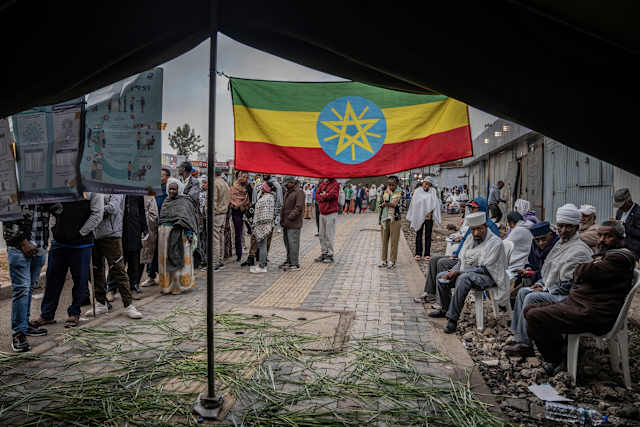
As Ethiopians voted in parliamentary and regional elections on June 1, the outcome appeared largely predictable.
Prime Minister Abiy Ahmed and his ruling Prosperity Party entered the vote as overwhelming favorites to retain power. Yet the significance of the election extends far beyond who wins. The real questions concern legitimacy, political inclusion, security, and the future stability of one of Africa’s most important countries.
While the election is expected to strengthen Abiy Ahmed’s mandate, it also highlights the deep challenges that continue to shape Ethiopia’s political landscape, including regional conflicts, ethnic tensions, opposition grievances, and unresolved questions stemming from the devastating Tigray war.
Why are Ethiopia’s elections important?
Ethiopia is Africa’s second most populous country, with a population exceeding 120 million people. It is also one of the continent’s fastest-growing economies and an influential regional power in the Horn of Africa.
The June 1 election determines the composition of the House of Peoples’ Representatives, the lower chamber of parliament. Since Ethiopia operates under a parliamentary system, the majority party in parliament effectively controls the government and selects the prime minister.
More than 50 million registered voters were eligible to participate.
The election is therefore not merely a routine political exercise. It will shape the direction of Ethiopia’s government for the next five years during a period marked by political uncertainty, security challenges, and economic transformation.
Who is Abiy Ahmed?
Abiy Ahmed became prime minister in 2018 after years of anti-government protests shook Ethiopia.
Initially, he was celebrated both domestically and internationally as a reformer. He released political prisoners, welcomed exiled opposition figures back to the country, and introduced political reforms that appeared to signal a democratic opening.
His most internationally recognized achievement came in 2019, when he received the Nobel Peace Prize for ending decades of hostility between Ethiopia and neighboring Eritrea.
At the time, many observers viewed him as a transformative leader capable of modernizing Ethiopia and reducing ethnic tensions.
However, the optimism surrounding his leadership later faced serious challenges.
Why has Abiy Ahmed become controversial?
The turning point was the outbreak of the Tigray war in November 2020.
The conflict between Ethiopia’s federal government and the Tigray People’s Liberation Front (TPLF) became one of the deadliest wars of the 21st century. Hundreds of thousands of people are believed to have died directly or indirectly from fighting, famine, disease, and displacement.
The war drew international criticism over allegations of human rights abuses committed by all sides.
Although a peace agreement was signed in late 2022, the political consequences continue to shape Ethiopian politics today.
At the same time, new security crises emerged in other regions, particularly Amhara and Oromia, where armed groups continue to challenge federal authority.
As a result, Abiy Ahmed’s image has shifted from that of a celebrated reformer to a leader facing accusations of democratic backsliding and increasing centralization of power.
Why is the Prosperity Party expected to win?
The Prosperity Party enjoys several structural advantages.
It controls federal institutions, possesses extensive organizational resources, and maintains a nationwide political presence that most opposition groups struggle to match.
The opposition remains fragmented, divided by ideology, ethnicity, regional interests, and leadership disputes.
Many opposition organizations also argue that they operate under unequal conditions, citing arrests, restrictions, administrative obstacles, and political pressure.
The government rejects these allegations and insists the electoral process remains open and competitive.
Nevertheless, most analysts agree that the Prosperity Party entered the election with a significant advantage over its rivals.
Because of this imbalance, many observers view the election less as a genuine contest for power and more as a confirmation of the existing political order.
Why is Tigray not participating?
One of the most controversial aspects of the election is the absence of voting in Tigray.
The northern region was devastated by the civil war that lasted from 2020 to 2022. Although active large-scale fighting has ended, political institutions remain fragile, and the region has not fully reintegrated into normal federal political processes.
As a result, millions of Tigray residents have once again been excluded from participating in a national election.
Critics argue that this undermines the legitimacy of the electoral process because a significant portion of the population remains without effective representation in federal institutions.
Supporters of the government counter that practical and security-related considerations make immediate full participation difficult.
Regardless of the justification, Tigray’s absence remains one of the election’s most significant political issues.
What happened in Amhara and Oromia?
Tigray is not the only region facing instability.
Amhara and Oromia, Ethiopia’s two most politically significant regions after Addis Ababa, continue to experience security challenges.
In Oromia, clashes involving the Oromo Liberation Army and government forces have persisted for years.
In Amhara, tensions escalated following disputes over regional security arrangements and federal authority.
Reports indicate that voting was disrupted or limited in certain areas due to security concerns. Some polling stations were unable to operate normally because of armed violence or fears of violence.
Although voting proceeded in most parts of the country, these disruptions reinforce concerns about whether all citizens had equal opportunities to participate.
What is ethnic federalism and why does it matter?
Understanding Ethiopia’s political system requires understanding ethnic federalism.
Since the 1990s, Ethiopia has been organized into regions largely based on ethnic identity. Each region possesses a degree of autonomy and self-governance.
Supporters argue that this model protects cultural diversity and allows different communities to govern themselves.
Critics contend that it has reinforced ethnic divisions and encouraged political competition along identity lines rather than national interests.
Abiy Ahmed has sought to promote a stronger national political identity through the Prosperity Party, which replaced the coalition-based structure that previously dominated Ethiopian politics.
However, many regional actors perceive these efforts as attempts to weaken regional autonomy.
This tension between centralization and regional self-rule remains one of the defining political struggles in contemporary Ethiopia.
What were the main campaign issues?
The ruling Prosperity Party emphasized economic development, infrastructure expansion, food security, modernization, and national unity.
Government officials argue that Ethiopia has achieved significant economic progress despite security challenges.
Major infrastructure projects, urban development initiatives, and economic reforms have been central themes of the campaign.
Opposition groups focused more heavily on governance issues, political freedoms, human rights, accountability, and regional grievances.
They argued that sustainable development cannot occur without greater political inclusion and trust between the government and society.
The campaign therefore reflected two competing narratives: one emphasizing stability and development, and another emphasizing political reform and democratic participation.
How important is economic growth for the government’s message?
Economic performance is one of the strongest pillars of the government’s political strategy.
Ethiopia remains one of Africa’s largest emerging economies. Despite periods of instability, the government continues to promote industrialization, infrastructure development, agricultural modernization, and foreign investment.
Officials argue that continuity is essential for maintaining growth and completing long-term development projects.
For many voters, economic concerns such as employment, inflation, food prices, and public services may be more immediate than broader constitutional debates.
This helps explain why the Prosperity Party continues to enjoy support despite ongoing security and political challenges.
What do critics say about the election?
Critics do not necessarily dispute that the Prosperity Party enjoys significant public support.
Instead, they question whether the election provides a genuinely level playing field.
Concerns raised by opposition groups and human rights organizations include:
• Restrictions on political activity
• Arrests of opposition figures
• Unequal access to media
• Administrative barriers
• Security-related disruptions
• Exclusion of conflict-affected regions
These concerns have fueled debate over whether electoral victories alone are sufficient to demonstrate democratic legitimacy.
The government rejects allegations of unfairness and maintains that Ethiopia’s institutions are functioning under difficult circumstances.
What will happen after the election?
Final results are expected by June 11.
If current expectations prove correct, the Prosperity Party will retain its parliamentary majority, allowing Abiy Ahmed to continue serving as prime minister.
Such a result would provide political continuity and likely reassure investors seeking stability.
However, victory at the ballot box will not automatically solve Ethiopia’s deeper challenges.
The government will still face:
• Ongoing insecurity in several regions
• Tensions between federal and regional authorities
• Unresolved grievances from the Tigray conflict
• Opposition distrust
• Ethnic polarization
• Human rights concerns
• Economic pressures
These issues will remain on the national agenda regardless of the election outcome.
Can the election lead to national reconciliation?
This may be the most important question facing Ethiopia.
The election can provide a constitutional mandate and reinforce institutional continuity. What it cannot automatically create is political trust.
Many Ethiopians continue to hold different views about the country’s recent conflicts, the balance between federal and regional authority, and the future structure of the state.
National reconciliation requires more than electoral victories. It requires dialogue, inclusion, accountability, and compromises among competing political forces.
For Abiy Ahmed, the challenge is therefore larger than winning another term.
His government must convince both supporters and critics that political participation remains meaningful and that national unity can coexist with Ethiopia’s ethnic and regional diversity.
What is the broader significance of these elections?
The June 2026 elections illustrate the paradox of modern Ethiopia.
On one hand, the country possesses functioning state institutions, ambitious development goals, and a government capable of organizing nationwide elections despite significant difficulties.
On the other hand, major regions remain affected by conflict, political trust remains fragile, and millions of citizens continue to feel excluded from national decision-making.
The expected victory of the Prosperity Party will likely strengthen Abiy Ahmed’s formal authority. Yet the election also underscores a reality that many Ethiopians already recognize: political stability cannot be achieved through electoral success alone.
The ultimate test for Ethiopia in the coming years will not be whether the government can win elections. It will be whether it can transform electoral legitimacy into genuine national reconciliation, reduce regional tensions, and build a political system that all major communities believe represents them fairly.
That challenge remains unresolved, and it may ultimately prove more important than the election result itself.
By Faig Mahmudov


Similar news