Stifling independence: France's violent repression in New Caledonia


For decades, France has pursued a policy in New Caledonia that can be characterized as classic neocolonialism.
For decades, France has pursued a policy in New Caledonia that can be characterized as classic neocolonialism. Utilizing migration policy as a tool of colonization, the French government aimed to assimilate the indigenous population — the Kanaks — by inundating them with newcomers to diminish their influence and suppress their aspirations for independence. Recently, disregarding the will of the Congress and the Caledonians themselves, the authorities attempted to change the electoral law, allowing migrants to participate in referendums on the island's fate. This decision provoked widespread public reaction, highlighting France's colonial mindset.Local independence supporters, who have long fought for their rights, see these actions by the French government as a desperate attempt to keep New Caledonia in its colonial grip. They are calling for the repeal of the illegal bill, warning of catastrophic consequences for the entire island community. Despite numerous calls for dialogue, Macron's government continued the forcible implementation of its agenda, ignoring both local and international demands.
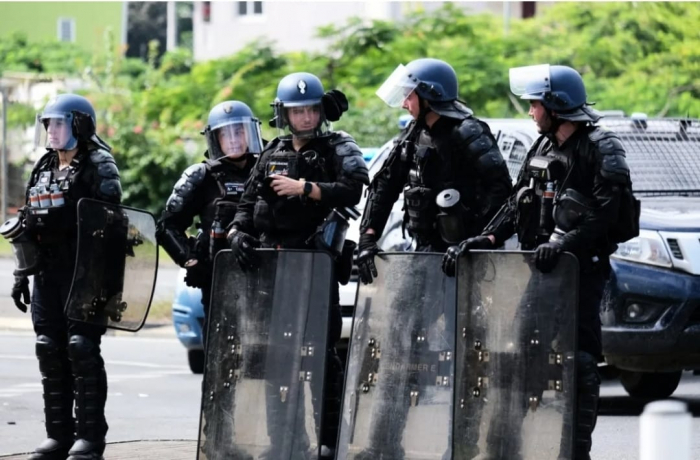
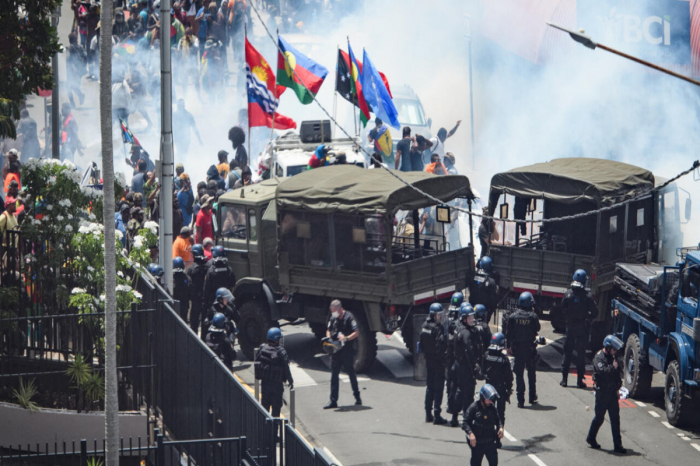
The response to peaceful protests was the deployment of the army. Consequently, clashes resulted in severe injuries among the civilian population. The violence by the French military raises questions about the mission's goals, as France, possessing the status of a nuclear power and a permanent member of the UN Security Council, resorts to armed suppression.
The actions of the French government on the island have caused international concern. Particularly troubling is the blockage of access to social media platforms like TikTok, an attempt to hide the truth about what is happening from the global community. This is corroborated by information provided by New Caledonia's representative at the UN, who reported widespread human rights violations, including the killing of young people.
French officials, notably Interior Minister Gérard Darmanin, justify their actions by blaming foreign forces, such as Azerbaijan, which appears not only as a distraction from the real issue but also as an attempt to ignite international tensions without any basis. This evasion of responsibility, choosing to blame and create external threats instead of engaging in open dialogue with the indigenous population and considering their opinions, highlights the inconsistency between France's proclaimed democratic values and the reality of its policies.
Such behaviour by the French authorities underscores the dissonance between the declared values of democracy and the actual policies implemented in practice. It seems that for France, the Kanaks are merely pawns in the colonial chess game, where the primary goal is to maintain control over the territory and resources of New Caledonia.
These actions undoubtedly raise concerns not only in New Caledonia but also within the global community. Human rights organizations and international observers are calling for an immediate cessation of violence and the beginning of sincere and constructive dialogue between the French government and the people of New Caledonia.
In this context, democratically elected representatives of the Kanaks must play a key role in determining the island's future. It has already been proven that they can successfully win elections, demonstrating the local population's support for them. France, which positions itself as a defender of freedoms and human rights, should abandon its colonial methods and support true democracy in New Caledonia.
Only the full recognition and realization of the Kanaks' right to self-determination can lead to a peaceful and just resolution of the long-standing conflict. The international community, in turn, must exert pressure on France to ensure it fulfills its obligations under international law and human rights commitments.
The true test for French democracy is not only its domestic policy but also the way it governs its overseas territories. History judges harshly, and in the case of New Caledonia, it will judge based on whether France chose to stand on the side of justice or continue colonial oppression.
Supporting New Caledonia in its quest for self-determination and respecting the cultural uniqueness of the Kanaks can serve as an example of how modern states should treat their overseas territories. In an era of globalization and heightened attention to human rights, France's actions in New Caledonia appear anachronistic and incompatible with its image as a protector of global values. In reality, these actions reflect deeply entrenched colonial practices that should be completely overcome in the modern world.
France's colonial legacy, unfortunately, continues to influence its political practices regarding overseas territories such as New Caledonia. This policy not only oppresses indigenous peoples but also undermines France's efforts to promote democracy and human rights on the international stage. It is crucial for France to reconsider its approaches and begin a sincere decolonization process that includes respecting the rights and culture of indigenous peoples and giving them the opportunity to determine their own future.
In conclusion, the path for France and New Caledonia to resolve their current issues lies through dialogue, respect for the rights of the indigenous people, and full acknowledgment of historical mistakes. A peaceful future for the island is possible only when the French government and the Kanaks can sit at the negotiating table as equal partners, ready to work together for the common good. The international community, in turn, must continue to pressure France to fulfill its human rights obligations and support the decolonization process in New Caledonia.
(If you possess specialized knowledge and wish to contribute, please reach out to us at opinions@news.az).


Similar news