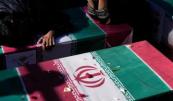
A new map of the Middle East: Europe chooses pressure on Israel instead of fighting terrorism - INTERVIEW


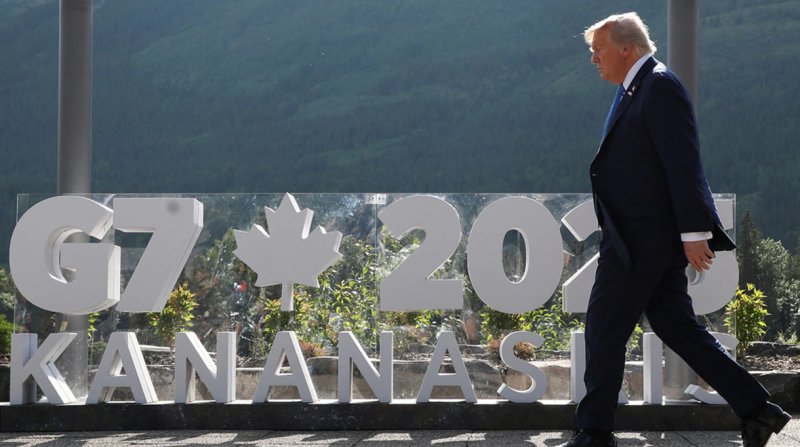
A wave of recognition of Palestine by the G7 countries, increasing radicalization, growing pressure on Israel, and contradictions within NATO—all of this is shaping a new reality in which strategic decisions become a matter of survival.
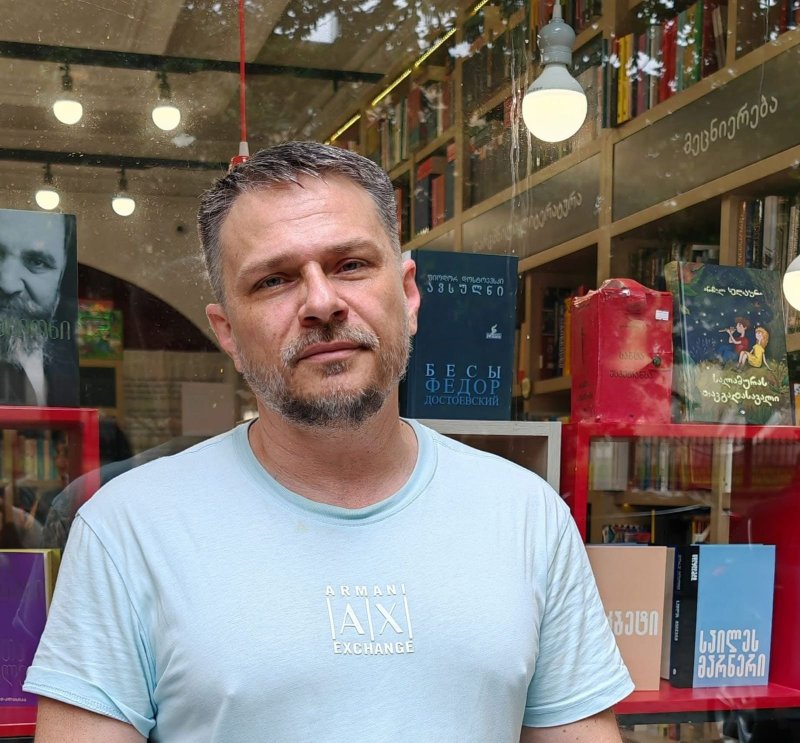
We discuss how these processes affect Israel, the West, and the region as a whole with Israeli public figure and political analyst Yuri Lagunin, editor-in-chief of News Wall Israel.
– Yuri, in your opinion, how does the wave of Palestinian recognition by G7 countries, including the UK, Canada, and Australia, change Israel’s strategic position?
– The situation is actually quite interesting because the state that is now raising the issue of a Palestinian state—or two states for two peoples—looks very unconvincing. Instead of making efforts to, essentially, pressure Hamas so that the negotiations Israel is conducting—or trying to conduct—reach any logical conclusion, these countries, by their actions, are essentially pushing Hamas toward a more aggressive policy and a refusal to make any concessions to Israel. First of all, it must be understood that trying to build diplomatic relations with Israel on the blood of hostages is simply foolish. And Hamas, above all, if it wants negotiations, must first release completely peaceful people who are in terrible conditions. Accordingly, the actions of the West, and especially the UK, now emphasize their unwillingness for peace to come to Israel and its surroundings. The key question is why they are interested in this. Their actions are so destructive that they only push Israel to act more harshly toward terrorists, since Israel now understands that the very survival of the state is at stake. And this is probably the first and main point in this situation.
– Can such Western steps be seen as a restart of the “two-state” concept after the events of October 7?
– Yes, I absolutely agree. Europe, first and foremost, is trying to use the situation in the Middle East as a tool of pressure, and this is not the first time. We know well how the West, including France, tried to influence the South Caucasus, how much pressure was applied to Azerbaijan, and we understand that behind every instrument of pressure there should be some real power. But the West no longer has real power—it is internally divided, and today every state, if we take the European Union, understands that in a critical situation, everyone is for themselves. As an example, we can recall the actions of the UK during the pandemic, the secret measures each state took to prioritize its own interests. So today, we have reached a point where, in particular, the UK will try to use this instrument of pressure in the future and will try in every way to exert some influence on Israel, like on a big bazaar, where everyone bargains and tries to show that their goods are better. But today, the UK is not in a position to dictate anything to Israel. Therefore, all Western attempts will ultimately lead to nothing. Attempts to limit Israel, impose sanctions, or introduce additional taxes or tariffs against Israel will achieve nothing because, first, Israel has enough friends. There are enough states, even in Europe, that, unlike the UK, have a positive attitude and are ready to interact based on their own interests.
– What are the risks that recognition of Palestine, especially without reservations regarding Hamas, will strengthen radicals’ influence? Or, conversely, can we expect an enhancement of the Palestinian Authority and Mahmoud Abbas as a “moderate partner” in the eyes of Europe and part of the Arab world?
– Unfortunately for the West, and especially Europe, history has repeatedly shown: the most radical extremist or terrorist, when influenced by Western structures, unexpectedly “becomes civilized” and starts behaving like a respectable person. However, the Middle East today is so deeply radicalized that it seems there is no further room to move. Israel’s task now is to reduce the level of this radicalization as much as possible, to clean up the decades-long “Augean stables,” and to reach a new status quo in which key states in the region can play a constructive role. Egypt is a very telling example: despite its own interests and disagreements, Cairo trades with Israel and can find common ground even in the most difficult situations. In disputes, the parties use mediators and arbitrators, allowing consensus to be reached peacefully and diplomatically. Disagreements remain, but points of contact are found year after year, preventing escalation. The same logic applies to other states in the region: if social, political, and economic stability can be achieved there, the likelihood of hostile actions against Israel will be minimized. It is important to understand that external powers, which have shown interest in the Middle East for centuries, most often pursued their own goals and were a destabilizing factor rather than a stabilizing one. The involvement of individual EU countries today only confirms this: they directly or indirectly push Hamas to even greater aggression and sabotage negotiations. In such a situation, it is hard to believe that truly reasonable forces oriented toward peace remain in Palestinian governance. Radicalization has reached such depth that the only path to a sustainable settlement is to remove extremist elements from power and prevent them from blocking the peace process.
– Interestingly, on one hand, Türkiye actively uses the Palestinian issue to strengthen its position in Europe and the Middle East, while the Trump administration opposes Palestinian recognition. Does this indicate the beginning of a split within NATO regarding the Middle East agenda?
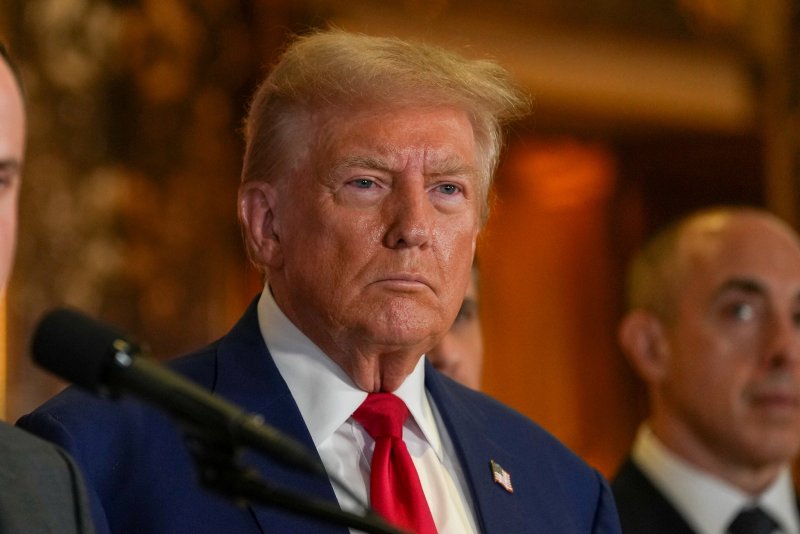
– I think the key here is the question of choice. Speaking specifically about Türkiye, it faces a dilemma: whom will it choose in the future? A weak Europe, which has repeatedly deceived it, or the United States, since Türkiye has obligations within NATO? We should not forget that Türkiye is a member of the alliance, on whose territory nuclear weapons are stationed. And we understand perfectly: NATO without the US is practically nothing. Another point to consider: today we see the process of restoring more or less normal, even friendly relations between China and India—a colossal market, practically half the world. Here we also have Russia, and of course Israel, which remains the main partner of the US. All these states are in constant contact, building interactions, and Türkiye and Israel, despite contradictions, have not crossed red lines. They find common ground, resolve issues diplomatically, and develop trade. Everyone understands that the current war will end, but it is also clear that a new conflict could erupt at any moment and in any region—whether Taiwan, Africa, or other hotspots where tensions have reached the limit. However, the most important point is that in the future, Europe will not be taken seriously as a strategic partner. The US will also have to share global influence, but America remains one of the strongest powers in the modern world. Türkiye knows how to make correct conclusions and choices. Comparing Europe’s current policies and real prospects, Türkiye will undoubtedly orient itself toward partners with whom agreements are possible and whom it can trust. Recent years show that Türkiye always chooses partners with whom real agreements can be reached. As long as Donald Trump remains US president, his personal agreements with Ankara carry particular weight—if he gives his word, he keeps it. Therefore, in my view, no serious split will occur. Weak links will simply fall away as unnecessary elements. Europe risks ending up with nothing: its economy could collapse, and the migration crisis could spiral out of control. In these conditions, every state, including Azerbaijan, will seek stable partners for long-term coexistence and cooperation. As for the UK, despite close ties with Azerbaijan, its role in the future will still be limited.
– After recognition, calls for immediate annexation of the West Bank intensified. Could this lead to a new wave of radicalization within the Israeli political sphere? And how realistic is it that Israel will choose escalation over diplomatic defense?
– In fact, one circumstance plays a decisive role here. Israel’s actions are explained by the necessity to act as firmly as possible. There is a classical principle: one side in a conflict acts exactly as much as its opponent allows. This is why Israel often responds harshly—it understands that it has few true allies and must defend the state. The future of the country depends on today’s actions. We understand perfectly well that London could have opened a Palestinian embassy at any other time—for example, when real peace negotiations began and it became clear that hostilities had ended. However, this step was taken precisely now. Partly, this is an attempt to play to the electorate, partly to provoke and cause maximum inconvenience to Trump. But all of this resembles more an agony caused by anticipation of political changes: in the upcoming elections, the political landscape in the UK may be completely reformatted, and a new government will begin building new relations—with Israel and the South Caucasus. Therefore, it cannot be said that Israel is deliberately escalating. It acts calmly and only raises the level of force when necessary, not for hidden objectives. Israel’s goal is not territorial expansion, as some claim, but primarily to create conditions in which terrorists cannot dig tunnels at the border and send killers into peaceful streets. Israel is waging war for one goal—to defeat terrorism, which has been pursuing it since the state appeared on the map decades ago.


Similar news