Atomic power: How Kazakhstan will overcome the energy crisis


Editor's note: Independent expert Telman Shuriev (Kazakhstan).
Kazakhstan faces an energy deficit, and building a nuclear power plant (NPP) offers a crucial solution. As the world's largest uranium producer with the second-largest reserves, Kazakhstan is ideally positioned to develop nuclear energy. The cost-effective and environmentally friendly extraction of uranium makes it a key component in securing the country's sustainable energy future.Kazakhstan has long-standing partnerships with leading nuclear powers such as Japan, Korea, the USA, France, Russia, and China. These collaborations provide access to advanced nuclear technologies and projects, enhancing the country's nuclear energy potential. Unlike renewable energy sources, which depend on weather conditions and daylight, NPPs have a high capacity factor, operating over 90% of the time compared to 25-35% for renewables.
The benefits of nuclear energy extend beyond reliability. In 2020, President Kassym-Jomart Tokayev reaffirmed Kazakhstan's commitment to achieving carbon neutrality by 2060, aligning with the Paris Agreement. With coal contributing over 55.7% of national emissions, transitioning away from coal is essential for achieving low-carbon development goals.
As nuclear energy develops, Kazakhstan can significantly reduce greenhouse gas emissions. According to a UNECE report, nuclear energy's emissions are 135 times lower than coal and 73 times lower than gas. Kazakhstan's coal-fired plants emit over 1,000 CO2/kWh, highlighting the need for cleaner energy alternatives like nuclear power, whose emissions are 181 times lower.
Kazakhstan plans to build next-generation NPPs that meet modern safety requirements, incorporating a combination of active and passive systems to ensure resilience against external and internal impacts. Modern plants have high safety levels, with a probability of an accident being one in 10 million years, and up to 40% of construction costs dedicated to safety systems. Waste management practices will adhere to international standards, minimizing radiation exposure risks to the environment and public health.
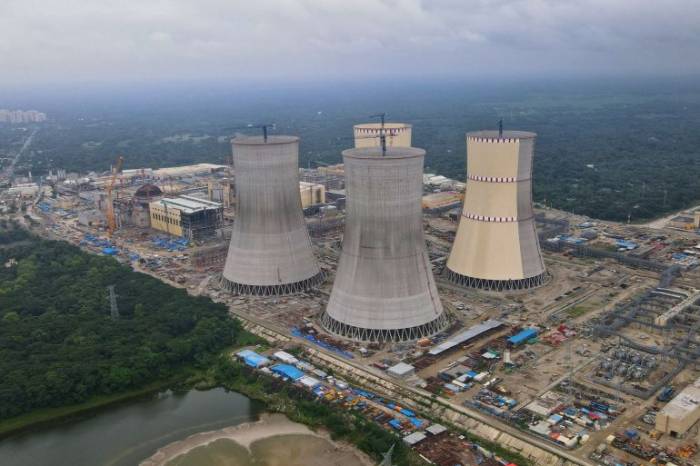
International experience supports the construction of NPPs. Currently, 31 countries operate nuclear power plants. Amid a global energy crisis, several leading nations are reviving nuclear programs. For instance, France plans to build between 6 and 14 new reactors, with the first to be operational by 2035. Newcomers to nuclear energy, such as Turkey, the UAE, Belarus, Bangladesh, and Egypt, are actively pursuing NPP construction.
In the fall of 2023, an IAEA expert group visited Kazakhstan to assess potential sites for an NPP and found no obstacles to construction near Lake Balkhash. However, further engineering surveys will be conducted to account for possible external influences, including seismic activity. These measures demonstrate Kazakhstan's commitment to safety and environmental standards in its nuclear projects.
Public opinion in Kazakhstan is increasingly supportive of NPP construction. Recent research by DEMOSCOPE and PAPERLAB shows that 46.6% of Kazakh citizens support building an NPP, with over 50% in favor according to Ministry of Energy data. These figures indicate growing public acceptance of nuclear energy's necessity for the country's future.
The economic benefits of NPP construction are substantial. The project will drive infrastructure development and job creation, providing a multiplier effect on the economy. Expected tax revenues exceed $2.5-3.0 billion, with business support during the construction phase amounting to about $2.5-3.5 billion. The construction phase will create up to 8,000 jobs, and up to 2,000 jobs during operation, with each NPP job creating more than ten jobs in related sectors.
Preparing skilled personnel for NPP operations is a crucial aspect of the project. Kazakhstan's nuclear sector already employs over 20,000 people, and more than 120 students undertake internships in leading nuclear centers annually. The country is actively developing its scientific and educational base and collaborates with countries like France and Russia to exchange experience and build human capital. More than 4,000 students are enrolled in nuclear specialties across educational institutions, demonstrating a long-term strategy for preparing nuclear energy specialists.
In conclusion, building an NPP in Kazakhstan is a strategically important step that will strengthen the country's energy independence, reduce greenhouse gas emissions, and contribute to sustainable economic growth. By leveraging international experience and advanced technologies, Kazakhstan can become a model for other countries in the safe and efficient use of nuclear energy.
(If you possess specialized knowledge and wish to contribute, please reach out to us at opinions@news.az).


Similar news