Between Washington, Tehran and Beijing: Kazakhstan’s strategic calculus


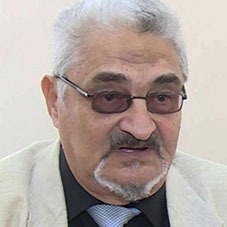
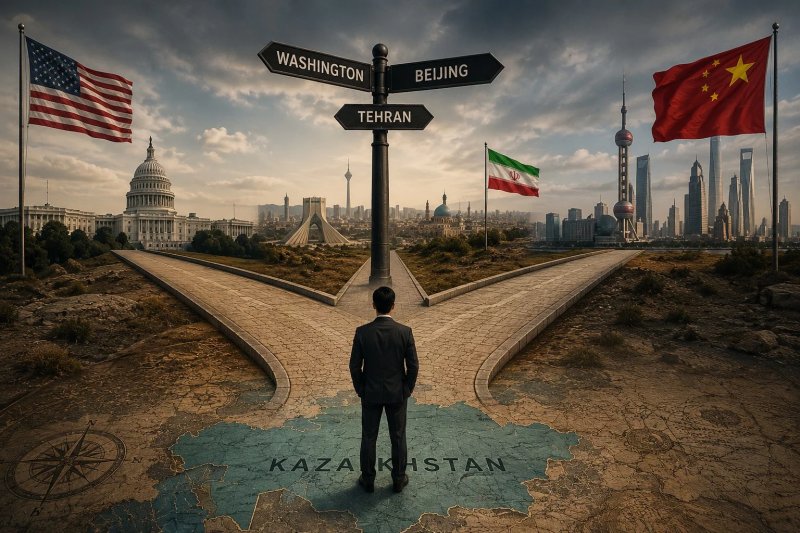
Kazakhstan is rightly regarded as the leading country in Central Asia, both in terms of its territory and natural resources. Its position gives it significant influence on the global stage. Although Kazakhstan is a Muslim-majority country, it pursues a highly pragmatic foreign policy, maintaining friendly relations with countries across the world, including Israel.
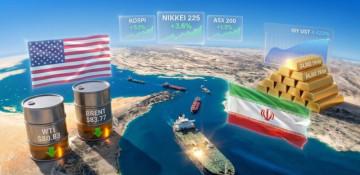
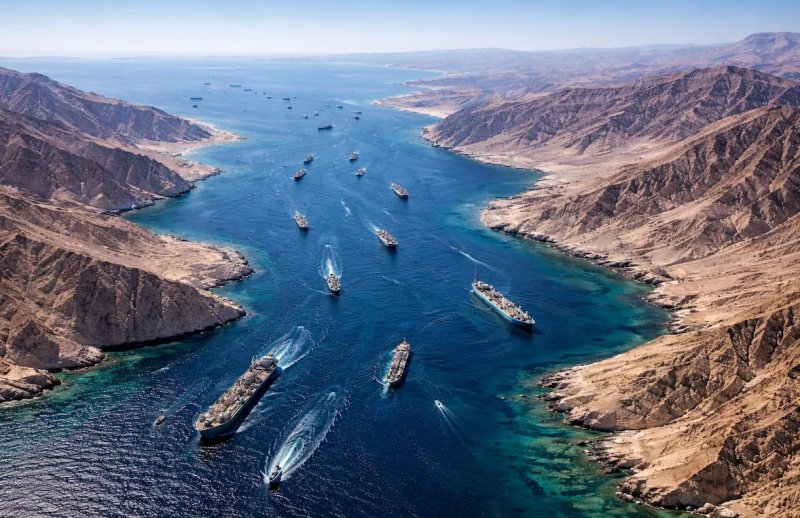
It is clear that the conflict in the Middle East has also directly affected Kazakhstan, particularly in matters related to the oil and gas sector. Developments surrounding the Strait of Hormuz have had an impact on the entire world. Iran remains one of the major oil producers, while the Persian Gulf region is a strategic hub for global energy supplies. Military crises in the Middle East have repeatedly triggered sharp rises in oil prices.
Credit: oerlive.com
According to Saida Tleulenova, a financial analyst and expert at the Qazaq Expert Club, the situation around Iran is contributing to increased volatility in the global oil market.
“According to OPEC and the International Energy Agency (IEA), Iran produces around 3–3.3 million barrels of oil per day and exports up to 2 million barrels. With global demand standing at 102–104 million barrels per day, this amounts to roughly 3% of the market. Formally, this share is not critical. However, the market is sensitive even to changes of 1–2 million barrels,” she noted.
Up to one-third of global seaborne oil supplies — around 20 million barrels per day — pass through the Strait of Hormuz. Higher oil prices increase the cost of electricity and gas while also intensifying inflationary pressures. For Kazakhstan, this creates a dual effect, she said.
“On the one hand, higher oil prices generate additional budget revenues through mineral extraction taxes, export earnings and inflows into the National Fund. Every additional $10 per barrel could bring hundreds of billions of tenge per year. On the other hand, rising prices fuel inflation and increase volatility in the tenge exchange rate,” Tleulenova emphasised.
These factors appear to play a major role in shaping Kazakhstan’s position on the current conflict. On 18 February, ahead of his visit to Washington for the first meeting of the Peace Council, Kassym-Jomart Tokayev published an article in The National Interest titled “Reliability Is the New Power”. In it, Tokayev pledged that Kazakhstan would remain a reliable and honest partner for the United States.
Perhaps this explains why Kazakhstan did not react for two days to the coalition attack on the Islamic Republic of Iran on 28 February 2026, which was accompanied by the killing of senior Iranian officials. The first official statement from the Kazakh Foreign Ministry came only on Sunday evening. It did not contain any condemnation of the United States or Israel, but merely expressed sympathy for the people of Iran and regret over strikes on civilian facilities in Arab states.
On 1 March, the President of Kazakhstan held telephone conversations with the leaders of Qatar and the UAE, expressing support and sympathy over attacks on civilian facilities, thereby making clear where Astana’s concerns lay. Judging by these steps, Kazakhstan is pursuing its own distinct course, taking into account both new opportunities and the accompanying risks.
Political analyst Gaziz Abishev noted that missile and drone attacks trigger a particularly emotional reaction in Kazakhstan. According to him, strikes on civilian facilities in other countries heighten the sense of anxiety and explain why Kazakhstan seeks to strengthen relations with the Gulf states. In his conversation with UAE President Sheikh Mohamed bin Zayed Al Nahyan, the Kazakh leader directly stated that attacks on civilian facilities were unacceptable.
“My main mission is to ensure the stable socio-economic development and security of Kazakhstan in this turbulent and dangerous time,” Kassym-Jomart Tokayev stressed in his address to the nation in September 2025.
In his conversation with the Emir of Qatar, Sheikh Tamim bin Hamad Al Thani, the President confirmed that Kazakhstan was ready to provide necessary assistance to its regional partners if such a request were made. At the same time, Astana’s key priority remains its commitment to an exclusively political and diplomatic settlement, despite the “unrestrained anger” of the warring parties.
Official Astana, of course, is not opposed to Iran as such. However, as a country that voluntarily renounced nuclear weapons and continues to promote the agenda of nuclear disarmament, Kazakhstan has its own distinct position. Iran’s desire to acquire nuclear weapons is supported neither by Russia nor by China. Tehran has repeatedly been offered the opportunity to reach an agreement and develop a model of coexistence with its ideological opponents. Yet no agreement has been achieved.
As Abishev emphasised, Kazakhstan once gave up its nuclear potential and continues to promote the idea of reducing global nuclear arsenals. “In any conflict, Astana places emphasis on diplomacy and seeks to resolve disputes through negotiations rather than through pressure or force,” he added.
The Kazakh leader, who signed the Abraham Accords and joined the Peace Council, is seeking to preserve relations with the Trump administration and derive the maximum possible benefit from them. These steps have increased Kazakhstan’s involvement in Middle Eastern affairs.
As Kazakhstan’s Ministry of Foreign Affairs explained, the decision was made on the basis of national interests. It fully corresponds to the balanced, constructive and peace-loving nature of the republic’s foreign policy. Kazakhstan will continue to consistently advocate a just and sustainable settlement based on the norms of international law.
This does not mean that Kazakhstan is taking anyone’s side. The goal of the country’s leadership is to preserve neutrality and ensure peace and prosperity for all.
According to international affairs expert Anuar Bakhitkhanov, the surge in tensions in the Middle East has created not only new opportunities for Kazakhstan, but also a wide range of risks. The expert notes that oil remains the primary channel of influence.
“A short-term rise in prices boosts export revenues, gives the budget more room for manoeuvre and improves the balance of payments. This effect provides temporary relief and increases foreign currency inflows,” he said.
However, Bakhitkhanov stressed that such price spikes are almost always unstable and do not create a sustainable trend.
“The geopolitical premium in oil prices is accompanied by rising global inflation expectations. Logistics become more expensive, the cost of maritime insurance increases, and this creates the risk of imported inflation, pressure on the tenge exchange rate and the continuation of tight monetary policy,” he said.
Bakhitkhanov drew particular attention to the structure of export flows. He noted that Kazakhstan remains dependent on a limited number of export routes. Any disruptions in international logistics increase the risk of price discounts and supply interruptions.
“The optimal solution is a conservative fiscal approach, the expansion of export routes and support for macroeconomic stability regardless of the next stage of the price cycle,” he added.
Credit: kmg.kz
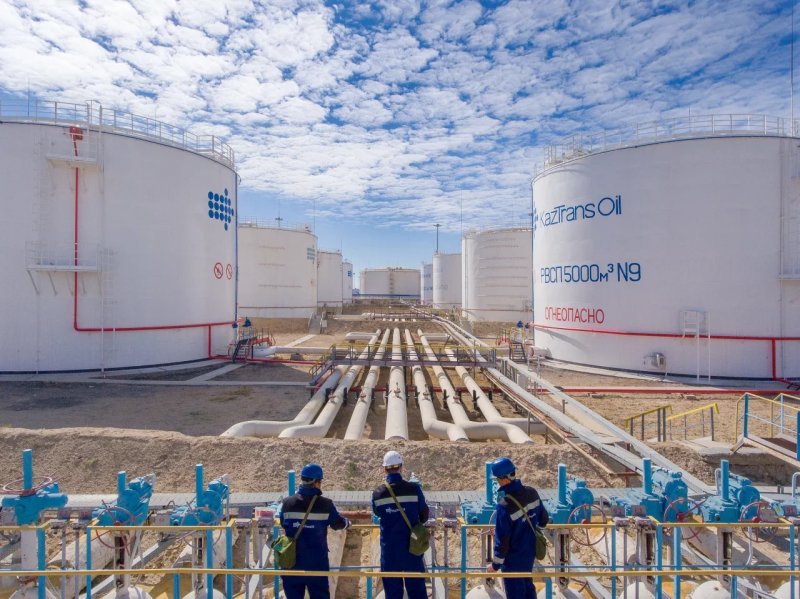
In this situation, Kazakhstan’s role is increasing, as its oil could become an alternative source for China, which has purchased large volumes of hydrocarbons from the Middle East. As a result, KazTransOil (KZTO) is strengthening its position amid an oil deficit and growing transit volumes.
At the same time, Kazakhstan is reinforcing its role as a key transit route for Beijing, creating potential for faster growth in KZTO share prices.
According to Teniz Capital, the ongoing conflict is deepening the global oil deficit and increasing interest in Kazakhstan’s oil sector. Under current conditions, local beneficiaries include KZTO and KMGZ, which is already reflected in the growth of their market valuations.
Thus, Kazakhstan’s balanced and pragmatic position gives it broad room for manoeuvre between different centres of power, helping to ensure stability and prosperity for the republic.
(If you possess specialized knowledge and wish to contribute, please reach out to us at opinions@news.az).


Similar news