Azerbaijan seeks to join BRICS: What could this mean politically?


By Faiq Mahmudov
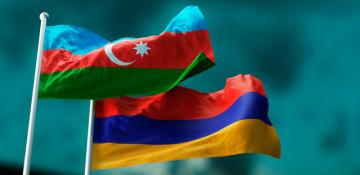
On August 20, Azerbaijan took a significant step on the global stage by officially applying to join BRICS , a prominent international group that brings together some of the world's largest and most influential emerging economies. This strategic move, announced by Azerbaijan's Foreign Minister Jeyhun Bayramov, highlights Baku's ambition to align with a dynamic bloc that is increasingly shaping the global economic and political landscape. By seeking membership in BRICS, Azerbaijan aims to boost its global standing and strengthen its economic and political ties within this influential group.While BRICS is primarily an economic organization, its membership also carries political weight. How might Azerbaijan's entry into this organization impact its political position on the world stage? What opportunities could arise, and what challenges might it face?
To explore these questions, News.Az reached out to political experts for insights into the political implications of Azerbaijan joining BRICS.
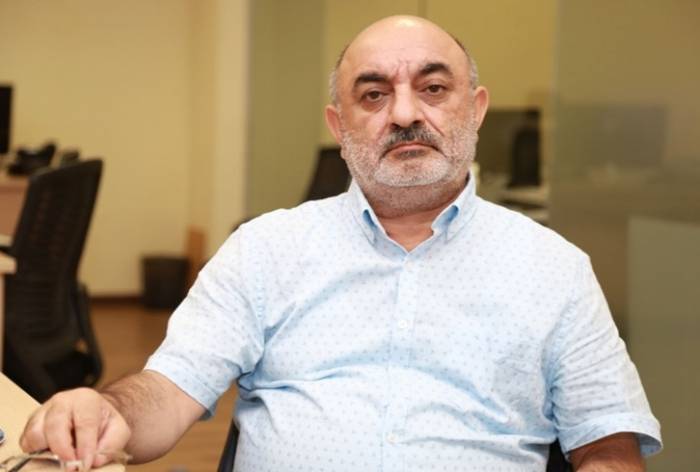
Sadraddin Soltan, Head of the Middle East Research Center , shared his thoughts on the political aspects of this move: “BRICS is largely led by Russia and China, forming a bloc that counters the Western alliance. If we consider the U.S. and its allies in Europe and Asia as the Western bloc, and those aligned with Russia and China as the Eastern bloc, then Russia and China are the key players in this Eastern bloc. Brazil, as a major developing country, and South Africa, a close ally of the West in southern Africa, also bring significant influence to BRICS. For Azerbaijan, joining this organization may not impose restrictions that limit its economic relations with the EU and the U.S., as BRICS members themselves maintain trade ties with these Western powers. Imposing such restrictions on Azerbaijan would hinder the expansion of BRICS and diminish its appeal. Therefore, I believe there is no risk of Azerbaijan being forced to choose sides.”
Soltan also emphasized that Azerbaijan has made it clear that it does not join military blocs: “Azerbaijan is a member of the Non-Aligned Movement, which is committed to not joining military alliances. Azerbaijan cooperates with various military and political forces globally but does not align itself with any single bloc. Given this stance, it is unlikely that BRICS would impose restrictions or demands on Azerbaijan. Azerbaijan’s foreign policy, which is focused on neutrality and cooperation with all parties, naturally avoids such dilemmas.”
He further noted that Azerbaijan’s foreign policy is characterized by its non-alignment: “Azerbaijan is not a NATO member and does not cooperate with NATO militarily. It is committed to peaceful development and does not pursue nuclear weapons or support terrorism. Azerbaijan respects the territorial integrity of all nations and maintains diplomatic relations with countries on all sides of global conflicts, including Palestine and Israel. This balanced approach makes Azerbaijan an attractive partner, and I believe BRICS members will view its membership application favorably.”

Yegane Hajiyeva, Chairwoman of the Public Union of the Young Democrats Institute , provided additional perspective, noting that BRICS, in its current form, is more of an international economic association than a political organization: “BRICS was created to deepen economic cooperation among its members. It lacks a formal charter or foundational document, making it more of an association. However, the absence of a formal structure hasn't stopped BRICS from evolving into a political platform that brings together countries opposed to the Western-dominated world order, led by the U.S. BRICS is expanding its scope to include cooperation in various fields, from agriculture to information security, and has established working groups, expert councils, and forums that influence member countries' interactions.”
Hajiyeva pointed out that since 2015, BRICS has established two financial institutions—the BRICS Reserve Fund and the BRICS Development Bank—to support infrastructure projects and provide financial assistance during crises. These institutions, each with a capital of $100 billion, could shape the political evolution of BRICS: “These financial institutions represent BRICS’ desire to create an alternative to the Bretton Woods system, which is dominated by the Western financial institutions like the IMF and the World Bank. The Bretton Woods system primarily serves Western interests, and its shortcomings have prompted BRICS members to seek alternatives. For example, when Azerbaijan restored its territorial integrity in line with international law, existing international institutions sided with the aggressor, serving the interests of leading Western nations rather than upholding international law. Though BRICS is not yet at the same level, these initiatives clearly show that its members are not willing to accept the political biases of the Bretton Woods institutions.”
Hajiyeva acknowledged that these factors could shape the future of BRICS. As the organization evolves, it may pose both opportunities and challenges for Azerbaijan: “While BRICS membership could be beneficial, it also presents challenges. Azerbaijan is a key player in the Bretton Woods system, especially in certain regions. Overall, global political dynamics are moving towards multipolar alternatives rather than a unipolar world. The Western system, which solidified in the 1950s, has already lost much of its moral and political authority.”


Similar news