Azerbaijani entrepreneur loses control of key Moscow airport business


Relations between Azerbaijan and Russia are going through a difficult period. Despite public statements about a strategic partnership, in reality, cooperation between the two countries is becoming increasingly restrained. A recent development in Russian business directly linked to Azerbaijani entrepreneurs has become a symbol of this cooling.
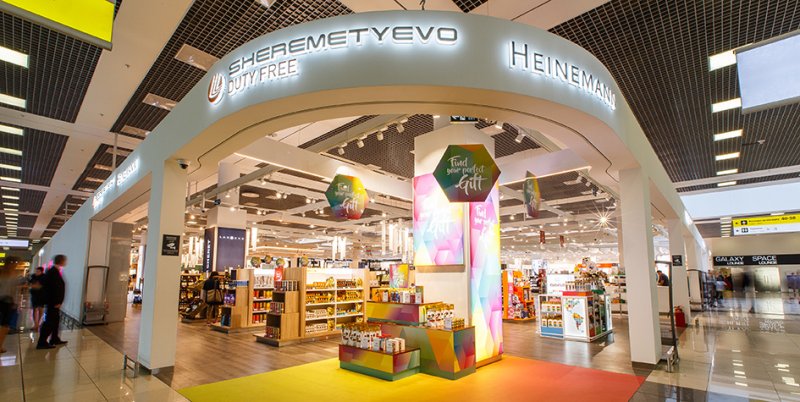
At the end of August, it was revealed that entrepreneur Araz Mekhdiev had ceased to be the owner of the largest duty-free operator at Sheremetyevo Airport.
News.Az, citing RBC, reports that on August 25 control of LLC Travel Retail Sheremetyevo passed to Vitaly Bavin, who had headed the company for the past two years. Established in 2022, it now manages most of the duty-free and duty-paid stores at the airport, including boutiques such as Max Mara, Hugo Boss, and Swarovski. In 2024, the company demonstrated impressive growth, doubling its revenue to 12.4 billion rubles ($154 million).
Mekhdiev had previously controlled other structures as well — in Domodedovo Airport and shares in Imperial Duty Free. However, in the spring and summer of 2025, these assets were also transferred to offshore companies registered in the Marshall Islands. Mekhdiev’s departure from the Russian market cannot be viewed solely from a commercial perspective. This process reflects a broader trend of cooling Azerbaijan-Russia relations. Business in the duty-free sector has traditionally been associated with a high level of trust and political approval at the top. The loss of control over such assets by an Azerbaijani entrepreneur shows that Moscow is no longer inclined to leave strategic segments of business in Azerbaijani hands.
Mekhdiev had previously been known for his ties with the Kievskaya Ploshchad group of God Nisanov and Zarakh Iliev. In 2018, he received stakes in several of its companies that had earlier belonged to entrepreneur Ilgam Ragimov. But as early as 2019, those shares returned to Ragimov, once again indicating the instability and fragility of Azerbaijani business positions in Russia.
On the political level, the cooling is even more apparent. In recent years, Baku and Moscow have increasingly diverged in their assessment of the regional agenda. Russia is attempting to maintain control over the South Caucasus, but its position is weakening. Azerbaijan, on the contrary, has strengthened its ties with Türkiye, expanded cooperation with the West and China, and is actively developing new transport and energy corridors where Moscow plays only a secondary role. In this context, business stories such as Mekhdiev’s case are merely illustrations of a deeper political reality: Moscow is gradually pushing Azerbaijani players out of its strategic niches, while Baku is deliberately seeking new directions for cooperation beyond Russia’s orbit.
Today, relations between Azerbaijan and Russia can best be described as pragmatic, but lacking the trust and closeness of the past. Moscow views Baku primarily through the prism of geopolitical control and risk minimization, while Azerbaijan sees Russia as a neighbor with whom balance must be maintained, but without excessive dependence. Thus, the “Mekhdiev case” is not just the story of a change in the owner of a duty-free network. It is an indicator that relations between the two countries have entered an era of cold calculation, where national interests take precedence over everything else and the space for trusting alliances is rapidly shrinking.


Similar news