As Central Asia undergoes one of the most dynamic geopolitical transformations in its recent history, Azerbaijan’s role at the center of these regional shifts is becoming increasingly undeniable.
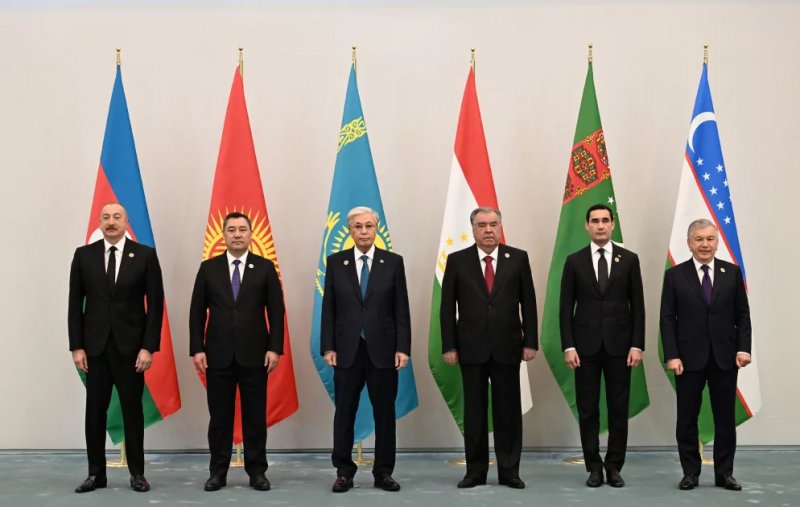
President Ilham Aliyev’s visit to Uzbekistan has once again placed Baku at the center of discussions on connectivity, security, and Turkic cooperation, underscoring the country’s growing role in shaping the strategic architecture of the broader region.
Against this backdrop, prominent analysts from both Azerbaijan and Uzbekistan told News.Az that Azerbaijan is no longer simply a partner, but a driving force behind many of the political, economic, and transport processes redefining Central Asia’s future.
Zaur Mammadov, an adviser at the Academy of Public Administration under the President of Azerbaijan and chairman of the Baku Political Scientists Club, told News.Az that President Aliyev’s visit to Uzbekistan once again demonstrates that Azerbaijan is an increasingly influential, strategic, and leading actor in shaping developments in Central Asia.
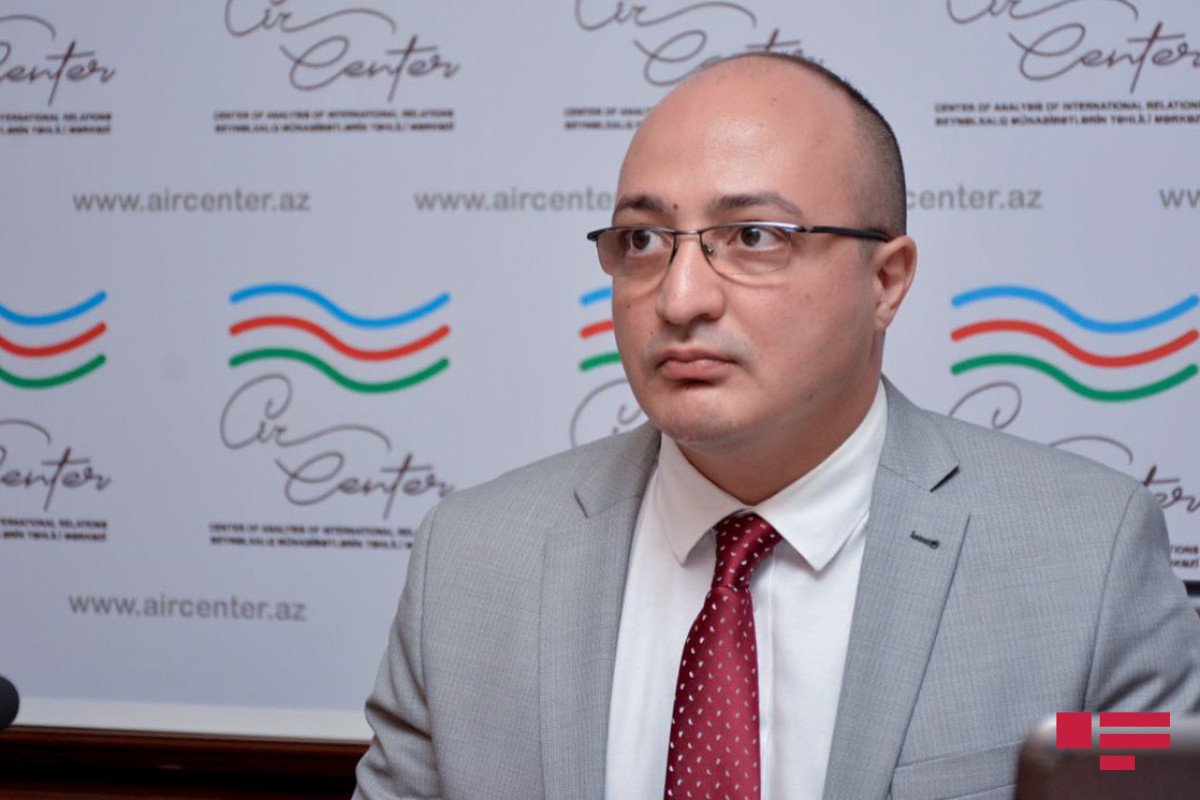
Photo source: Air Center
According to him, President Aliyev’s regular participation in high-level regional events is clear evidence of Baku’s rising diplomatic weight and the strategic importance Central Asian states attach to cooperation with Azerbaijan.
Mammadov noted that the current period marks a historic stage for both Central Asia and the South Caucasus, as the level of solidarity, coordination, and political trust among the Turkic states is unprecedented.
“This unity is not only the result of cultural and ideological closeness; it is driven by serious geopolitical, security, and economic factors,” he said.
He stressed that new security challenges are bringing regional countries even closer. Control over transport and communication routes, the opening of new transit corridors, the expansion of the Middle Corridor, and the diversification of energy export routes are accelerating regional cooperation.
“Azerbaijan is at the very center of these transformations, serving as the main bridge connecting the South Caucasus with Central Asia,” Mammadov added.
The political analyst pointed out that Central Asian states fully understand the strategic significance of Azerbaijan’s policies in logistics, transport, energy, and security. For this reason, deepening cooperation with Baku contributes to regional stability and strengthens the political and economic capacity of the countries involved.
“A new regional order is emerging today, and Azerbaijan is becoming one of its key strategic actors,” Mammadov emphasized. He added that growing political solidarity, economic integration, mutual investments, security coordination, and major connectivity projects are reinforcing Turkic unity and boosting the overall strength of the region.
Mammadov concluded that Azerbaijan’s increasing influence and its expanding partnership with Central Asian states stand at the core of these regional developments.
Shahodat Hashimova, a political analyst and staff member at Uzbekistan’s Center for Foreign Policy Studies, told News.Az that President Ilham Aliyev’s participation underscores Azerbaijan’s growing role as a key regional partner and a strategic transit and energy hub for Central Asia.

Photo source: https://www.uwed.uz/
“President Ilham Aliyev’s participation in the Consultative Meetings of the Heads of State of Central Asia for the third time reflects the steadily strengthening partnership between Azerbaijan and the countries of the region. Today, Azerbaijan plays a vital role as a key transit link connecting Central Asia with European and global markets through the Caspian Sea and the South Caucasus," she said.
Hashimova added that as global attention shifts toward transport connectivity and the development of international corridors, Azerbaijan’s strategic importance is becoming increasingly evident.
According to her, beyond transport, Azerbaijan remains a significant player in the energy sector. “It is a reliable supplier for European consumers and has the potential to become an important route for delivering Central Asian energy resources to Western markets," she noted, adding that this aligns with regional efforts to diversify exports and strengthen energy security.
“Azerbaijan and the Central Asian states also share similar foreign policy principles, prioritizing multi-vector cooperation and diversified international relations. Their cultural and historical ties further facilitate political dialogue and joint initiatives," Hashimova stressed.
The political commentator noted that these shared interests form the foundation of cooperation within the Middle Corridor, one of the most promising routes between Europe and Asia.
“Azerbaijan serves as the engine of this project through the rapid development of its port and railway infrastructure, including the Alat Port, the Baku–Tbilisi–Kars railway, and a modern air transport network," she emphasized, adding that as a result, transit volumes between Azerbaijan and Central Asia have grown steadily, exceeding one million tons in the first 10 months of 2025.
The expert also said that the 30th anniversary of diplomatic relations between Azerbaijan and Uzbekistan provides an opportunity to assess the depth of their bilateral partnership.
She noted that over three decades, the two countries have built a solid framework based on historical closeness, shared cultural values, and converging regional priorities. “Under the leadership of Presidents Ilham Aliyev and Shavkat Mirziyoyev, cooperation has expanded in the economic, transport, investment, and energy sectors,” Hashimova added.
She said Uzbekistan’s interest in increasing the share of finished goods in its exports and Azerbaijan’s focus on non-oil diversification create natural opportunities for industrial cooperation and joint production. “A planned commercial online platform will help businesses expand partnerships and launch new projects. Energy cooperation, including renewable energy initiatives and joint research, is also strengthening."
She noted that cultural and humanitarian ties continue to grow through bilateral events, city partnerships, media forums, and NGO cooperation, reinforcing long-term people-to-people connections. “This comprehensive partnership also contributes to strengthening Turkic unity and enhancing regional stability,” the expert concluded.
News.Az



.png)