Armenia faces a choice between the EU and the EAEU: Will Russian blackmail work?


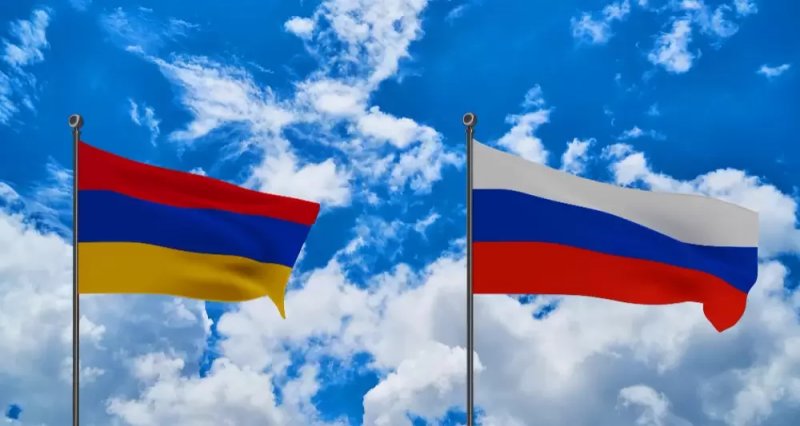
With only a few days left before the elections in Armenia, Moscow has noticeably ramped up pressure on Yerevan, tightening what some describe as a “noose” around the Armenian economy.
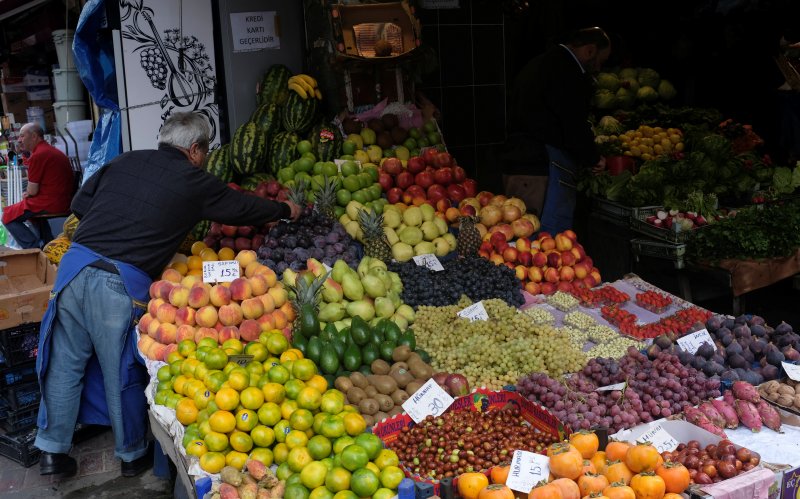
Since 2 June, Russia has refused to allow another category of Armenian goods into its market — stone fruits. These include grapes, apricots, sour cherries, sweet cherries, plums, peaches, and nectarines.
On the same day, according to a decision by Rosselkhoznadzor, restrictions were also introduced on imports of live fish and fish products from Armenia. Only two producers were granted permission to export after inspections carried out at their facilities in late May.
These decisions are a continuation of measures Russia has taken against Armenian imports following Yerevan’s statements about its European choice. Rosselkhoznadzor’s actions are not officially presented as political; they are explained by the alleged presence of quarantine pests in Armenian products, which are prohibited within the EAEU framework. However, few doubt the political motivation behind the measures imposed on Yerevan on the eve of the elections.
It gives the impression that Moscow has only recently “discovered” Armenia’s pro-European intentions, although Yerevan has long been open about them. In May, Russia began sharply expanding restrictions on Armenian exports. Since 22 May, imports of flowers from Armenia were restricted, as were supplies and sales of previously imported batches of Jermuk mineral water. Since 23 May, the sale of alcoholic products from several leading Armenian companies was banned in Russia, and from 30 May imports of tomatoes, cucumbers, greens, and strawberries from Armenia were prohibited. In each case, the bans were justified by alleged violations of phytosanitary standards and safety requirements.
Source: TASS
Commenting on the restrictions, Armenian Prime Minister Nikol Pashinyan said he considered these steps wrong and warned that they risk turning Armenian citizens against the EAEU. “For me, as prime minister, all of this is a problem. But we will solve all these problems,” he said.
Pashinyan also promised support for local companies affected by the Russian restrictions, speaking at a meeting with residents of the village of Lchashen in Gegharkunik Province. “The government has already decided that in all cases where unfair obstacles arise for exports, we will implement support programmes and subsidy schemes so that there are no victims in our economy,” he said.
He added that Armenia would seek new markets for agricultural producers, noting that several business delegations had already been sent abroad for negotiations and that concrete proposals had been received for the purchase of roses, fruit, and vegetables.
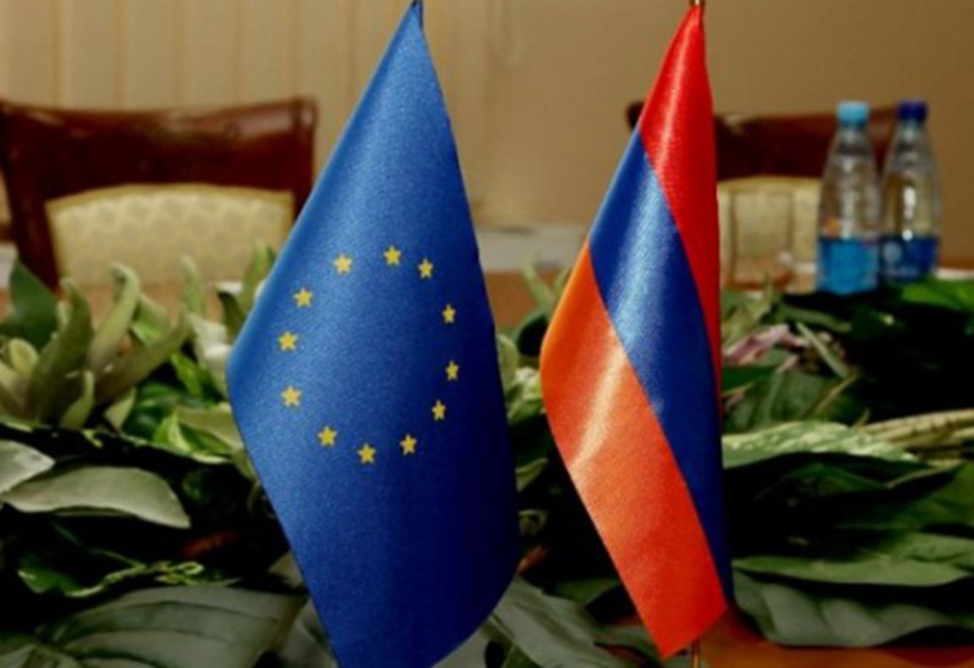
The European Union has also voiced support for Armenia amid the dispute. According to European media, European Commission spokesperson Anouar El Anouni said: “We are a reliable partner for Armenia, and our partnership is stronger than ever.”
Armenia does not hide the fact that it is counting on support from its European partners. If the European course has placed the country under such pressure, then the European Union, it argues, should help it manage the consequences.
Armenian Economy Minister Gevorg Papoyan said the government is launching a support programme for agricultural exporters seeking access to the EU market. He said Armenian products meet European requirements and that the main remaining obstacle is high logistics costs. Papoyan noted that Armenian fruit and vegetables have Global G.A.P. certification, an international standard confirming environmental safety and product quality, meaning they can be sold in European supermarkets.
As part of the response measures, the government has introduced compensation schemes for producers. Papoyan said compensation for flower exporters, for example, would amount to around $5.5 million by the end of the year, while tomato and pepper producers would receive about $3.5 million.
However, despite all this, the issue of logistics persists. Armenia has suddenly run into the consequences of its long-standing conflict with Azerbaijan at a moment when it least expected it. The time has come when Armenia’s 30-year isolation has become a real obstacle to addressing a problem of strategic importance. Against the backdrop of Yerevan’s loud “divorce” from Moscow, Europe may, to some extent, support a country moving towards its embrace. But what can be done if there are no established logistics routes?
Armenian exports to Europe have traditionally been limited in scale. They are mainly routed through Georgia, since the border with Türkiye remains closed. Goods are transported by road or rail to Georgian Black Sea ports and then shipped to Europe. Alternatively, overland routes through Türkiye are used. The opening of the Akhalkalaki–Kars railway line, part of the Baku–Tbilisi–Kars corridor, has also been cited as a potential additional route in recent discussions.
Source: Arka.am
Since logistics costs for Armenian products will remain high, their price competitiveness in European markets is expected to be lower than that of local producers. The issue cannot be resolved quickly. Armenia has long been oriented primarily towards the Russian and broader post-Soviet markets. Preferences under the Eurasian Economic Union have enabled it to trade with relatively low adjustment costs.
Yerevan is aware of this. It is no coincidence that Pashinyan has said Armenia will remain in the EAEU as long as this does not contradict its European integration agenda.


Similar news