Taiwan opposition chief eyes Trump meeting in move likely to alarm Beijing


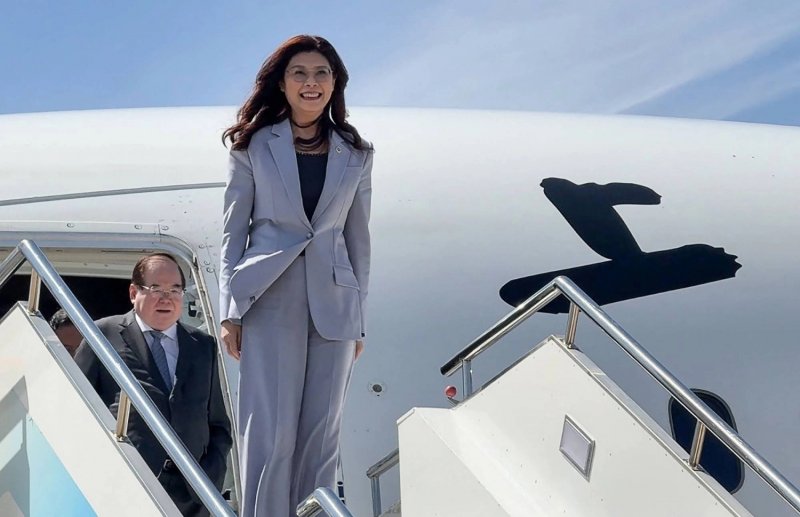
Taiwanese opposition leader Cheng Li-wen’s visit to the United States has become one of the most sensitive political signals in relations between Washington, Beijing and Taipei. Cheng, the chairwoman of Taiwan’s largest opposition party, the Kuomintang, said she would be willing to meet US President Donald Trump during her two-week trip to the United States. At first glance, this may appear to be a standard diplomatic remark, but in the context of the Taiwan question, even such statements carry significant political weight.
The Taiwan question remains one of the most sensitive and potentially volatile issues in global politics. It sits at the intersection of major geopolitical fault lines: the strategic rivalry between the United States and China, competition over critical technology supply chains, security dynamics in the Indo-Pacific region, and the future of the international order. For this reason, any statement by a senior Taiwanese politician, particularly one suggesting possible contact with a sitting US president, is inevitably interpreted not only as a domestic political gesture but also as an international signal.
Cheng Li-wen stressed that she was ready to engage with influential world leaders if such contacts could contribute to peace and stability. The wording is cautious but ambitious. It allows the Kuomintang leader to frame her visit not as an anti-China move, but as an effort to broaden international dialogue on Taiwan’s future. At the same time, the mere mention of a possible meeting with Donald Trump is likely to draw Beijing’s attention, as China reacts strongly to any move that could be seen as conferring international legitimacy on Taiwan.
RECOMMENDED STORIES
The historical context makes Cheng’s remarks even more significant. Since Washington severed official diplomatic relations with Taipei in 1979 and recognised Beijing as the sole legal government of China, no Taiwanese leader has met a sitting US president. Formally, Cheng Li-wen is not the head of Taiwan’s administration and serves as the leader of an opposition party. However, even in that capacity, a possible meeting with the US president would carry considerable political implications. For Beijing, it could be seen as another step towards raising Taiwan’s international profile, even if Washington maintains that such contacts are unofficial.
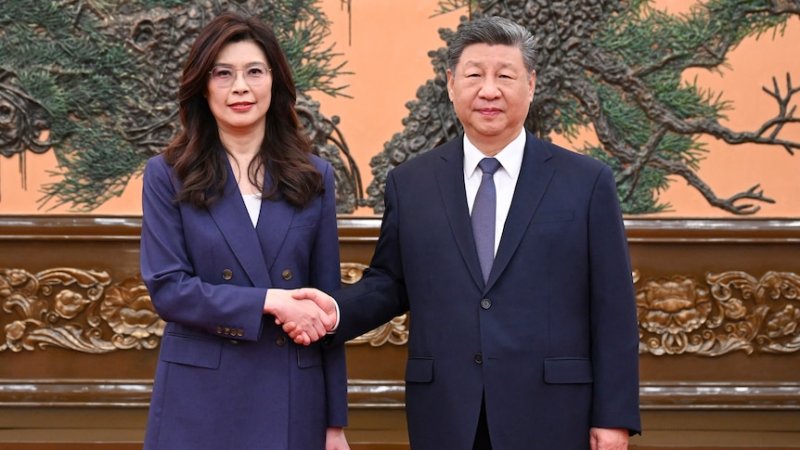
Cheng’s trip to the United States comes shortly after her visit to China, where she met Chinese President Xi Jinping. This makes the US leg of her diplomatic activity particularly significant. Cheng is seeking to demonstrate that the Kuomintang can maintain communication channels with both Beijing and Washington. This contrasts with Taiwan’s ruling administration, whose relations with China remain deeply strained. Beijing refuses to engage with Taiwanese President Lai Ching-te, whom it views as pursuing a course towards formal separation from China.
Against this backdrop, the Kuomintang is positioning itself as a force capable of reducing the risk of military confrontation while preserving Taiwan’s external ties. For the party, this is an important political asset. It seeks to present itself not as a force inclined to make concessions to Beijing, but as one capable of engaging both sides of the global rivalry. This approach may appeal to Taiwanese voters who fear conflict but are not prepared to accept full alignment with Beijing’s terms.
However, this strategy also carries significant risks. For supporters of Taiwan’s current administration, the Kuomintang’s contacts with China may be seen as a threat to the island’s sovereignty and security. Taiwan remains divided between those who prioritise strengthening a distinct Taiwanese identity and closer ties with the United States, and those who advocate maintaining functional relations with Beijing to avoid escalation. Cheng’s visit to the United States, following her contacts with Xi Jinping, places her squarely at the centre of this debate.
For China, the situation is also complex. On the one hand, Beijing traditionally maintains contacts with political forces in Taiwan that do not advocate formal independence. In this sense, the Kuomintang is viewed as a more acceptable channel for communication than the ruling Democratic Progressive Party. On the other hand, a possible meeting between Cheng and Donald Trump would create a sensitive diplomatic issue for Beijing. China opposes even unofficial high-level contact between Taiwanese politicians and senior US leaders, viewing it as undermining the “One China” principle.
Washington, meanwhile, also faces a delicate balancing act. The United States formally adheres to its “One China” policy, while maintaining robust unofficial ties with Taiwan, supplying arms to the island and regarding it as a key element of the Indo-Pacific security architecture. Taiwan is also strategically important economically, as a major global hub for semiconductor production. Any instability in the region could have far-reaching consequences for global supply chains, trade and regional security.
For the Trump administration, a potential meeting with Cheng Li-wen would be a particularly sensitive decision. On the one hand, it could signal a firm US stance towards China and demonstrate support for Taiwan. On the other, it risks provoking a strong reaction from Beijing and complicating broader US-China relations, including trade, security and crisis management. At a time of already heightened tensions, even symbolic gestures carry strategic weight.
The defence dimension is also significant. In recent years, the United States has urged Taiwan to strengthen its defensive capabilities, particularly in asymmetric warfare, drones, anti-ship systems and cybersecurity. Against this backdrop, Washington is likely to scrutinise the Kuomintang’s position on defence spending. If Cheng’s party is perceived as favouring reduced military expenditure in favour of engagement with China, this could raise concerns among US policymakers. From Washington’s perspective, Taiwan’s political leadership must remain committed to strengthening the island’s defence regardless of party affiliation.
Domestically, Cheng’s visit may become part of a broader contest for political influence. The Kuomintang is seeking to demonstrate that it can do more than criticise the ruling party; it is also capable of conducting its own international outreach. This is particularly important as foreign policy and security remain central issues in Taiwanese politics. If Cheng can convince voters that her party can maintain relations with the United States while reducing the risk of escalation with China, it could strengthen the Kuomintang’s domestic standing.
At the same time, Taiwan’s ruling party is likely to monitor Cheng’s statements in the United States closely. Any attempt to portray the Kuomintang as the only force capable of ensuring peace is likely to draw criticism from political opponents, who may argue that stability should not come at the cost of political concessions to Beijing or at the expense of ties with democratic partners. In this way, Cheng’s visit to the United States could quickly become an important element in Taiwan’s domestic political contest.
For Beijing, the key question is whether Washington will use contacts with Taiwan’s opposition as an additional lever in its competition with China. Chinese authorities have long accused the United States of expanding unofficial ties with Taipei, supplying arms and undermining regional stability. A potential meeting between Cheng and Donald Trump, even in an informal capacity, could be interpreted in Beijing as another step in that direction.
Yet there is another side to this situation. A meeting, or even Cheng’s stated willingness to meet, may signal that Taiwan’s opposition is not fully within Beijing’s orbit and is seeking to preserve room for independent manoeuvre. This is significant for the Kuomintang’s image inside Taiwan. The party needs to demonstrate that its dialogue with China does not mean abandoning relations with the United States, nor does it make it dependent on Beijing. For this reason, Cheng’s visit to the United States may be aimed not only at an international audience, but also at voters in Taiwan.
More broadly, the episode illustrates how sensitive diplomacy surrounding Taiwan has become. Today, it is not only official treaties, military exercises or arms deliveries that matter, but also symbolic gestures: who meets whom, at what level, in what capacity, and under what wording. Around Taiwan, a political environment has emerged in which even unofficial contact can be seen as a challenge, and a carefully worded statement can be interpreted as a strategic signal.
Cheng Li-wen’s visit to the United States also reflects the evolving role of opposition politicians in international affairs. In the context of the Taiwan issue, not only the sitting administration but also the largest opposition party is increasingly becoming a player in the foreign policy arena. Cheng is seeking to demonstrate that Taiwan’s future cannot be defined solely through confrontation. However, she will also need to show that dialogue with Beijing does not weaken the island’s security, and that contacts with Washington do not become a provocation leading to further escalation.
Therefore, Cheng Li-wen’s statement that she would be willing to meet Donald Trump is not merely diplomatic politeness. It is a signal directed at multiple audiences. To Washington, it suggests that Taiwan’s opposition wants to remain within the US sphere of attention. To Beijing, it indicates that the Kuomintang is preserving space for an independent foreign policy. To Taiwanese voters, it signals that the party is seeking to offer an alternative to the current course: reduced confrontation with China, but without abandoning relations with the United States.
This is why the visit of Taiwan’s opposition leader to the United States may have consequences far beyond a single trip. It underscores that the struggle over Taiwan’s future is being waged not only in the military and economic spheres, but also through political symbols, personal contacts and competition for international legitimacy. Amid growing US-China rivalry, such signals are becoming part of a broader strategic dynamic in which even a potential meeting can influence the tone of the regional agenda.


Similar news