Battle for Georgia’s future: Will sovereignty prevail over geopolitical intrigue?


Editor's note: Zahid Oruj is an Azerbaijani politician, chairperson of the Social Research Center of Azerbaijan, and chairman of the Milli Majlis Committee on Human Right. The article expresses the personal opinion of the author and may not coincide with the view of News.Az.
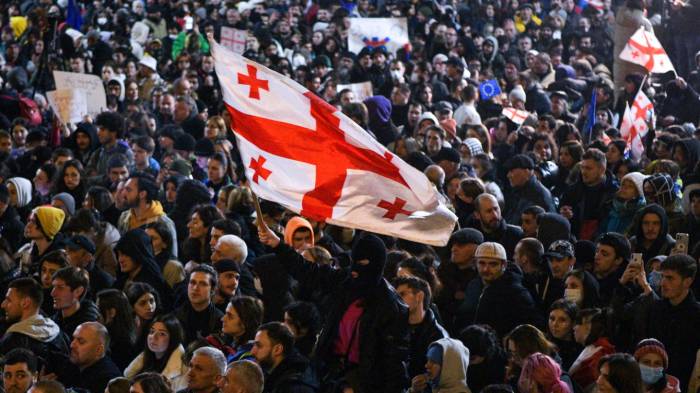
On October 26, Georgia heads to pivotal parliamentary elections — a choice between preserving sovereignty and independence or a return to events reminiscent of the bloody geopolitical revolution of 2003.When we first gained independence, we believed in international law and avoided interfering in the internal affairs of other states. However, these principles do not apply to countries that write the rules themselves and overthrow post-Soviet governments through violent conflicts.
In the run-up to the elections, the European Union has increased pressure on the Georgian authorities by imposing strict financial and economic sanctions, such as suspending aid worth 151 million euros. The United States is reviewing its cooperation with Georgia, threatening to cancel visa agreements, while major Western media actively support the opposition, demonizing the "Georgian Dream."
Georgia is being pushed to open a second front against Russia and impose sanctions . However, in 2008, when the Georgian people, influenced by Western intrigues, initiated military actions to regain Abkhazia and South Ossetia, they found themselves alone, facing Russia on the battlefield.
Bidzina Ivanishvili claims: “From 2004 to 2012, the country was not governed by a government elected by the people but by a revolutionary committee appointed from outside and backed by foreign agents.”
The next target after the 2003 color revolution organized by the West was supposed to be Azerbaijan. If there had been a change of power then, the country might have lost the territorial integrity it secured in 44 days, and Karabakh’s independence could have been recognized. Now it becomes clear what those who sought to impose "Georgian democracy" were aiming for.
Ilham Aliyev put a stop to attempts at color revolutions. It was our country that extended a helping hand to Georgia during the August war, providing assistance in a difficult moment.
If the "National Movement" had been in power in 2020, Georgia, under Western pressure, might have allowed arms to be transported to Yerevan through its territory. This raises the question — if the country was to be governed by a modern “English-speaking Ordzhonikidze,” appointed from Brussels, why did Georgian sons shed blood in front of Gorbachev’s army? Freedom means liberation not only from the Kremlin and the Russian Empire but from all foreign colonizers.
The Georgian people must choose their own future. We see that the fight against Azerbaijan also runs through Georgia. The opening of the Zangezur corridor contradicts the interests of official Tbilisi, which seeks to remain the only “window” for Azerbaijan, as well as those who want to overthrow the current government. Ilham Aliyev’s statement “keep your hands off the Caucasus” expresses the protection of the interests of all peoples in the region.
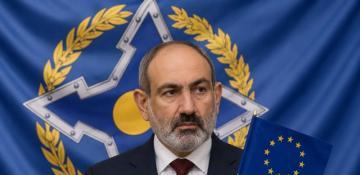
Western states have passed the mission once entrusted to Saakashvili to Pashinyan and Yerevan.
What happens in a country with which we are allied affects the entire region. The outcome of the elections will determine the fate of strategic projects worth billions and the future of almost half a million Azerbaijanis.
Situations in Ukraine, Syria, and Afghanistan serve as lessons. We support not social and political chaos in Georgia and international conflicts but stability and security. Our victory is an example for Georgia. The greatest Georgian dream is a strong and united Azerbaijan.
(If you possess specialized knowledge and wish to contribute, please reach out to us at opinions@news.az).


Similar news