Georgia prepares for a major test of sovereignty


By Tural Heybatov
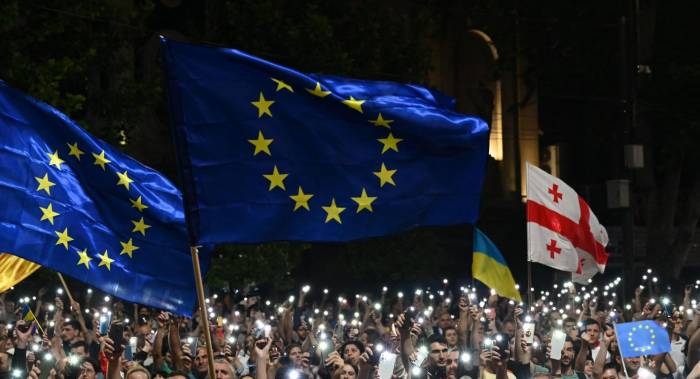
On October 26, Georgia will hold parliamentary elections. On Sunday, October 20, the opposition staged a march in Tbilisi under the slogan " Georgia Chooses the European Union ." The organizers expected up to 300,000 citizens to participate in the march and the rally at Freedom Square, but only a few tens of thousands showed up. Among the participants was Georgia's President, Salome Zourabichvili.According to opposition leaders, on October 26, the Georgian people will face a choice between freedom and subjugation. Freedom is associated with a European future and EU membership, while subjugation means a closer relationship with Russia. The opposition aimed to use the rally to show that the Georgian people are saying "no" to the current government and overwhelmingly support European integration. With only a few days left until the elections, Georgians will have the chance to confirm their European choice at the polls. Yet, the opposition saw it necessary to take preemptive action to demonstrate their unity and strength. However, discouraging details started emerging the very next day.
According to Mamuka Mdinaradze, the executive secretary of the ruling "Georgian Dream," the opposition had already lost the elections a week before voting day. He claimed that people were brought in from across the country to participate. "Nothing like this has ever been done before," Mdinaradze wrote on social media.
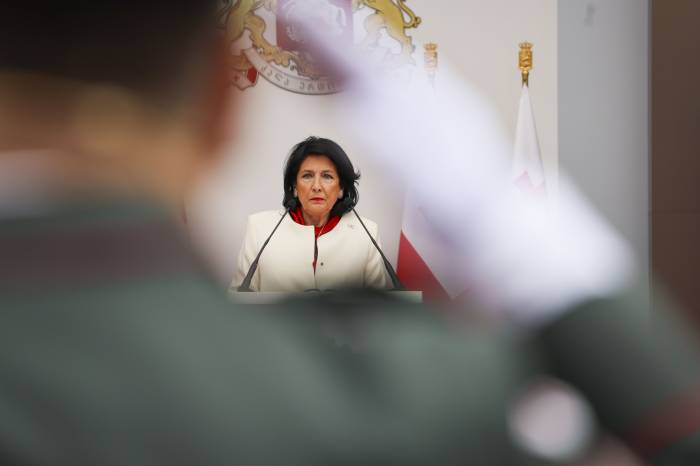
The elections will be held under a proportional system, with mandates distributed among parties that pass the five-percent threshold. Competing for seats in parliament are the "Coalition for Change," the "National Movement" (founded by former President Mikheil Saakashvili, currently in prison), the "Strong Georgia" coalition, the "For Georgia" party (founded by former Prime Minister and ex-ally of Bidzina Ivanishvili, Giorgi Gakharia), and the ruling "Georgian Dream." Analysts believe that President Salome Zourabichvili will be a major factor in the elections. The Presidential Palace has effectively become an opposition headquarters, where opposition parties gather, hold discussions, and form coalitions. At Zourabichvili's initiative, the "Georgian Charter" was signed. The purpose of this document is to unite the pro-European opposition against the government, which is seen as pro-Russian, in the October 26 parliamentary elections. The opposition's plan envisions forming a temporary government that will operate for several months, introducing essential reforms to bring the country closer to Europe, after which new parliamentary elections will be called.
Salome Zourabichvili spoke at the October 20 rally after the national anthems of Georgia and the EU were played. She addressed the EU and the United States, promising, "We will be partners and allies beyond your imagination. When we join Europe—and we will join Europe!"
Georgia will be a key topic at the upcoming two-day EU summit. " The European Council will discuss a range of foreign policy issues, including the situation in Moldova and Georgia. Both countries are at a crucial point on their European path," European Council President Charles Michel said in a letter to EU leaders ahead of the summit.
As for Moldova, it has already faced its "crucial moment." In a referendum held on October 20, the European option won by a slim margin—55 to 45 percent. While the results seem to indicate a "yes" to the EU, half of Moldova's population remains against European integration, which is a serious cause for concern for the EU. There is a possibility that Georgia may see a similar outcome. At the EU summit, a clear message was sent to the Georgian government: Brussels will halt the European integration process if Tbilisi does not change its political course.
On October 17, the Congress of Local and Regional Authorities of the Council of Europe adopted a declaration on the current situation in Georgia. 76 members of the Congress supported the declaration, 10 voted against, and 6 abstained.
The day before, a statement was released by the foreign ministers and European affairs ministers of 13 EU countries. It is worth listing the signatories to show who is missing: representatives from Germany, France, Poland, Belgium, Denmark, Estonia, Latvia, Lithuania, Luxembourg, Portugal, Finland, Sweden, and the Czech Republic signed it. There is no need to dwell on the contents of the statement, as it generally repeats the narratives echoed by other EU officials addressing Georgians.
It seems that official Tbilisi is not planning to change its course, showing an unexpected level of independence. Until now, it was believed that Georgia would indefinitely cling to the coattails of the European Union, which had kept Georgia within its sphere of influence with promises for almost twenty years. Yet, despite the West's "serious concern" and "deep worries," the Georgian government has decided to set sail on its own.
A week before the elections, EU Ambassador to Georgia Pawel Herczynski made another warning statement: "We will respect your choice; your future is in your hands, not someone else's. But please respect the fact that the European Union is founded on certain values. These are freedom, democracy, rule of law, and human rights. These values are non-negotiable. If Georgian voters decide to turn Georgia into a one-party state, ban all opposition parties, drive out civil society, turn it into a place where there are no free media, or if you decide that the rights of every individual in Georgia will not be protected, then I want to be clear—Georgia will not become a member of the European Union today, tomorrow, or in 2030," Herczynski stated.
It is hard to overlook that the EU Ambassador seems to contradict himself. While affirming that the EU will respect the choice of the Georgian people, he simultaneously warns that if the Georgian people choose something that the West disapproves of, the EU will not respect that choice.
It was previously announced that the European Union had suspended Georgia's accession process. The European Council's statement expressed "serious concern over recent developments in Georgia," specifically due to the adoption of the "Transparency of Foreign Influence" law, which "represents a setback from the steps outlined in the Commission's recommendation for candidate status." Pressure on Tbilisi intensified after Georgian Parliament Speaker Shalva Papuashvili signed the "Family Values and Protection of Minors" law in October. The law bans same-sex marriages, adoption by same-sex couples, and gender transition. Both bills were introduced by "Georgian Dream."
So, Georgia is in for a heated Saturday. On October 26, the Georgian people will face a significant test. We will refrain from making predictions. Time will tell.


Similar news