EU suspends Georgia's accession process: Analysis of the situation


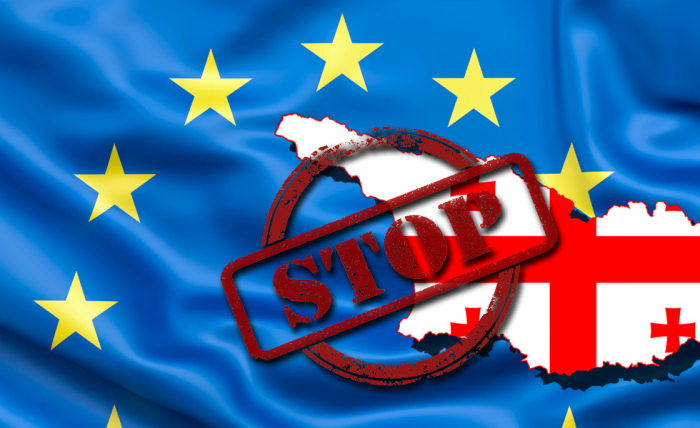
The European Union Ambassador to Georgia, Pawel Herczynski, expressed regret at an international conference in Tbilisi that EU leaders had decided to suspend Georgia's accession process to the EU. He stated, "The intentions of the current Georgian government remain unclear to EU leaders. Anti-Western and anti-European rhetoric is completely incompatible with the goal of joining the EU. Unfortunately, Georgia's admission to the EU is currently on hold."
Previously, EU leaders had pointed to the possibility of suspending the process due to Georgia's adoption of the law on foreign influence. EU High Representative for Foreign Affairs Josep Borrell emphasized that if the Georgian government continues its current course, the doors of the EU will be closed to the country.Pawel Herczynski also reported that EU leaders decided to freeze 30 million euros intended to strengthen Georgia's defense capabilities. "Our direct support to the Georgian government will decrease, and we will try to direct this support to civil society and the media," the diplomat noted.
Herczynski added that the decision to suspend Georgia's EU accession process was made by EU leaders at a meeting on June 27. He expressed hope that the new government would start "serious work on Georgia's integration into the EU" after the elections in October. At the same time, he emphasized that there is little time left for changes.
On July 9, it became known that EU leaders decided to freeze 30 million euros intended to strengthen Georgia's defense capabilities. The country's president, Salome Zurabishvili, stated that the postponement of joint US-Georgia exercises and the freezing of financial aid are the result of the Georgian authorities' hasty and hostile policies.
Relations between Georgia and the West deteriorated in the spring of 2024 after the adoption of the law on foreign agents. A number of American and European politicians opposed this initiative, believing that it could restrict freedom of speech and interfere with the activities of independent media.

Georgian political analyst Gela Vasadze told News.Az that EU Ambassador to Georgia Pawel Herczynski distorted the facts. Vasadze believes that EU leaders understand the intentions of the Georgian leadership well. "The Georgian leadership intends to rule forever. However, nothing lasts forever; people do not live forever. Georgia is ruled by Bidzina Ivanishvili, and he seeks to rule forever by changing ministers and possibly even his party. He does not want Europe and the US to see this. Is this possible? Maybe. The period of adaptation is now underway," the expert noted.
Gela Vasadze also noted that the US should impose sanctions on the Georgian opposition to unite it and force it to fight against the current government, which is deviating from democratic values. "Unification is the only scenario in which the opposition can defeat the 'Georgian Dream' in the parliamentary elections in October," he is convinced.

In turn, Ukrainian political scientist Oleksandr Okhrimenko told News.Az that Georgia is not concerned about the current situation. "Georgia is already dependent on Russia, and the desire to join the EU has decreased. Joining the EU was popular during Saakashvili's time, but after obtaining a visa-free regime, many Georgians went to Europe and became anti-European. Therefore, today Russia is popular in Georgia. Russians buy real estate in Georgia, and most tourists come from Russia. Consequently, Georgia's future is connected with Russia," the expert stated.

Russian political analyst Daria Grevtsova told News.Az that there are several political groups in Georgia. "The main group, which is represented in the parliament, is moderately radical towards the West and supports former supporters of Saakashvili. Another group is oriented towards Russia and is small but still exists. The suspension of Georgia's EU accession is due to several reasons. First, Georgia did not join the anti-Russian sanctions after 2022, despite pressure from Western countries. Second, many Russian tourists came to Georgia, which helped support the economy. Also, the Georgian population does not support the radical plans of the opposition to return Abkhazia and South Ossetia, which could lead to a new war that no one wants," the expert said.
The Russian analyst emphasized that the law "On Transparency of Foreign Influence" was adopted to protect the ruling coalition from Western interference. "This reduced Western influence and lowered the risk of a coup. Georgia does not yet plan to abandon its economic ties with Russia, which is beneficial to both countries. However, the idea of joining the EU has not disappeared. Western leaders are considering the possibility of a new coup in Georgia, aimed at appointing a radical pro-Western president. This will require the repeal of the laws on foreign agents and the severance of ties with Russia. Western countries are also urging Georgia to join sanctions against Russia. Otherwise, Georgia will not be able to continue participating in EU programs that provide funding," D. Drevtsova stated.


Similar news