Belgium entering into confrontation with Russia


An important agreement on security and military cooperation between Ukraine and Belgium was reached during Ukrainian President Volodymyr Zelensky's visit to Brussels, Belgian Prime Minister Alexander De Croo has announced, emphasizing the importance of this step for ensuring stability and security in the region.
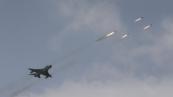
According to De Croo, the agreement includes significant military aid worth 977 million euros and a commitment from Brussels to support Ukraine over the next 10 years. A special focus is on the transfer of weapons: According to the document, Belgium plans to provide 30 F-16 fighter jets to the Ukrainian Armed Forces by 2028, with the first one potentially arriving this year.President Zelensky clarified that the agreement not only involves military aid but also cooperation in the military-industrial sector and support for the "peace formula" aimed at resolving the conflict in the eastern part of the country. Additionally, both parties agreed on joint efforts to restore Ukraine's economy and strengthen anti-Russian sanctions.
Belgium's commitment to supporting Ukraine in the security field is further emphasized by the training of Ukrainian pilots and technicians to maintain F-16 fighter jets starting from 2023. In the current context of geopolitical tension, this step demonstrates Belgium's desire to strengthen relations with Ukraine and support efforts to preserve sovereignty and territorial integrity.
However, Belgium's decision to supply F-16 fighter jets has drawn a negative reaction from Russia. Dmitry Peskov, the press secretary of the Russian President, announced Russia's intention to destroy the fighter jets on Ukrainian territory. This highlights the sharp differences on security issues between Russia and the West.
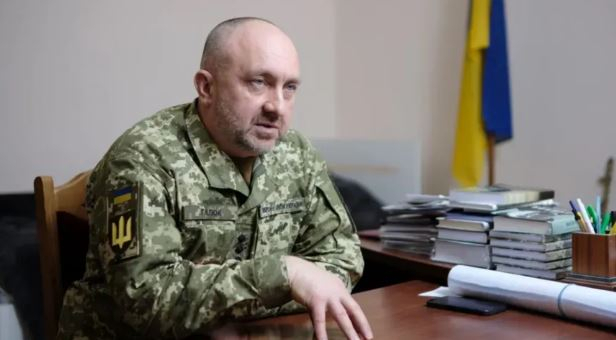
Ukrainian military expert Pavel Lakiychuk commented on the issue, stating that if we are talking about a bilateral agreement on security cooperation and the signing of a Security Cooperation Agreement, the agreement signed in Brussels today is not the first one. According to the Joint Declaration of the G7 countries signed on 12 July 2023, the list of countries signing security agreements with Ukraine in five months has exceeded the top ten, and the process continues.
"Incidentally, Latvia signed a similar agreement in April, and negotiations on similar agreements with Lithuania, Estonia, and Poland are in their final stages. This is not a competition about who is first; it is careful work that includes the capabilities and interests of neighbouring countries, Ukraine's needs, and several other aspects. The agreements will only work in practice when they reflect the real capabilities of the parties involved," he said.
Commenting on the delivery of F-16 fighter jets to Ukraine, the expert noted that we should also base this on our partners' real capabilities. Currently, NATO countries are undergoing a long-term rearmament process, moving from old F-16 Fighting Falcon to the fifth-generation F-35 Lightning II fighter jets.
"The first to receive the new Lightning can transfer the old Fighting Falcon to Ukraine without reducing their defence capabilities. The Belgians expect a phased delivery of 35 F-35s in the near future. Accordingly, they have the opportunity to transfer the much-needed F-16s to the Ukrainian Air Force. As for the Baltic States, their capabilities to protect their airspace are still very limited. Most of them do not have fighter jets at all. Therefore, considering the increasing threat from Russia for the Baltic countries, NATO allies organized the 'Baltic Air Policing Mission' in 2004, where partner countries' squadrons took turns patrolling the airspace over the Baltic countries," the expert noted.
Lakiychuk emphasized that thanks to Polish friends, during the most difficult period of the war in 2022, despite the disapproval of NATO partners, they managed to transfer several much-needed Soviet MiG-29s. In 2023, within the framework of Ramstein, the remaining 10 MiG-29s, Mi-24 attack helicopters, and Mi-2 transport and combat helicopters were dismantled as "aircraft spare parts". The Poles are also waiting for the delivery of new F-35s, but their rearmament "queue" is very far. "Therefore, they cannot give F-16s to Ukraine. Moreover, unlike Belgium, Denmark, and the Netherlands, the threat from Russia is very close for them – Polish F-16s take to the air to protect their airspace whenever Russia's Kalibr and Kinzhal missiles fly towards Lviv or Lutsk," he pointed out.
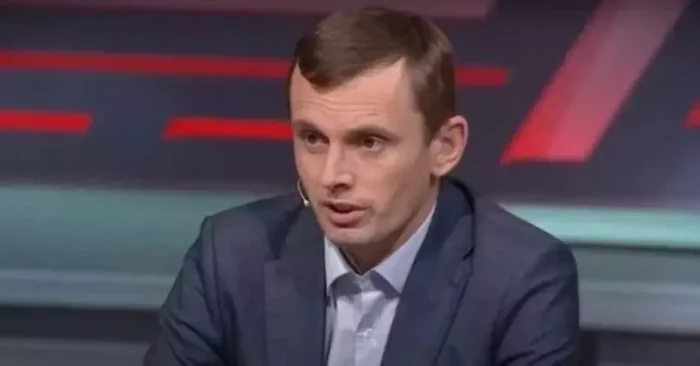
In an interview with News.Az, Ukrainian political scientist Ruslan Bortnik stated , "Why not Poland, Latvia, or Lithuania, but Belgium? Because these countries are practically bordering Russia or Belarus and can become victims of Russian aggression. Therefore, these countries are in no hurry to conclude such agreements. Additionally, economically and military-economically, the Baltic countries are not very significant. They do not have serious military production like Belgium.
Poland has already significantly provided Ukraine with all the resources it has and today cannot promise additional resources to Ukraine. Especially since the Polish government is divided into the president's faction and the prime minister's faction, this idea is not very popular there," he said.
The political scientist noted that for the abovementioned countries, military aid to Ukraine involves additional political risks, adding that these countries also lack the necessary resources.


Similar news