Can 100 days bring peace? Experts critique Trump’s ambitious Ukraine plan


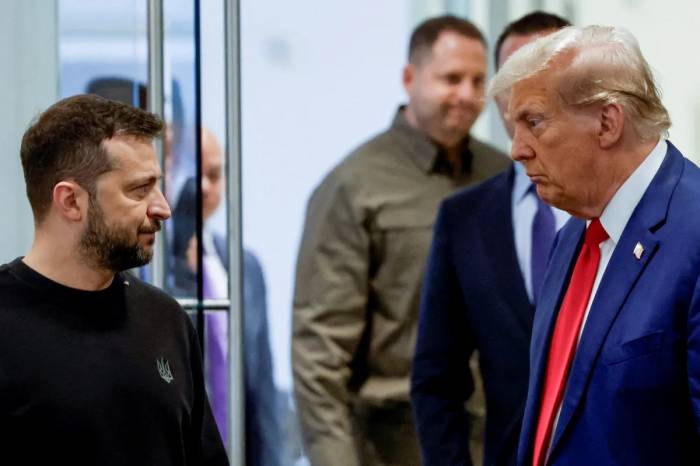
U.S. President Donald Trump has tasked his special envoy for Ukraine, Keith Kellogg, with resolving the conflict in Ukraine within 100 days—a deadline that many experts dismiss as unrealistic. During his presidential campaign, Trump famously claimed he could end the war in a single day, though he later conceded that the conflict proved more intractable than anticipated.
To gauge the viability of a peace deal between Russia and Ukraine, particularly in light of Trump’s ambitious timeframe, News.Az reached out to leading political scientists from both sides of the divide.
In an interview with News.az , political scientist Yevhen Magda of Ukraine expressed skepticism about any prospects for a swift resolution. “I believe that 100 days to resolve the Russia–Ukraine war is a myth,” Magda asserts. He argues that the conflict’s sheer scale and complexity defy the notion of neatly concluding hostilities within a fixed period. Moreover, Magda suggests that the Trump administration may lack a nuanced grasp of the conflict’s underlying dynamics.
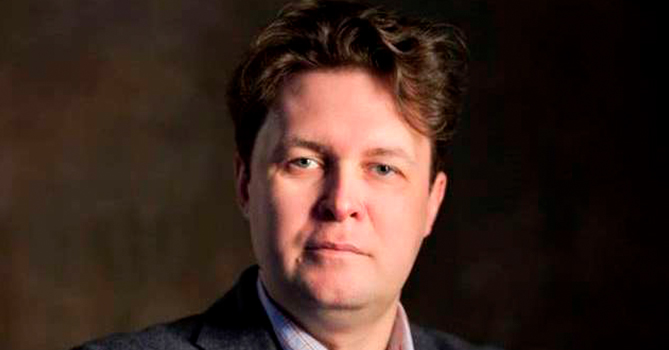 “Consultations with Russia might be underway regarding its vision of the process, but there is little evidence that President Putin is inclined to halt the war,” he observes. For Magda, Russia’s long-term strategy under Putin is not to secure an immediate ceasefire but rather to exert continuous political pressure on Ukraine. “Putin’s objective is to maintain a position from which he can dictate terms to Ukraine, all the while expecting the West to look the other way,” he explains. The political scientist further contends that the administration’s approach is reminiscent of Cold War-era bargaining—a mindset ill-suited to the realities on the ground today.
In an interview with News.az, Russian political scientist Darya Grevtsova offers a perspective that, while acknowledging the existence of Trump’s proposed peace plan, casts doubt on its practical impact. Meanwhile, Grevtsovaacknowledg ed the existence of Trump's proposed peace plan but cast doubt on its practical impact. “It’s possible that Trump has a peace plan, but its details and the willingness of both Russia and Ukraine to accept it remain highly uncertain,” she remarks.

Grevtsova speculates that any viable agreement might include a return to the status quo ante along the contact line, along with measures such as lifting bans on the Russian language and the Orthodox Church, as well as restricting Ukraine’s armed forces and weaponry. Critically, she notes that Ukraine would likely have to abandon any aspirations toward NATO membership. “If these conditions were met—and if Trump or other international actors could exert sufficient pressure on Ukrainian President Volodymyr Zelensky, who is increasingly seen as compliant—then a ceasefire might be conceivable,” Grevtsova suggests.
However, she tempers this optimism by warning that a genuine peace agreement is unlikely in the near term. “In reality, we should expect only limited de-escalation measures, such as agreements to avoid shelling critical infrastructure like energy and nuclear facilities, rather than a comprehensive cessation of hostilities,” she explains. Furthermore, Grevtsovapredicts that the U.S. could eventually shift much of the financial burden of Ukraine’s war to European partners, a move that might force a recalibration of Ukrainian policy in the coming months.
Both experts converge on the view that any resolution to the conflict will require more than short-term diplomatic maneuvering. For Magda, a lasting peace hinges on a fundamental restructuring of power dynamics—arguably, the dismantling of the current Russian imperial framework. Grevtsova, on the other hand, emphasizes that while temporary measures may reduce the intensity of the fighting, a definitive peace will only be achieved when broader strategic shifts occur, potentially as funding and resources wane for Ukraine.
In sum, while Trump’s 100-day peace initiative may serve as a provocative political statement, both Ukrainian and Russian scholars remain deeply skeptical of its prospects. The conflict, it appears, is not one that can be resolved within a neat deadline but rather demands sustained, multifaceted efforts and, ultimately, structural changes that extend far beyond any singular peace plan.


Similar news