Can the world live without China? Global dependence explained


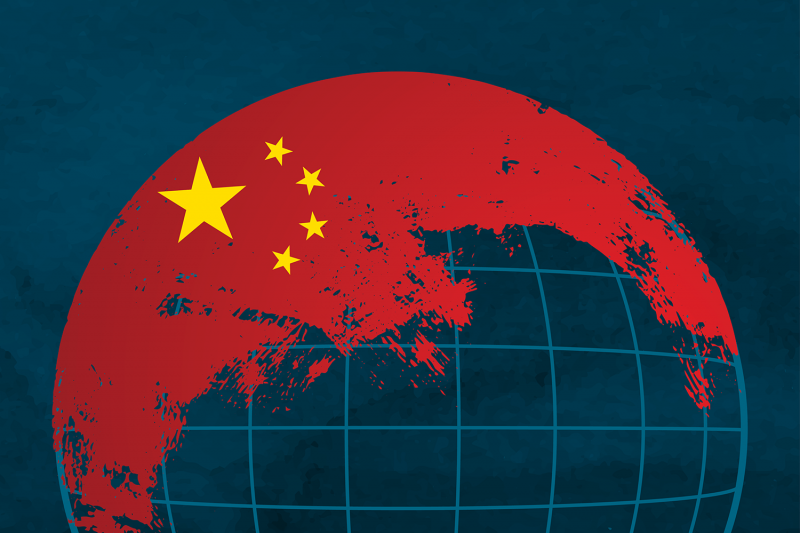
The question "Can the world live without China?" transcends simple economic speculation. It is a strategic inquiry into the architecture of 21st-century globalization. The blunt, short-term answer is a resounding no. The world as currently configured would experience systemic collapse without China’s integrated role. However, the more nuanced, forward-looking reality is that the world is already attempting the Herculean task of learning to live differently with China, reducing critical vulnerabilities while acknowledging its permanent, albeit reconfigured, centrality. This process is not about replacement, but about painful, expensive, and incomplete rebalancing.
I. The pillars of dependence: More than just cheap goods
China’s role is often reduced to its “world’s factory” moniker, but this undersells the sophistication and depth of its embeddedness.
- The unrivaled manufacturing ecosystem: Scale, speed, and smarts
China is no longer just the low-cost assembler of the 1990s. It has evolved into the planet’s most comprehensive industrial ecosystem. Its dominance isn't merely about cheap labor; it’s about aggregate scale, unparalleled supply chain clustering, and a developed logistics backbone. A company can source a specialized capacitor, a custom aluminum extrusion, and a precision mold within a 50-mile radius in the Pearl River Delta, with prototypes turned around in days. This “just-in-time” innovation system is as critical as “just-in-time” inventory.
- Critical sectors:Beyond consumer electronics, China’s grip is strategic. It refines 90% of the world’s rare earth elements, crucial for magnets in EVs and fighter jets. It produces over 50% of the world’s steel and aluminum. In pharmaceuticals, it is the leading supplier of antibiotics, vitamins, and the aforementioned APIs. A sudden severance would halt auto plants, delay construction, and threaten basic healthcare supplies globally.
- The green transition paradox:The West’s push for a renewable future is currently built on Chinese manufacturing. Over 80% of solar panels, a majority of lithium-ion batteries, and key wind turbine components flow from China. Decarbonizing without China in the near term is a physical impossibility, creating a stark energy security dilemma.
- The dual economic role: Colossal market and financial anchor
China performs two sometimes contradictory functions in the global economy.
- The insatiable consumer: The narrative of the Chinese consumer as the primary engine of global growth is powerful. While its growth has slowed, its scale remains unmatched. It is the largest automotive market, the top destination for luxury goods, and a make-or-break arena for sectors from agriculture (soybeans) to entertainment (box office). For multinational corporations, “China for China” strategies are now standard; losing market access means ceding future growth and scale.
- The creditor and stabilizer: China’s trillions in foreign exchange reserves, heavily invested in U.S. and European sovereign debt, act as a stabilizer for Western bond markets. Its outward investments, via the Belt and Road Initiative (BRI), have built ports, railways, and power grids across Asia, Africa, and parts of Europe, creating deep structural ties and dependencies that extend far beyond trade balances.
- The technological co-leader: From imitation to innovation
The West’s technological dependence has shifted from passive (cheap assembly) to active (integrated R&D and advanced manufacturing).
- Hardware prowess: China dominates the manufacturing of not just finished devices but the precision machinery that makes them. It is a leader in high-speed rail, drone technology, and telecommunications infrastructure (5G).
- The digital ecosystem parallel universe: Apps like WeChat and AliPay have created a seamlessly integrated digital life model that rivals Silicon Valley’s offerings. Chinese AI research is world-class, and its companies are leaders in surveillance technology and fintech. A digital “decoupling” would split the global internet and slow the pace of innovation in both spheres.
- The resource vortex and logistics command center
China’s industrial machine dictates global commodity cycles. Its demand swings move markets for copper (critical for electrification), iron ore, oil, and agricultural products. Economies from Australia to Chile and Brazil have been structurally reshaped by the Chinese demand cycle. Simultaneously, seven of the world’s 10 busiest container ports are in China. This isn’t just about exporting Chinese goods; it’s about controlling the circulatory system of global trade. Rerouting this logistics network would be a decade-long endeavor of monumental cost.
II. The great unwinding: "China Plus N" and its discontents
The recognition of over-dependence, fueled by trade wars, pandemic disruptions, and geopolitical rivalry, has launched the "Great Unwinding." The dominant strategy is "de-risking" or "China Plus N" — not wholesale decoupling, but strategic diversification.
- The mechanisms of diversification
- Friendshoring/Nearshoring: Shifting production to politically aligned or geographically proximate nations. The US looks to Mexico and “I2U2” partners (India, Israel, UAE); Europe looks to Eastern Europe, Türkiye, and North Africa.
- Industrial policy as a catalyst: The U.S. CHIPS and Science Act and the EU’s Green Deal Industrial Plan are explicit attempts to use subsidies and protectionist measures to onshore critical production (semiconductors, batteries, clean tech).
- Supply chain resilience: Companies are moving from lean, single-source models to more resilient, multi-regional inventories. This means higher costs for duplicate tooling and capacity.
- The inherent limitations and costs
This transition is fraught with friction:
- The scale dilemma: No single nation, not even India or a collective like ASEAN, can replicate China’s combination of scale, skilled engineering workforce, and supplier density overnight. Building a parallel semiconductor fab can cost $20 billion and take five years.
- The cost inflation imperative: Diversification is inherently inflationary. Higher labor costs in destination countries, duplicated capital expenditures, and the loss of Chinese manufacturing efficiencies will raise prices for end consumers, potentially fueling persistent inflation in Western economies.
- The "N" in "China Plus N" often leads back to China: Vietnam or Mexico may assemble final products, but they still import high-value components, machinery, and raw materials from China. This merely adds a node to the supply chain without severing the core dependency. China is moving up the value chain, becoming the supplier of the machines that make the machines.
- China’s counter-strategy: China is not passively watching. It is investing heavily in automation to retain higher-end manufacturing, pushing for self-sufficiency in semiconductors (“Made in China 2025”), and deepening trade ties with the Global South via the BRI and BRICS+ frameworks, creating alternative economic ecosystems.
III. The contours of a "post-dependent" world: Fragmentation and managed interdependence
The end state is not a world without China. It is a world with asymmetric, managed interdependence.
- A bifurcated or multifurcated global system: We are moving towards parallel economic blocs. A U.S.-led bloc focused on “de-risking” in critical sectors (tech, energy, defense), and a China-centric bloc focused on the Global South, with a large “swing” middle ground (ASEAN, parts of the Middle East and Africa) playing the fields. This means duplicated standards, competing payment systems (SWIFT vs. CIPS), and technological spheres of influence.
2. Sectoral decoupling: Complete decoupling is a fantasy. The future is sector-specific. Full-scale separation is likely in "hard tech" (advanced semiconductors, quantum computing, AI for military use). Partial diversification will occur in "green tech" and pharmaceuticals. Deep integration will likely remain in consumer goods and non-strategic industrial inputs where Chinese efficiency is irreplaceable.
3. The permanent role: China will remain, at minimum:
* The dominant manufacturer for non-strategic, high-volume consumer goods.
* The largest or second-largest single consumer market for most global brands.
* An indispensable player in meeting global climate goals, given its green tech manufacturing lock-in.
* The primary trade partner for the majority of the Global South.
Conclusion: Living differently, not without
The world cannot "live without China" without embarking on a decade of depression-level economic suffering and facing security risks from medicine shortages to stalled energy transitions. The question itself is a misnomer. The real question is: At what cost and over what timeframe can the world reduce its most dangerous single points of failure while managing a relationship with a peer competitor that remains deeply economically intertwined?
The answer is unfolding before us: a messy, costly, and politically charged process of partial disengagement in strategic areas, coupled with continued entanglement elsewhere. The goal is not independence — a near-impossibility in a globalized world — but resilience through diversified dependence. The world will live with China for the foreseeable future, but it will be a more complex, tense, and expensive coexistence, marking the definitive end of the era of hyper-globalization that China’s rise both powered and came to symbolize. The next phase is the era of strategic re-globalization, where efficiency is no longer the sole god, and security of supply commands a premium.
By Asif Aydinly


Similar news