Trump challenges UK's green transition: A clash of energy policies


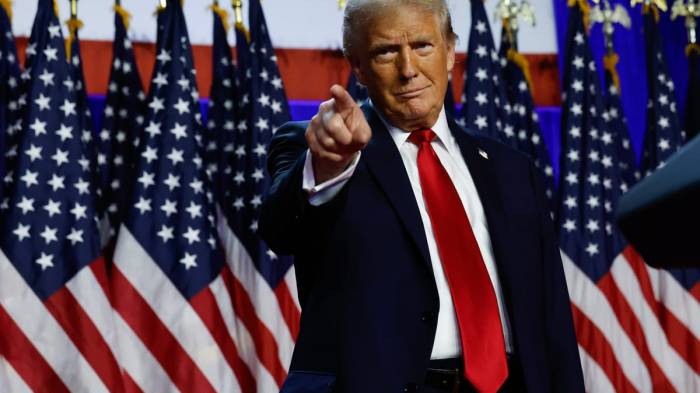
Photo: Politico
US President-elect Donald Trump recently made headlines with his sharp criticism of the UK’s decision to phase out oil and gas drilling in the North Sea.
In a statement posted on Truth Social, he labeled the move a "very big mistake," urging the UK to "open up the North Sea" and "get rid of the windmills." While his remarks were characteristically blunt, they underscore a broader debate about the tension between traditional energy industries and the global shift toward renewable energy.At the heart of Trump’s critique lies his longstanding opposition to green energy initiatives, which he views as economically disruptive and strategically flawed. However, his comments also highlight deeper issues facing the UK’s energy sector—issues that are emblematic of the global challenges in balancing energy security, economic stability, and environmental commitments.
The UK’s decision to impose higher taxes on oil and gas companies has been a major point of contention. In 2022, the Conservative government introduced a windfall tax, increasing the overall tax rate for oil and gas producers to 78%. This was framed as a necessary measure to capture extraordinary profits generated by soaring energy prices in the wake of Russia’s invasion of Ukraine. However, the policy has faced significant backlash from industry players, with US energy giant Apache announcing its exit from the North Sea by 2029, citing high taxes and stringent environmental regulations.
Apache’s decision is a warning signal for the broader industry. The company described the North Sea as "unprofitable," a sentiment echoed by other operators who argue that such policies deter investment and risk undermining the sector's long-term viability. For a region historically dependent on oil and gas revenues, the economic ramifications of a declining industry are significant.
 Borntoengineer
Despite these concerns, both Conservative and Labour governments have justified these taxes as a means to fund the transition to renewable energy. Labour leader Keir Starmer, for instance, has committed to expanding wind power capacity to 60 gigawatts by 2030. Yet, questions remain about whether the revenues generated from traditional energy can sufficiently offset the costs of building a low-carbon economy.
Trump’s remarks are not merely economic in nature; they reflect a broader ideological stance. Throughout his political career, he has positioned himself as a champion of traditional energy sources, viewing them as critical to economic growth and national security. His opposition to wind farms, often described in colorful terms, is well-documented. In 2015, he famously sued to block the construction of wind turbines near his golf course in Scotland, a fight he ultimately lost.
For Trump, energy policy is as much about symbolism as it is about strategy. By advocating for the expansion of oil and gas exploration, he seeks to reinforce the narrative of energy independence and economic resilience. His call to "open up the North Sea" aligns with his broader vision of a world where traditional industries are prioritized over what he perceives as experimental and risky green technologies.
From a geopolitical perspective, Trump’s critique also signals his skepticism toward policies that, in his view, undermine the economic competitiveness of Western nations. For the UK, his comments serve as a reminder of the delicate balancing act between maintaining investor confidence in traditional energy sectors and meeting international climate commitments.
The UK’s pivot toward renewable energy is part of a larger global effort to combat climate change. The government’s ambitious plans to expand wind power capacity are designed to reduce carbon emissions and decrease reliance on fossil fuels. Proponents argue that this transition is not only necessary for environmental reasons but also represents a strategic investment in the energy sources of the future.
However, the transition is fraught with challenges. Critics, including major oil and gas companies, warn that high taxes and regulatory burdens risk creating energy supply gaps and increasing dependence on imports. In a world still grappling with the economic fallout of the COVID-19 pandemic and the ongoing war in Ukraine, energy security remains a pressing concern.
While the UK government has sought to frame its policies as a model for sustainable development, the reality is more complex. Building a low-carbon economy requires massive investment, and the pace of this transition must be carefully managed to avoid economic dislocation. Trump’s critique, while controversial, touches on valid concerns about the potential economic trade-offs of ambitious environmental policies.
At its core, the debate over the North Sea reflects a clash of ideologies. Trump represents a worldview that prioritizes immediate economic stability and the preservation of traditional industries. His supporters see him as a defender of jobs in the oil and gas sector and a vocal opponent of policies that, in their eyes, jeopardize livelihoods in the name of environmental goals.
On the other hand, the UK’s approach embodies a vision of long-term sustainability, albeit with significant short-term costs. The Labour Party’s commitment to renewable energy reflects a broader societal consensus on the urgency of addressing climate change. However, this consensus is not without dissent, particularly from those who question the feasibility and economic impact of such an aggressive transition.
Trump’s condemnation of the UK’s energy policy sheds light on the broader tensions shaping global energy debates. As the UK grapples with the dual challenges of reducing carbon emissions and maintaining economic competitiveness, the path forward is anything but clear. Trump’s remarks serve as a stark reminder of the competing priorities at play—economic stability, environmental responsibility, and geopolitical strategy.
While the UK government remains committed to its green agenda, the criticism from Trump and others highlights the need for a more nuanced approach. The future of energy policy will require balancing innovation with pragmatism, ensuring that the pursuit of sustainability does not come at the expense of economic resilience or energy security.
(If you possess specialized knowledge and wish to contribute, please reach out to us at opinions@news.az).


Similar news