How the Belt and Road is shaping the future of the global economy


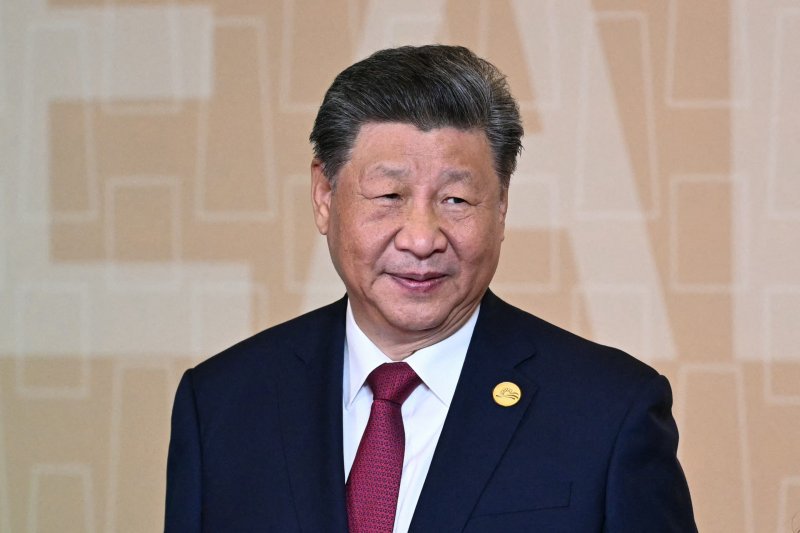
The Belt and Road Initiative, proposed by President Xi Jinping in the autumn of 2013, has become one of the most significant economic and strategic projects of the 21st century — one that has reshaped the global infrastructural, trade, and geo-economic landscape. Unlike traditional integration models based on ideological blocs, political confrontation, or power projection, this initiative offers a vision of interconnectedness and pragmatic cooperation, where economics and development form the basis of a new international order.
From the earliest stages, the initiative attracted interest across Asia, Europe, Africa, Latin America, the Middle East, and Oceania. Over the past decade, more than 150 countries and international organizations — including nations from the EU, the Gulf region, Africa, Central Asia, South America, and Southern Europe — have joined it. Today, the participating states account for roughly 65% of the world’s population and 40% of global GDP. These figures reflect not only the scale but also the degree of trust in the project as a platform for development. In global politics, it is exceptionally rare for an idea to unite such diverse states, economic systems, and strategic interests.
The first results proved remarkable. According to World Bank data, trade between participating countries increased by 4.1%, foreign direct investment grew by 5%, and low-income economies experienced an average GDP increase of 3.4% through infrastructure modernization, improved logistics, and the creation of new production chains. International assessments indicate that by 2030, the initiative may generate up to $1.6 trillion annually for the global economy — an amount comparable to the current economies of Spain or South Korea.
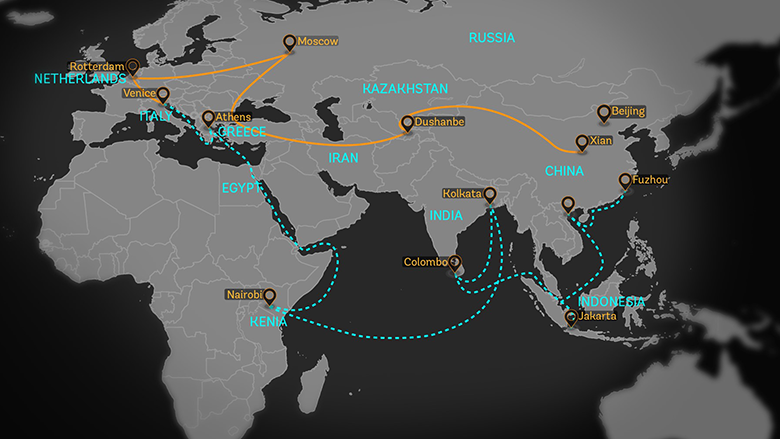
Infrastructure has become the core pillar of the Belt and Road Initiative. Over the past decade, more than 200,000 kilometers of new or modernized highways have been completed, along with tens of thousands of kilometers of railways, nearly one hundred ports, numerous industrial zones, logistics hubs, technology parks, and energy facilities. These infrastructure upgrades have significantly accelerated the transformation of global logistics. One of the most striking examples is the growth of rail freight between China and Europe: while only 80 freight trains connected the two regions in 2013, by 2024 the number reached 19,392 — an increase of more than 240 times. According to China State Railway Group, around 12 million TEU (approximately 120 million tons of cargo) have been transported via these rail routes to date.
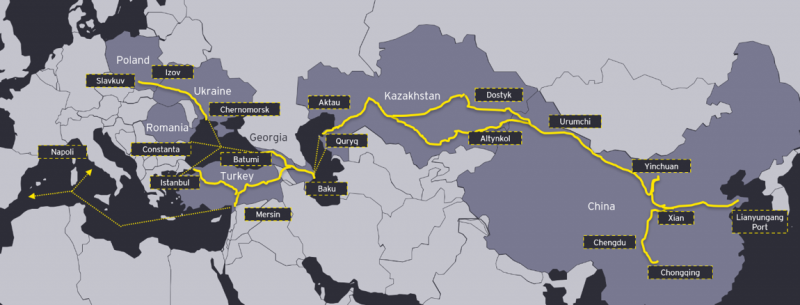
A key component of the emerging logistics landscape is the Trans-Caspian International Transport Route — the so-called Middle Corridor. Over the last two years, it has become one of the fastest-growing trade routes, and by 2030 its capacity is expected to increase by 3 to 3.5 times compared to 2021 levels. Currently, more than 60% of cargo shipped along this route consists of Chinese goods destined for European markets. The development of the Middle Corridor has driven major modernization of port infrastructure in Kazakhstan and Azerbaijan, enhanced railway connectivity across Central Asia and the South Caucasus, and accelerated the implementation of modern digital customs systems.
The financial architecture of the initiative has become its own mechanism of global influence. Its backbone consists of the Asian Infrastructure Investment Bank with over $100 billion in capital, the Silk Road Fund with assets near $40 billion, the Export-Import Bank of China, the China Development Bank, and dozens of joint financial platforms supporting transport, energy, educational, technological, and industrial development. Through these instruments, many developing countries have gained access to long-term financing previously available primarily to major world economies.
Today, the initiative is extending far beyond traditional infrastructure investment and gradually evolving into a multi-layered development platform. One of its most dynamic areas is digitalization. The “Digital Silk Road” includes the introduction of autonomous logistics systems, smart customs platforms, artificial intelligence in freight management, the construction of data centers, and the expansion of cross-border e-commerce. Businesses gain the ability to operate beyond outdated bureaucratic restrictions, while consumers benefit from expanded access to global markets.
The environmental dimension is becoming equally important. The “Green Silk Road” supports renewable energy projects, including solar power plants, wind parks, hydrogen energy facilities, as well as modernization programs aimed at reducing greenhouse gas emissions. Today, more than 30% of Belt and Road projects are classified as green — and this share continues to grow, reflecting the global transition toward climate resilience.
Humanitarian cooperation has also become an essential part of the initiative. More than 80,000 students from participating countries currently study in China through Belt and Road programs. Joint research platforms are being established in engineering, medicine, biotechnology, artificial intelligence, and renewable energy. The initiative has evolved into an instrument of economic advancement, knowledge exchange, cultural dialogue, and the development of new international elites.
In this sense, the Belt and Road Initiative has transformed into a long-term strategy for global development, presenting a new model of international cooperation founded on mutual benefit, inclusivity, and respect for national sovereignty. In a rapidly emerging multipolar world, it does not function as a tool of pressure but as a universal mechanism that enables states to strengthen their economic competitiveness, modernize infrastructure, and integrate into new global value chains.
P.S. The world is changing rapidly. In an era where traditional alliances are weakening and old economic models no longer guarantee stability, initiatives like the Belt and Road become symbols of transition — from rivalry to cooperation. Those countries that recognize the logic of the new global economy in time will not only benefit today; they will build the foundations of their future for decades to come.


Similar news