Ceasefire or pause?


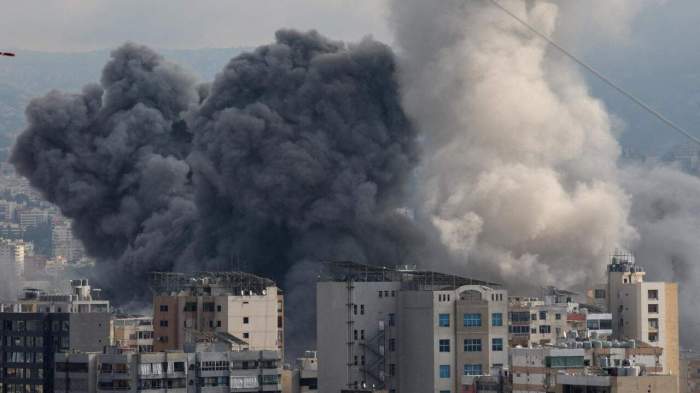
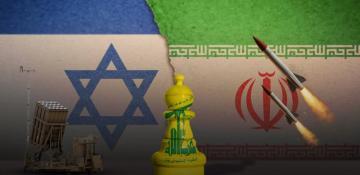
After long and exhausting negotiations on November 27, a ceasefire agreement was finally reached between Lebanon, specifically Hezbollah, and Israel, lasting for 60 days. This announcement was made by U.S. President Joe Biden and French President Emmanuel Macron. During this period, barring unforeseen circumstances, Israel will withdraw its troops from southern Lebanon, while Hezbollah militants will vacate the border areas, making way for the Lebanese Army and UNIFIL forces. According to the agreement, the Shiite terrorist organization has agreed to cease its "resistance," which it had linked to halting military actions against Hamas in the Gaza Strip.
Hezbollah, significantly weakened, is losing its influence both within Lebanon and abroad. Israel has warned Lebanese residents not to return to areas still occupied by its troops. Additionally, the Israeli government retains the right to strike Hezbollah should it violate the terms of the ceasefire. This stern stance by Israel is tied to the conflict's toll on the Shiite group, with over 3,760 militants killed and approximately 8,000 wounded. The fighting has also displaced around 1.2 million Lebanese residents, exacerbating sectarian tensions and mistrust among former allies, who now view each other with open animosity.The weakening of Hezbollah's dominance has sparked the resurgence of previously suppressed insurgent groups in Syria, many supported by Turkiye. Long-standing Sunni-Shiite tensions have resurfaced, adding to the already volatile situation. It’s worth noting that conflicts in the region predate Islam, involving struggles between Rome and Parthia, Byzantium and the Sassanids, and later the Ottomans and Safavids, all vying for control over trade routes. Today, little has changed, except that new players like the EU, the U.S., Russia, China, and India have joined the fray, driven primarily by competition over energy resources.
The loss of prestige by Hezbollah, a key supporter of Syrian President Bashar al-Assad, has created a power vacuum. On the very day after the ceasefire between Israel and Lebanon was announced, the jihadist group Hayat Tahrir al-Sham (HTS) launched an offensive. Having long controlled Idlib and quietly amassed forces, HTS has shifted the political dynamics in the Middle East. Backed by factions of the Free Syrian Army, the group has unified under the banner of "Operation Al-Fatah Al-Mubin," with their advance toward Aleppo dubbed "Operation to Prevent Aggression," a warning to Iran to temper its ambitions. Footage from the battlefield shows HTS fighters tearing down portraits of Iran's Supreme Leader Ali Khamenei and trampling on images of Bashar al-Assad.
Facing this unexpected offensive, Russian forces, Assad’s troops, and Iran-backed militias began retreating. The opposition seized the 46th Brigade base and took control of Aleppo. According to Syrian state television, Assad’s soldiers were ordered to evacuate the city to avoid encirclement. Reports also indicate that the opposition recaptured the town of Saraqib, with fighting intensifying near Daraa, close to the Jordanian border.
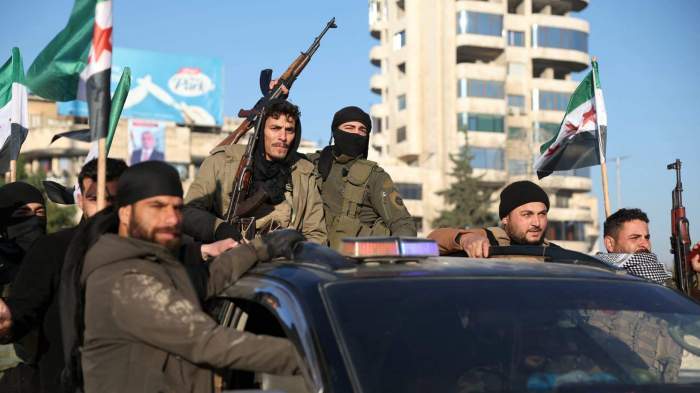
Rebels have reportedly acquired a large number of man-portable air-defense systems (MANPADS) from the Syrian army's arsenal. Simultaneously, Ankara-backed Turkmen armed groups have initiated operations against PKK/YPG terrorists in Tel Rifaat, under Kurdish control. These developments indicate the conflict is evolving into a dangerous ethno-religious war amidst global sectarian tensions.
The rebels are now a few kilometers from Nubl and Zahra, two predominantly Shiite towns housing Hezbollah forces supported by Iran. Their capture could result in large-scale ethnic cleansing given the heightened Shiite-Sunni hostilities. Meanwhile, anti-Assad forces have attacked Nayrab Air Base east of Aleppo, home to Iran-backed militias. This marks the most significant assault against Assad’s regime since March 2020, when Russia and Turkiye brokered a ceasefire. Iranian media reported that IRGC Brigadier General Kiumars Pourhashemi, a senior Iranian military advisor, was killed in the fighting.
The Kurdish ANHA agency reports that HTS fighters have captured at least 22 settlements, including two strategically important villages near Saraqib in Idlib province. These areas are just two kilometers from the M5 highway connecting Aleppo to Damascus. According to ANHA, HTS’s offensive is supported by pro-Turkish factions in the region.
In essence, Russia's involvement in Ukraine and the weakening of Iran’s proxies have unleashed a new wave of conflict in the Middle East. According to Octagon, a “two-tiered pyramid of American influence” is forming in Idlib province. Ukraine’s Defense Intelligence Directorate (GUR) is increasingly engaging with HTS, training militants in operating combat drones for joint actions against Syrian government forces and Russian troops in the region. The operations, allegedly directed by the U.S. Defense Intelligence Agency, also involve coordinating attacks by HTS, the Syrian National Army (SNA), and other factions with Israeli strikes on IRGC targets in Syria and Hezbollah positions in Lebanon.
As rebels have taken 16 villages in Hama province and advanced toward Damascus, unconfirmed reports suggest infighting has broken out between various factions in the capital. Against this backdrop, Ankara may seize the moment to launch operations against the Kurdish-led Syrian Democratic Forces (SDF) in northern Syria. Turkish President Recep Tayyip Erdoğan has stated that it is high time Syrian refugees in Turkiye return home.
Syria is now embroiled in its worst-case scenario.
Assad has made an unscheduled trip to Moscow, urgently seeking weapons and troops, but Russia’s resources remain tied up in Ukraine. As predicted, the Middle East is on the brink of a major upheaval, and its geopolitical map is poised for significant changes in the near future.
(If you possess specialized knowledge and wish to contribute, please reach out to us at opinions@news.az).


Similar news