Collapse of Assad's regime: What does it mean for Russia and the world


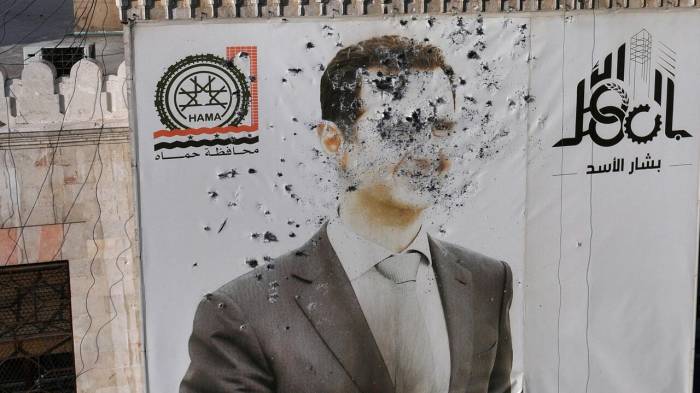
A bullet-riddled portrait of Syria's Bashar al-Assad adorns Hama's municipality following the city's capture by rebel forces on December 6, 2024. © Omar Haj Kadour, AFP
Editor's note: Russian military-political analyst, expert in the field of strategic security, specialist in the Middle East and Africa Vladimir Bekish. The article expresses the personal opinion of the author and may not coincide with the view of News.Az.
Once upon a time, long ago, I was flying from Moscow to Damascus for business. At Vnukovo Airport, I went through check-in, handed over my luggage, and waited for boarding. When the boarding call came, we went through security, boarded a bus, and drove to the Syrian plane. As we exited the bus, there on the ground lay all the passengers’ checked luggage. An announcement instructed each of us to identify our suitcase and hand it over personally to the airline’s baggage handlers. Only then could we board the plane.The idea was clear: to ensure that no “unclaimed” suitcase—possibly carrying a bomb—made its way onto the plane from Moscow.
But my impressions of Syria and the situation there didn’t end with that flight. What’s happening now in Syria and the consequences it will lead to are beyond chaotic. It’s something far worse. The aftermath will be severe—not just for Syria or the Middle East but most critically for Russia, both externally and internally. Here’s why.
Syria, located in a volatile region where Russia has strategic interests, has maintained long-standing relations with Moscow. For decades, Russia has supported Syria with financial aid, arms, humanitarian supplies, and political backing on the world stage. Moreover, Syrian President Bashar al-Assad has cultivated a close relationship with Russian President Vladimir Putin. They’ve met, shaken hands, perhaps even embraced. They’ve negotiated deals, and Russia has established military bases in Syria, deploying soldiers, planes, helicopters, and ships. Russian forces have fought on Assad’s side, conducted operations against his adversaries, and held military drills in the Mediterranean to demonstrate strength to the West.
In return, Assad has done everything to ensure Russia’s satisfaction with its presence in the region and its access to the Mediterranean. Everything seemed mutually beneficial.
Yet, the Syrian army... let’s just say, it has its peculiarities. While in Syria, I interacted with local soldiers and learned about their methods. A Syrian soldier would report to duty in the morning, take up arms, and defend his trench against enemies, firing as needed—until about 6 or 7 p.m. Then, a pause. The soldier would head home, change, and go to work as a waiter at a nearby café or diner. After his night shift, he’d return home to sleep, ready to head back to the trenches in the morning.
I also recall friends in Dubai showing me a luxurious villa in a prestigious area, valued at $3.5 million. They explained that it had recently been purchased by a Syrian general—one of several Syrian property owners in the area.
Against this backdrop, Assad’s regime and power structure suddenly collapsed. Along with it went Syria’s unwavering loyalty to Russia and the affection for Russian forces, which had tirelessly supported Assad in bombing significant parts of Syria and suppressing the opposition that now holds power. Do you think this opposition, once targeted by Russian military efforts, will harbor any love for Moscow? Or for Iran, Assad’s ally and Russia’s partner, which also seems to have lost ground in Syria?
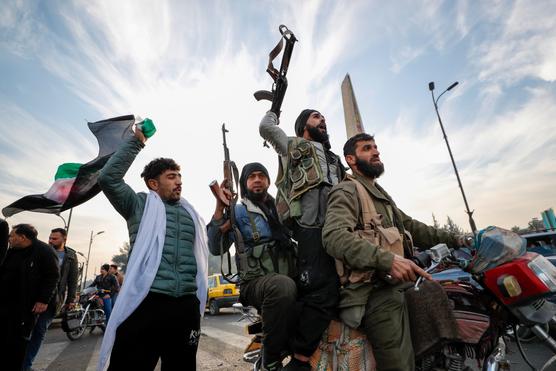
Syrian opposition fighters celebrate the fall of the Bashar al-Assad regime, December 8, 2024. OMAR SANADIKI / AP
Internally, the consequences for Russia are just as troubling. All the resources Russia invested in Syria—money, arms, humanitarian aid, and human lives—seem to have yielded zero results. Will anyone in the Russian leadership take responsibility for this colossal failure? Moreover, in the face of bewilderment among officials, politicians, and media over the lightning-fast downfall of Assad’s regime, one must ask: Was this truly so sudden and unpredictable? Where was the intelligence? The diplomats? The embedded agents? The satellite imagery? These are serious questions with serious implications, as they suggest a recurring pattern of historical oversight. Libya followed a similar script and taught no lessons. Sudan, too. And this indicates that something similar could happen unexpectedly in other places where Russia currently fosters ties and provides support. Africa, for instance, where Russia is investing significant effort, often following the same playbook as in Syria.
Speculating on Syria’s future and the region’s dynamics—what Iran, Türkiye, Israel, and the Kurds will do—is a vast topic. The U.S.’s role, particularly after January 20, will be straightforward: it will back Israel fully, as Trump has promised.
As for Syria itself, I foresee at least two Syrias, reminiscent of the Korean peninsula’s division. Who will mediate between them for years to come remains an open question.
Lastly, one intriguing tidbit: reports suggest that Assad and his family are now in Sochi. Russian authorities seem to keep their distance, but since they’ve provided him refuge, they must support him—housing, feeding, and covering his expenses. It’s doubtful that Assad fled Damascus empty-handed. He likely has assets—gold bars, offshore accounts, and more. The question is where and how much. It’s plausible that someone in Russia knows something about this.
And if so, it wouldn’t be surprising if they approach him with a logical proposition: “Well, dear friend, our country saved and sheltered you. That costs money. Share, won’t you? Maybe not with the state treasury, but at least with us…”
After all, Assad is unlikely to relocate to Dubai, Qatar, or Egypt anytime soon. Perhaps Venezuela might be an option...
(If you possess specialized knowledge and wish to contribute, please reach out to us at opinions@news.az).


Similar news