Tiberio Graziani: Meloni’s Azerbaijan visit signals Italy’s Eurasian ambitions - INTERVIEW



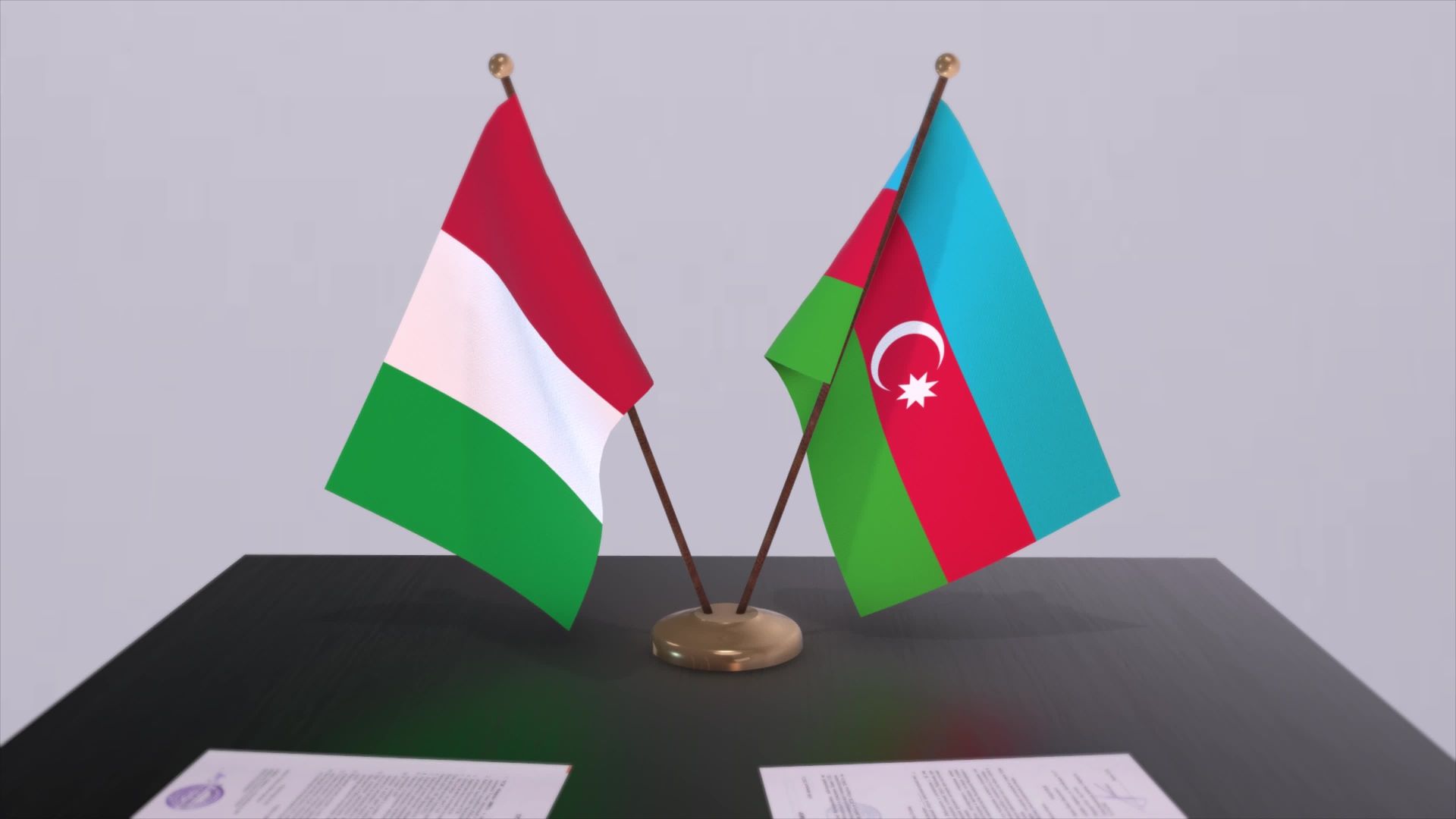
Italian Prime Minister Giorgia Meloni’s visit to Azerbaijan marked an important step in strengthening bilateral relations between Rome and Baku. The visit highlighted expanding cooperation beyond energy, including infrastructure, logistics, trade, and regional connectivity.
Analysts view the trip as a sign of Italy’s growing recognition of Azerbaijan’s strategic role in the South Caucasus and the wider Eurasian region. News.Az interviewed Tiberio Graziani, chairman of Vision & Global Trends – International Institute for Global Analyses.
- Mr Graziani, how do you assess Italian Prime Minister Giorgio Meloni's visit to Azerbaijan in terms of developing bilateral relations?
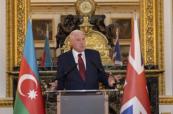
- Prime Minister Giorgia Meloni’s visit to Azerbaijan should be interpreted within the broader framework of Italy’s evolving international posture in the Euro-Mediterranean and Eurasian space. This was not merely a bilateral meeting driven by economic contingencies or by the energy dimension — important though that certainly is — but rather a step that signals Rome’s intention to consolidate a strategic relationship with an actor occupying a particularly significant geopolitical position in the South Caucasus.
For Italy, Azerbaijan represents a counterpart of primary importance, both as an energy supplier and as a geographical hinge between Europe, Central Asia, and the Caspian region. In an international context marked by the fragmentation of global balances, the crisis of traditional logistical chains, and the growing centrality of Eurasian infrastructure corridors, Baku assumes a role that goes beyond the purely commercial dimension.
From this perspective, Prime Minister Meloni’s visit can be seen as an act of strategic realism. Given its geographical position and historical vocation, Italy cannot confine itself to a peripheral posture with respect to Eurasian dynamics; on the contrary, it has a clear interest in strengthening relations with those countries that can contribute to the construction of new architectures of economic and energy connectivity between the Mediterranean and Eurasia.
.jpg)
Source: AzerTAG
On the bilateral level, the visit helps consolidate a relationship that already displays elements of continuity and strategic convergence, although it remains heavily concentrated on the energy dimension.
The maturation of the partnership between Rome and Baku will require a gradual overcoming of the current asymmetry, still strongly centered on energy, in order to develop more articulated forms of cooperation in the infrastructure, logistics, industrial, technological, and cultural sectors.
Ultimately, I consider this visit a positive development. It at least suggests the possibility that a greater awareness may also be emerging in Rome of Azerbaijan’s strategic importance — not only as an energy partner, but as a significant interlocutor within the broader Eurasian space.
- Italy is one of Azerbaijan's main trading partners, but looking at the trade structure, energy resources predominate in exports to Italy. In your opinion, what steps can be taken to diversify trade relations, and which non-energy areas of cooperation have development prospects?
- The current configuration of economic relations between Italy and Azerbaijan reflects a well-established reality: the energy sector constitutes the main pillar of bilateral trade. This is understandable, given Azerbaijan’s central role in the Eurasian energy geography and Italy’s need to diversify its supply sources. However, a mature strategic relationship cannot be based exclusively on a single dimension, however significant that dimension may be.
The real challenge is to transform a relationship that is predominantly commercial and centered on energy commodities into a structured and multidimensional economic partnership. To achieve this, it is first necessary to adopt a geopolitical vision of economics, recognizing that Azerbaijan is not merely an energy exporter, but a strategic territorial node within the Eurasian space.
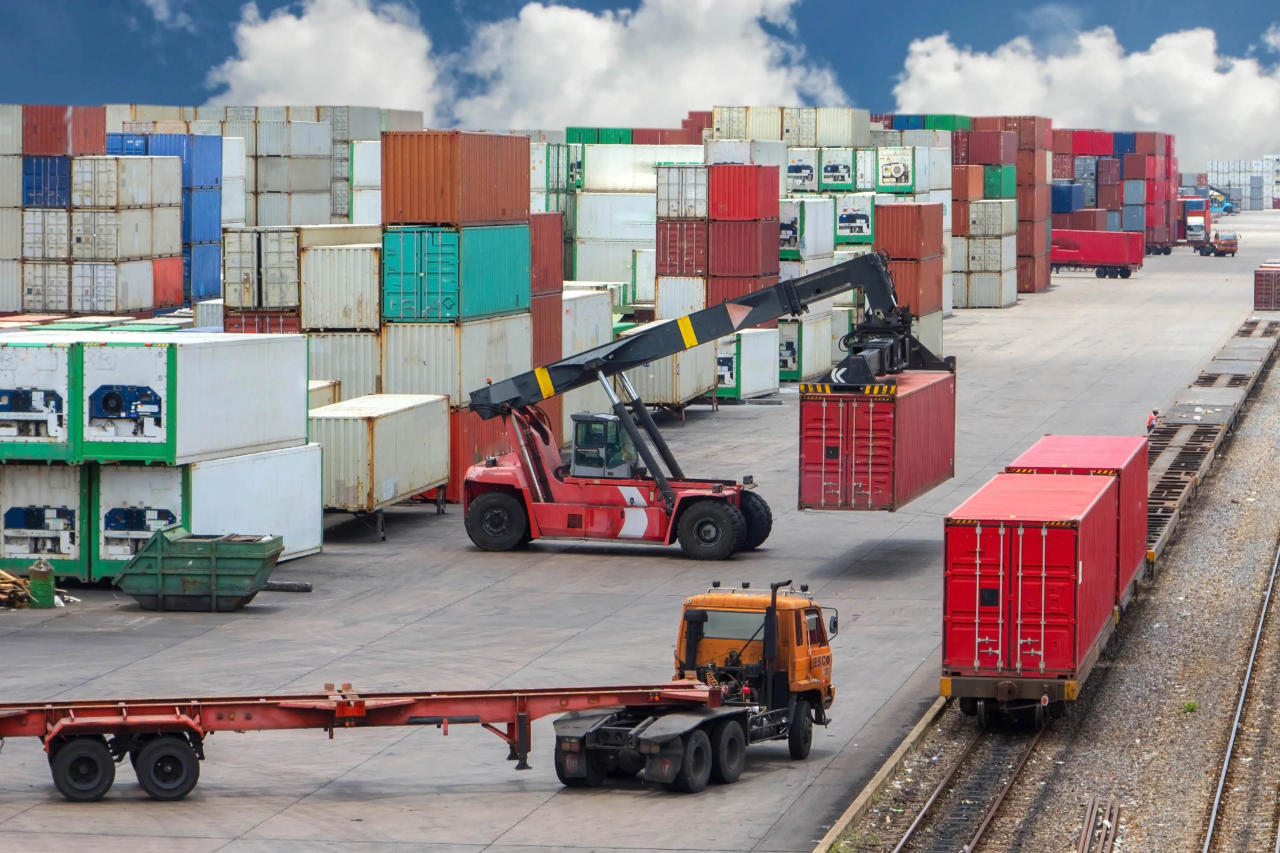
From this perspective, a first area with clear development potential is infrastructure and logistics. The growing centrality of connectivity corridors between Asia and Europe, particularly along the Trans-Caspian route, gives Baku a potentially decisive role as a transit hub. Thanks to its position in the Mediterranean and its port and manufacturing infrastructure, Italy could position itself within this dynamic not merely as a destination market, but as a partner in the development of integrated logistics networks, intermodal platforms, and transport cooperation.
Source: Trend
A second area concerns industrial cooperation in the broadest sense, particularly in sectors where Italy retains productive and technological capabilities that may support Azerbaijan’s economic modernization process. Within this framework, Azerbaijan could represent a favorable environment for investment, technology transfer, and industrial collaboration, particularly in infrastructure, engineering, agribusiness, and machinery.
The agri-food sector is no less relevant. Azerbaijan’s economic diversification requires domestic productive development, innovation in agricultural supply chains, and industrial transformation capacities — areas in which Italian expertise could find concrete application.
A further space for cooperation lies in education, research, and technological innovation. More solid economic relations, in the long term, are not built solely through trade flows, but through shared knowledge ecosystems: universities, research centers, advanced training programs, and scientific cooperation can constitute a decisive intangible infrastructure.
Finally, I would not overlook the cultural and tourism sectors, which are often underestimated but are strategically important in building durable relations between countries. Cultural diplomacy helps create mutual trust, an essential element for any lasting economic consolidation.
In summary, diversification requires a paradigm shift: moving from a relationship based on simple energy complementarity to a broader geoeconomic partnership, in which Italy and Azerbaijan recognize one another as connecting actors between the Mediterranean, the Caucasus, and Eurasia.
- How can Italy contribute to improving relations between Azerbaijan and the European Union?
- If Italy possessed a clearer degree of strategic autonomy, it could theoretically play a useful role in improving relations between Azerbaijan and the European Union, precisely by virtue of its political positioning and diplomatic tradition. Rome, at least during certain phases of its diplomatic history, has sought to play an intermediary role not only in terms of its membership in Euro-Atlantic structures, but also as an interlocutor capable of maintaining channels of dialogue with different geopolitical spaces. In this sense, Italy could exercise a function of pragmatic mediation between Brussels and Baku.
One must begin with a basic reality: the relationship between the European Union and Azerbaijan cannot be interpreted exclusively through normative or ideological categories, but must be understood in its concrete strategic dimension. Azerbaijan represents a significant actor in the Caucasian space, an important energy partner for Europe, and more broadly, a territorial node connecting the European continent with the Caspian region and Central Asia. Ignoring this reality would mean adopting a short-sighted view of Eurasian dynamics.
Precisely because Italy maintains consolidated and relatively stable relations with Baku, it can help foster a more balanced European approach, based on political dialogue, mutual recognition of strategic interests, and practical cooperation. This is not a matter of “taking sides” in favor of one party, but of promoting a more realistic relationship, less constrained by rigid ideological interpretations that often limit Europe’s diplomatic capacity.
A particularly relevant area is the economic one. Rome can encourage Brussels to conceive its relationship with Azerbaijan not solely in energy terms, but within the broader framework of Eurasian connectivity, logistical infrastructure, transport, and industrial cooperation. In other words, it can help shift the focus from a contingent relationship to a medium- to long-term strategic partnership.
There is also the issue of regional stability. The European Union has an interest in a stable South Caucasus integrated into cooperative regional dynamics. In this context, Italy could support dialogue-oriented initiatives aimed at reducing regional tensions, promoting a diplomacy oriented toward stabilization rather than polarization.
At a deeper level, I believe Italy could offer Europe a different geopolitical perspective: understanding that the Caucasian space is not a remote periphery, but rather a component of the broader Eurasian architecture currently undergoing transformation. If Brussels were to develop this awareness, its relationship with Baku could likewise take on a more structured and less episodic character.
Ultimately, Italy’s contribution could be to encourage a relationship between the European Union and Azerbaijan founded on strategic pragmatism, political dialogue, and mutual recognition of interests, overcoming approaches that risk reducing the geopolitical complexity of the region to overly simplistic frameworks.
- What foreign policy challenges does Italy face today? And how successfully is the country addressing them?
- Italy is currently facing a set of foreign policy challenges that reflect the current phase of profound transition in the international order. In my view, the central issue is that Rome is operating in a context marked by the gradual erosion of the unipolar structures that emerged after the Cold War and the consolidation of a more fragmented, competitive, and distinctly multipolar international configuration. In such a scenario, Italy’s principal challenge lies in clearly defining its strategic positioning and its margin of decision-making autonomy.
A first challenge clearly concerns the conflict in Ukraine and, more broadly, the crisis of European security. This conflict has exposed the strategic vulnerability of the continent and has intensified Europe’s dependence on external dynamics. Italy has, to a significant extent, aligned itself with the framework of Euro-Atlantic choices; however, a broader question remains unresolved: what role does Europe — and within it, Italy — actually intend to play in shaping the future continental balance? The management of the crisis has been politically coherent in terms of alignment, but far less effective in terms of Europe’s capacity for autonomous strategic initiative.
Source: Reuters
A second challenge concerns the wider Mediterranean, which constitutes Italy’s natural strategic space. Instability in North Africa, crises in the Middle East, energy competition, maritime security, migration flows, and the growing presence of external actors — from Turkiye to the Gulf powers, as well as Chinese and Russian projection — demand a more structured and coherent foreign policy. By virtue of its geography and historical tradition, Italy possesses a natural vocation in this strategic quadrant, but this potential has not always been translated into a sufficiently defined long-term strategy.
A third major issue is energy security and the reconfiguration of supply chains. Recent years have clearly demonstrated how energy, logistics, and commercial infrastructures have become central elements of geopolitical competition. In this respect, Italy has responded with a certain degree of speed in diversifying its energy sources, but the real challenge lies in transforming an emergency response into a structural geoeconomic strategy.
There is also the question of Italy’s relations with the emerging spaces of Eurasia, Central Asia, Africa, and the Indo-Pacific. In a multipolar world, Italy cannot confine itself to an exclusively Eurocentric projection. The ability to build balanced relations with new centers of power will be a decisive factor in determining its international relevance.
As for the effectiveness of Italy’s response, I would say that the country has shown pragmatism on certain specific dossiers, particularly in the energy field and in the management of its traditional alliances. However, a fundamental weakness remains: the difficulty of articulating a genuinely autonomous medium- to long-term strategic vision. More than a lack of diplomatic instruments, what often appears insufficient is the formulation of a geopolitical doctrine consistent with Italy’s position.
Ultimately, the main challenge is not merely to react to international events, but to move from a predominantly adaptive foreign policy to a more proactive one — capable of interpreting the transformations of the international system and positioning Italy as a conscious actor in the Euro-Mediterranean and Eurasian space.
- How do you assess the conflict resolution process between Azerbaijan and Armenia?
- The process of resolving the conflict between Azerbaijan and Armenia must first and foremost be assessed in light of the profound geopolitical transformations that have affected the South Caucasus in recent years. We are not dealing merely with a territorial dispute between two neighboring states, but with an issue situated within a region historically exposed to both regional and international competition, where local interests and broader geopolitical dynamics have often overlapped.
From this perspective, the fundamental fact is that the openly military phase of the conflict has substantially altered the previous balance, imposing a new political reality on the ground. From this point onward, the central issue is no longer simply the management of the conflict, but the construction of a stable and sustainable regional order. This inevitably requires a transition from a logic of historical confrontation to one of political normalization.
A credible process of stabilization can only consolidate if both parties agree to operate within a framework of political realism, recognizing that the stability of the South Caucasus constitutes a shared interest that transcends long-entrenched conflict narratives. In this sense, any diplomatic progress that facilitates direct dialogue between Baku and Yerevan should be regarded as a positive development.
However, overly simplistic interpretations should be avoided. Processes of geopolitical stabilization in sensitive regions rarely follow linear trajectories. Elements of fragility remain, linked to mutual trust, territorial delimitation issues, the security of regional communications, and the persistence of historically entrenched structures and divergent strategic interests.
There is also another aspect to consider: the South Caucasus does not operate in a geopolitical vacuum. Regional actors and external powers have historically exercised influence in this area, at times contributing to stabilization, and at others increasing the complexity of the situation. For this reason, any genuinely effective peace process should avoid becoming a terrain for geopolitical competition among external actors.
From a strategic perspective, normalization between Azerbaijan and Armenia could generate positive effects well beyond the bilateral dimension. A more stable South Caucasus could facilitate new infrastructural connections, trade corridors, and forms of economic cooperation between Europe and Asia, thereby contributing to the stabilization of an area that is crucial for Eurasian balances.
Therefore, my assessment is cautiously positive, yet realistic: today there is a window of opportunity for gradual stabilization, but the sustainability of this process will depend on the capacity of the parties to prioritize a logic of political equilibrium over the perpetuation of historical antagonism. In such contexts, peace is never merely the absence of war; it is the construction of a new regional equilibrium perceived as sustainable.
- Azerbaijani Energy Minister Parviz Shahbazov stated at the 6th meeting of the intergovernmental commission on economic cooperation between Azerbaijan and Italy that Rome could become a logistics hub for Europe as part of the Middle Corridor project. How interested is Italy in developing this project
- Italy’s interest in the Middle Corridor is, at least in theoretical terms, evident; however, it is necessary to distinguish between objective interest and the actual political-strategic capacity to translate that interest into concrete action. It is precisely here that a more problematic assessment emerges.
From a geopolitical perspective, the project presents elements of undeniable significance. The Middle Corridor is part of the broader reconfiguration of Eurasian routes, in a context where the fragmentation of traditional trade pathways and mounting geopolitical tensions are driving the search for new forms of connectivity between Asia and Europe. In such a scenario, Italy — by virtue of its geographical position and historical vocation — could theoretically aspire to a significant role as the Mediterranean terminal of these flows.
However, the central issue is that, over recent decades, Italy has demonstrated only a limited capacity to conceive of its geographical position as a structural geopolitical asset. There is often a considerable gap between the country’s strategic potential and its effective translation into coherent foreign and economic policy.
The idea that Rome could become a European logistics hub is certainly compelling, but it requires a number of preconditions that cannot be taken for granted today. First, a fully competitive and integrated infrastructure system, supported by a long-term strategic vision. Second, a clear political will to position Italy as a strategic actor in the redefinition of Eurasian connectivity, rather than merely as a passive beneficiary of initiatives designed elsewhere.
There is also a further reason for caution: the Middle Corridor is not geopolitically neutral. It involves delicate balances in the South Caucasus, relations with Central Asia, constraints arising from the current Euro-Atlantic positioning of both Italy and the European Union, Turkish interests, and, indirectly, the broader competition over continental connectivity architectures. To assume that Italy could automatically insert itself into this process without a clear geopolitical doctrine would be illusory.
Moreover, one should not underestimate a certain Italian tendency to interpret such projects primarily through a commercial lens, neglecting their strategic dimension. Yet today, infrastructure, ports, logistical corridors, and energy networks are not merely economic instruments; they are components of global geopolitical competition.
For this reason, I would say that Italy certainly has an objective interest in the Middle Corridor, but the real question is whether it possesses the political will and strategic coherence necessary to play a genuinely meaningful role. Otherwise, the risk is that the project will be perceived more as a diplomatic rhetorical formula than as a concrete opportunity for the country’s geopolitical repositioning.


Similar news