How the Iran crisis is reshaping global politics and energy


The Middle East has once again become the center of global attention as tensions involving Iran, Israel, the United States, and regional powers continue to escalate in 2026.
What began as a prolonged shadow conflict has evolved into one of the most dangerous geopolitical crises in recent years, raising fears of wider military confrontation, disruption of global energy supplies, and long term instability across the region.
RECOMMENDED STORIES
From missile attacks and drone warfare to oil market volatility and growing diplomatic divisions among world powers, the crisis is now affecting not only the Middle East but the global economy, international security, and political calculations in capitals around the world.
Here is a detailed FAQ explainer on the crisis, its origins, its implications, and what may happen next.
What is happening in the Middle East right now?
The Middle East is experiencing a sharp rise in military and political tensions centered around Iran and its regional rivals. Over recent months, confrontations involving Iran, Israel, and allied groups across the region have intensified dramatically.
The situation has included missile launches, drone attacks, naval incidents, cyber operations, and heightened military alerts across several countries. Governments throughout the Gulf region have reinforced air defenses and increased security around strategic infrastructure, particularly oil facilities and maritime routes.
The United States has also strengthened its military posture in the region amid fears that the conflict could spiral into a broader regional war.
At the same time, diplomatic negotiations aimed at reducing tensions have produced limited results, leaving the international community concerned about the possibility of direct military escalation.
Why is Iran at the center of the crisis?
Iran occupies a central role in Middle Eastern geopolitics due to its strategic location, military capabilities, regional alliances, and influence over key armed groups in the region.
For decades, Iran has competed with Israel, Saudi Arabia, and the United States for influence across the Middle East. Tehran has built extensive political and military relationships with groups in Lebanon, Iraq, Syria, Yemen, and elsewhere.
Iran argues that its regional policies are defensive and intended to deter foreign intervention. However, its rivals accuse Tehran of destabilizing the region through proxy warfare and military expansion.
The latest tensions stem from a combination of military incidents, disputes over Iran’s nuclear activities, regional rivalries, and growing fears that existing conflicts could merge into a larger confrontation.
Why are Israel and Iran rivals?
The hostility between Israel and Iran dates back decades but intensified significantly after the 1979 Islamic Revolution in Iran.
Iran’s leadership adopted a strongly anti Israel position and supported Palestinian groups opposed to Israeli policies. Israel, meanwhile, has long viewed Iran’s military ambitions and nuclear program as existential threats.
Over time, the rivalry evolved into a shadow war involving intelligence operations, cyberattacks, assassinations, airstrikes, and proxy conflicts across the Middle East.
In recent years, tensions escalated further as Iran expanded its missile and drone capabilities while Israel increased strikes targeting Iranian linked positions in Syria and elsewhere.
The current crisis reflects years of accumulated mistrust and unresolved strategic competition.
What role does the United States play?
The United States remains one of the most influential external actors in the Middle East and is a close ally of Israel and several Gulf Arab states.
Washington maintains military bases, naval forces, and security partnerships throughout the region. American officials argue that their presence helps deter threats and protect international shipping routes and energy supplies.
At the same time, the United States has long opposed Iran’s regional activities and nuclear ambitions. Successive American administrations imposed sanctions on Tehran and supported efforts to limit Iran’s military capabilities.
In the current crisis, the United States is attempting to balance military deterrence with diplomatic engagement. American leaders are trying to prevent wider war while also reassuring allies concerned about Iranian actions.
However, critics argue that US policies have sometimes contributed to instability by deepening regional polarization.
What is the importance of the Strait of Hormuz?
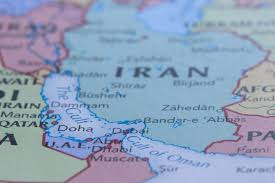
One of the most critical elements of the crisis is the Strait of Hormuz, a narrow waterway connecting the Persian Gulf to global shipping routes.
The strait is among the world’s most important energy corridors. A large percentage of global oil and liquefied natural gas exports pass through it every day.
Any disruption to maritime traffic in the Strait of Hormuz can rapidly affect global energy prices and international trade.
Because of its strategic significance, military incidents in or near the waterway immediately attract worldwide attention. Shipping companies, energy markets, and governments closely monitor developments there.
Iran has repeatedly warned that it could respond to pressure or military threats by affecting navigation in the region, although such actions would carry enormous economic and political consequences.
Why are oil prices reacting so strongly?
Global oil markets are highly sensitive to geopolitical instability in the Middle East because the region remains one of the world’s largest energy producing areas.
When traders fear supply disruptions, prices tend to rise rapidly due to concerns about reduced exports, shipping risks, or infrastructure damage.
Even without direct attacks on oil facilities, uncertainty alone can create volatility in global markets.
Rising oil prices can affect fuel costs, transportation, inflation, and economic growth worldwide. Countries heavily dependent on energy imports are particularly vulnerable.
In 2026, energy markets are already dealing with broader geopolitical uncertainty, making the Middle East crisis even more significant for investors and governments.
How are Gulf countries responding?
Gulf Arab states are responding cautiously but seriously to the crisis.
Countries such as Saudi Arabia, the United Arab Emirates, Qatar, Bahrain, and Kuwait are strengthening security around energy infrastructure and transportation networks.
Many Gulf governments are also attempting to avoid becoming direct participants in wider conflict. While some maintain strong security ties with the United States, they are simultaneously pursuing diplomatic channels with Iran to reduce tensions.
Recent years have seen efforts by several Gulf states to improve relations with Tehran after periods of severe hostility.
Nevertheless, concerns remain high that regional escalation could threaten economic development plans, foreign investment, tourism, and infrastructure projects across the Gulf.
What is happening with Iran’s nuclear program?
Iran’s nuclear program remains one of the most controversial aspects of the broader crisis.
Western governments and Israel have long expressed concern that Iran could eventually develop nuclear weapons capability. Tehran insists its nuclear activities are intended for peaceful civilian purposes such as energy production and scientific research.
International negotiations over Iran’s nuclear activities have repeatedly faced setbacks. Agreements designed to limit Iran’s nuclear development have weakened amid political disagreements, sanctions disputes, and accusations of non compliance.
As tensions rise, fears increase that diplomatic channels could collapse entirely, leading to greater confrontation over the nuclear issue.
For Israel in particular, Iran’s nuclear progress is viewed as a major national security concern.
How important are drones and missiles in this conflict?
Modern warfare technologies, especially drones and missiles, play a crucial role in today’s Middle Eastern security environment.
Iran has invested heavily in missile systems and unmanned aerial vehicles over the past decade. These technologies allow relatively low cost attacks capable of targeting infrastructure, military facilities, or strategic sites across long distances.
Regional armed groups aligned with Iran have also increasingly used drones and missiles.
Israel and Gulf states have responded by expanding air defense systems and investing in advanced interception technologies.
The widespread use of drones has transformed regional conflict dynamics by increasing the speed, unpredictability, and complexity of military confrontations.
Could the crisis turn into a regional war?
This remains one of the biggest fears among international observers.
Although many governments involved say they want to avoid all out war, the risk of miscalculation remains extremely high.
Regional conflicts often escalate unexpectedly due to misunderstandings, retaliation cycles, or accidental incidents.
A direct military confrontation involving Iran, Israel, and possibly the United States could rapidly spread across multiple countries and theaters.
Such a war would likely affect global energy supplies, international markets, aviation routes, maritime trade, and regional stability on an unprecedented scale.
At present, diplomatic efforts are focused on preventing precisely such an outcome.
How are global powers reacting?
Major international powers are closely monitoring the crisis.
European countries are urging restraint and supporting diplomatic engagement. Many European governments fear both economic fallout and the possibility of new migration pressures resulting from regional instability.
Russia and China also play important roles. Both countries maintain relations with Iran and have criticized aspects of Western Middle East policy while simultaneously calling for de escalation.
China in particular has growing economic interests in Middle Eastern energy supplies and trade routes.
The United Nations and various international organizations are attempting to encourage dialogue and reduce tensions, although their influence remains limited amid competing geopolitical interests.
How does the crisis affect ordinary people?
Although geopolitical crises are often discussed in terms of diplomacy and military strategy, ordinary civilians usually face the greatest consequences.
In conflict affected areas, people fear airstrikes, instability, economic hardship, and disruption to daily life.
Rising energy prices can also affect households worldwide through higher transportation costs, inflation, and increased prices for goods and services.
Businesses face uncertainty, investors become cautious, and tourism sectors may suffer across the region.
In countries already struggling with economic difficulties, additional instability can worsen unemployment and living conditions.
What role does cyber warfare play?
Cyber operations have become an increasingly important dimension of Middle Eastern rivalries.
States and non state actors alike use cyberattacks to target infrastructure, communications systems, government institutions, and private companies.
Iran and Israel are widely considered among the region’s most advanced cyber powers.
Cyber warfare allows adversaries to disrupt systems and send political messages without necessarily engaging in direct conventional military conflict.
However, cyber incidents also carry risks of escalation because attribution is often difficult and retaliation can quickly expand into broader confrontation.
Why are markets so nervous about escalation?
Financial markets react strongly to geopolitical uncertainty because instability creates risks for trade, investment, and economic growth.
The Middle East is especially important because of its role in global energy exports and strategic transportation routes.
Investors worry that prolonged tensions could disrupt shipping, increase inflation, weaken consumer confidence, and slow international economic activity.
Airlines, shipping companies, insurance firms, and multinational corporations are all closely watching developments.
The crisis also comes at a time when the global economy is already facing multiple pressures, including inflation concerns, technological disruption, and geopolitical competition among major powers.
Could diplomacy still succeed?
Despite the dangerous atmosphere, diplomatic channels remain active.
Several countries are attempting to mediate between rival sides and reduce the risk of military escalation.
Backchannel communications, regional negotiations, and international diplomatic initiatives continue behind the scenes even during periods of heightened tension.
Historically, Middle Eastern crises have often involved simultaneous confrontation and negotiation.
Many analysts believe that while the current situation is dangerous, all major actors understand the catastrophic consequences of full scale war.
This creates incentives for eventual compromise, even if tensions remain high in the short term.
How does this crisis compare to previous Middle East conflicts?
The current tensions differ from earlier Middle Eastern wars in several important ways.
First, modern technologies such as drones, cyber capabilities, precision missiles, and satellite surveillance have transformed military dynamics.
Second, the global economy is now even more interconnected, meaning regional instability can rapidly affect international markets and supply chains.
Third, the Middle East itself has changed politically and economically over the past decade. Several regional countries are pursuing ambitious modernization projects and want to avoid prolonged instability.
At the same time, longstanding rivalries and unresolved political disputes continue to fuel mistrust.
The result is a highly complex security environment where local, regional, and global interests overlap.
Why is 2026 considered a particularly sensitive year?
Analysts view 2026 as a highly sensitive period because several geopolitical pressures are converging simultaneously.
Global competition between major powers is intensifying. Technological and economic rivalries are reshaping international alliances. Energy markets remain vulnerable to disruptions. Domestic political transitions in various countries are influencing foreign policy calculations.
In the Middle East specifically, unresolved tensions from previous years have accumulated rather than disappeared.
This means that even relatively limited incidents can trigger broader regional and international reactions.
What happens next?
Predicting the future trajectory of the crisis remains extremely difficult.
Several possible scenarios exist.
One possibility is gradual de escalation through diplomacy, allowing tensions to ease while negotiations continue over security issues and regional disputes.
Another possibility is prolonged low intensity confrontation involving cyber operations, proxy conflicts, naval incidents, and economic pressure without full scale war.
The most dangerous scenario would involve direct military clashes escalating uncontrollably into broader regional conflict.
Much will depend on political decisions made in Tehran, Washington, Tel Aviv, Gulf capitals, and other major international centers in the coming weeks and months.
Why does the world care so much about the Middle East?
The Middle East occupies enormous strategic importance because of its geography, energy resources, trade routes, and political influence.
The region connects Europe, Asia, and Africa. It contains some of the world’s largest oil and gas reserves. It hosts key maritime corridors vital for global commerce.
Beyond economics, developments in the Middle East also influence international security, migration patterns, military alliances, and diplomatic relations worldwide.
As a result, instability in the region rarely remains a purely regional issue.
What happens there often reverberates far beyond its borders.
Conclusion
The Middle East crisis of 2026 represents far more than another regional dispute. It reflects a broader transformation in global geopolitics, energy security, and international power dynamics.
At the center of the confrontation stands Iran, surrounded by competing regional and international interests, longstanding rivalries, and mounting strategic pressures.
While diplomacy continues, fears of escalation remain significant. The involvement of major global powers, the importance of energy markets, and the growing role of advanced military technologies make the current tensions especially dangerous.
For governments, businesses, and ordinary citizens alike, the developments unfolding in the Middle East will continue shaping political and economic realities well beyond the region itself.
As the world watches closely, the central question remains whether diplomacy and restraint can prevail before the crisis crosses a point of no return.
By Faig Mahmudov


Similar news