End of Israel because of Harris? Trump's statement raises questions


Editor's note: Roman Gurevich is an Ambassador of the World Jewish Agency "Sokhnut", Israeli political scientist and journalist. The article expresses the personal opinion of the author and may not coincide with the view of News.Az .
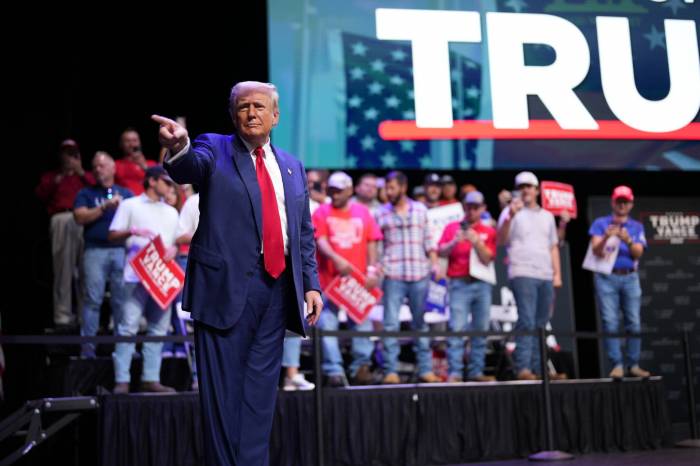
The State of Israel will find itself in a dangerous situation if the Democratic candidate, Kamala Harris, wins the upcoming U.S. elections . This statement was made by Donald Trump at the National Summit of the Israeli-American Council in Washington, where he expressed concern that Israel could cease to exist within two years under her presidency. These words sparked a wide-ranging response in the media and society, further intensifying an already heated election campaign in which both candidates are vying for the support of key voter groups, including American Jews.As the U.S. presidential race draws to a close, the competition between the candidates is becoming increasingly fierce. According to recent polls, both Donald Trump and Kamala Harris are neck-and-neck, creating an atmosphere of intrigue and tension. However, history has shown that the outcome of U.S. elections can often be unpredictable. In many cases, it is in the final weeks of the race that events occur, capable of drastically shifting public opinion. This is especially significant when such crucial issues as the future of U.S.-Israel relations and the support of the American Jewish community are at stake.
Emotions play a crucial role in American elections —often even more so than facts or a candidate’s platform. We've seen how unexpected political or economic events can mobilize voters and fundamentally alter the outcome of elections. Trump’s sharp statement that Israel could cease to exist if Kamala Harris takes office is not merely campaign rhetoric, but a calculated strategy aimed at drawing attention to national security and foreign policy issues. Trump is banking on raising fears among voters regarding the foreign policy of the Democratic candidate.

In this context, special attention is being paid to the American Jewish community. Historically, the majority of American Jews have traditionally supported the Democratic Party. However, in recent years, divisions have deepened within the community over domestic and foreign policy. For example, Russian-speaking Jewish immigrants, who left the former Soviet Union and settled in the United States, tend to support the Republicans. This trend is confirmed by various polls that show this demographic is more likely to vote for Trump and the Republican Party, especially given his efforts to strengthen ties with Israel during his presidency.
Given these dynamics, Israel and its future have become central topics in the campaign rhetoric of both candidates. Trump has consistently emphasized his commitment to supporting Israel on the global stage, from recognizing Jerusalem as its capital to initiating the Abraham Accords, which brokered historic peace agreements between Israel and several Arab countries. Kamala Harris, on the other hand, represents the Democratic Party's stance, which criticizes Trump’s unilateral actions and advocates for renewed negotiations in the Middle East, supporting a two-state solution to the Israeli-Palestinian conflict.
However, despite Trump’s alarming statements, panic should be avoided. History demonstrates that U.S.-Israel relations have always remained strong, regardless of whether a Democrat or Republican occupied the Oval Office. Israeli leaders have skillfully navigated cooperation with both parties, understanding the importance of the strategic partnership with America. Even under Democratic administrations, such as Barack Obama’s, who was often criticized for tense relations with Israel, military and economic cooperation continued to deepen.
Undoubtedly, relations between the U.S. and Israel flourished during Trump’s tenure. His decision to recognize Jerusalem as Israel’s capital and move the U.S. Embassy there was a significant symbolic gesture, appreciated both in Israel and among his supporters in the United States. Additionally, Trump succeeded in advancing the Abraham Accords, which allowed Israel to normalize relations with several Arab countries, including the United Arab Emirates and Bahrain. However, this does not mean that under a Democratic president, Israel would face an existential threat, as Trump suggests.
Political statements during election campaigns are often exaggerated and should be taken with caution. Emotions run high, and candidates, in an effort to mobilize their base, frequently resort to fear tactics. Nevertheless, regardless of who wins the election—whether it is Donald Trump or Kamala Harris—the alliance between the U.S. and Israel will remain strong. Both nations are bound by decades of collaboration, and any incoming U.S. president is unlikely to jeopardize these ties for short-term political gains. As Mark Twain once aptly remarked, "The reports of my death have been greatly exaggerated."
Even if the Democrats come to power, Israel will remain a vital strategic ally of the United States in the Middle East, and defense and economic cooperation will continue. Israel has faced numerous challenges throughout its history—ranging from wars and terrorism to economic crises—and has always found ways to maintain its strength. It is essential, now more than ever, to remain confident in the future, despite the election-related fears and predictions.
In conclusion, Trump’s words, though harsh, should be seen in the context of his efforts to win over specific voter groups, particularly within the Jewish community. Meanwhile, Kamala Harris is likely to reassure Israeli supporters by emphasizing her commitment to stable U.S.-Israel relations, regardless of the election outcome. Ultimately, democracy in the United States is a process that moves through many stages, and each election not only affects domestic policy but also shapes the future of international relations.
As the 2024 elections approach, the entire world is watching closely as the U.S. presidential race unfolds, understanding its global implications. Both Trump and Harris will continue to make bold statements to capture attention and support, but the real intrigue lies in the choice American voters will make and how it will shape the future of the country, as well as its key allies like Israel.
(If you possess specialized knowledge and wish to contribute, please reach out to us at opinions@news.az).


Similar news