Europe's gas market: Reserves high, but challenges loom


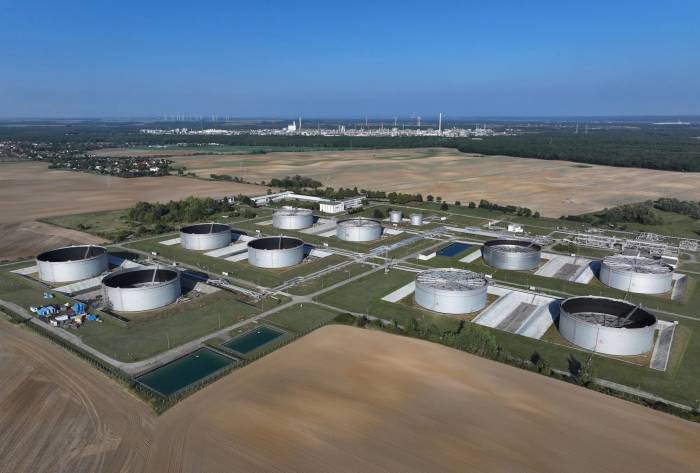
An oil storage facility in Schwedt, Germany. Photo: Sean Gallup/Getty Images
As Europe enters the heart of winter, the state of its energy security becomes a critical question. With gas storage facilities filled to unprecedented levels, reaching 90-96%, the European Union seems well-prepared for the season.
This figure surpasses the average values of previous years, which stood at around 85-88% before 2022. But do these numbers truly guarantee Europe’s energy security? On the one hand, high storage levels demonstrate the EU’s preparedness for winter. On the other, the fundamental issues of the European gas market remain unresolved, and the coming winter could pose a significant challenge to the region.High gas reserves: What's the secret?
A warm autumn in 2024 allowed Europe to avoid early use of gas reserves. However, as cold weather arrived, the situation began to shift. Data shows that in the first two weeks of December alone, around 10% of gas reserves were consumed—a significant reduction in a short period. If this trend continues, Europe may face fuel shortages at the peak of winter.
At the same time, gas consumption in the EU has significantly declined over the past two years. The reasons include record-high prices, which reached $2,500-3,000 per thousand cubic meters in 2022. This forced many industries, especially energy-intensive ones, to reduce production or shut down altogether.
Additionally, the development of renewable energy sources (RES) and programs aimed at reducing energy consumption have contributed to the drop in demand.
But can the current situation be considered stable? In my view, despite significant reserves, Europe remains vulnerable to energy shocks. Rising gas prices and potential supply disruptions continue to threaten the region’s economic stability.
Why do gas prices remain a key challenge?
High gas prices remain one of Europe’s major challenges. For comparison, industrial consumers in Russia pay about $100 per thousand cubic meters of gas, and in the U.S., the cost is roughly the same. In Europe, the price reaches $500-600. This disparity makes European goods uncompetitive in the global market. Moreover, businesses that are still operational are forced to factor high energy costs into their product prices, further reducing their competitiveness.
For example, the chemical industry, nitrogen fertilizer production, and metallurgy—sectors heavily dependent on gas prices—are already facing significant difficulties. In Germany, long considered the industrial engine of the EU, economic activity is declining. Industrial output is decreasing, and GDP growth has slowed to minimal levels.
Deindustrialization is becoming a real threat for Europe. High gas prices not only strain businesses but also prompt them to consider relocating production to regions with more affordable energy, such as the U.S. or Asia.
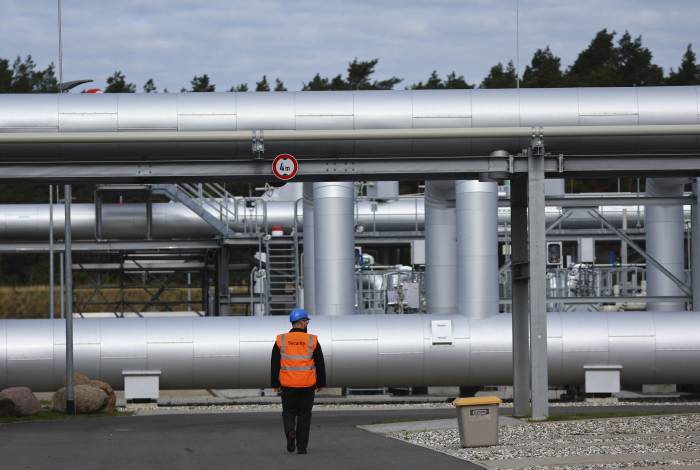
Security walks in front of the landfall facility of the Baltic Sea gas pipeline Nord Stream 2 in Lubmin, Germany, September 19, 2022. Photo: REUTERS/Fabrizio Bensch
Transit issues through Ukraine: What's next?
Particular attention should be paid to risks associated with the transit of Russian gas through Ukraine. Today, about 15 billion cubic meters of gas pass through this country annually. If this route is shut down, it would be difficult to replace such volumes quickly. The southern route—TurkStream and Blue Stream—is already operating at full capacity and cannot technically deliver gas to Slovakia or Austria.
A transit halt would result in a loss of 42.4 million cubic meters of gas per day. This would particularly impact countries dependent on this route, such as Slovakia, Austria, and Moldova. Slovakia, for example, would lose not only gas for domestic consumption but also transit revenues. Such a situation would inevitably drive up gas prices on the spot market, affecting all countries in the region.
Furthermore, European Commission President Ursula von der Leyen’s initiative to ban the import of Russian LNG could exacerbate the situation. Restricting LNG supplies would create additional shortages, leading to price surges. For Europe, this could mean another wave of the energy crisis.
Renewable energy sources: Salvation or illusion?
Many hope that the development of renewables will help Europe reduce its dependence on gas. However, at this stage, such expectations seem overly optimistic. Renewable energy production is unstable and depends on weather conditions. Windless weather or cloudy days can lead to a sharp increase in gas demand, especially during the winter.
Moreover, the infrastructure for storing energy from renewables is still in its early stages of development. While conventional energy allows for fuel storage, there is currently no equivalent capability for renewables. Developing energy storage systems, such as hydrogen technologies and batteries, requires significant investment and time.
Thus, in the near term, Europe will not be able to completely abandon gas. Even with the active development of renewables, the region will continue to rely on fossil fuels, especially during extreme winters.
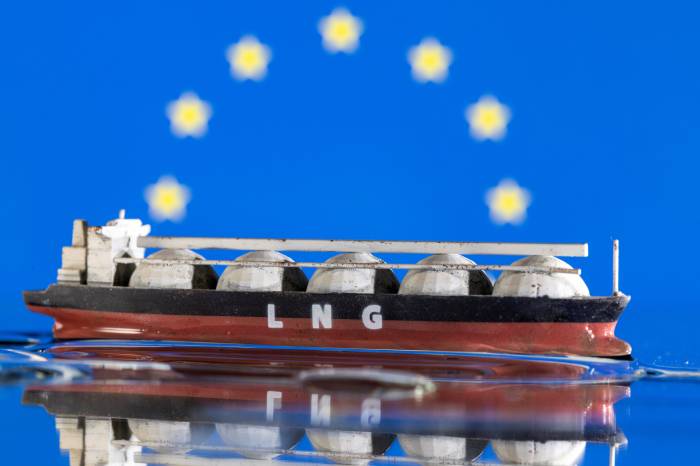
Model of LNG tanker is seen in front of the EU flag in this illustration taken May 19, 2022. REUTERS/Dado Ruvic/Illustration/File Photo
Possible scenarios: What lies ahead for Europe?
In my view, the future of Europe’s gas market will depend on several key factors:
1. Gas Prices: If prices stabilize below $300 per thousand cubic meters, it would help European economies recover. However, high prices will continue to hinder growth and increase costs.
2. Supply Diversification: Increased LNG imports from the U.S., Qatar, and Australia could partially offset reduced supplies from Russia. However, this would require substantial investments in transportation and regasification infrastructure.
3. Political Decisions: The EU must consider the long-term consequences of its sanctions and import restrictions on gas. Policies aimed at reducing dependence on Russia should not undermine the region’s economic stability.
The situation in the gas market remains highly unstable. Transit halts through Ukraine, bans on Russian LNG imports, and potential supply disruptions could lead to a new energy crisis. This would pose serious problems for European industry and the economy as a whole.
Europe finds itself in a challenging situation where high gas prices, political decisions, and weather
conditions are shaping a new energy landscape. Increasing gas storage levels is only a temporary measure. For long-term stability, the EU needs to develop a more balanced strategy that addresses not only current issues but also the future of the energy sector.
Developing renewables, diversifying supplies, and supporting industry are key tasks that must be tackled in the coming years. Without these steps, Europe risks losing not only its energy independence but also its economic competitiveness on the global stage.
(If you possess specialized knowledge and wish to contribute, please reach out to us at opinions@news.az).


Similar news