Ferit Temur: «Türkiye faces a dilemma—should it align with Russia to counter U.S. and Israeli plans?» - INTERVIEW


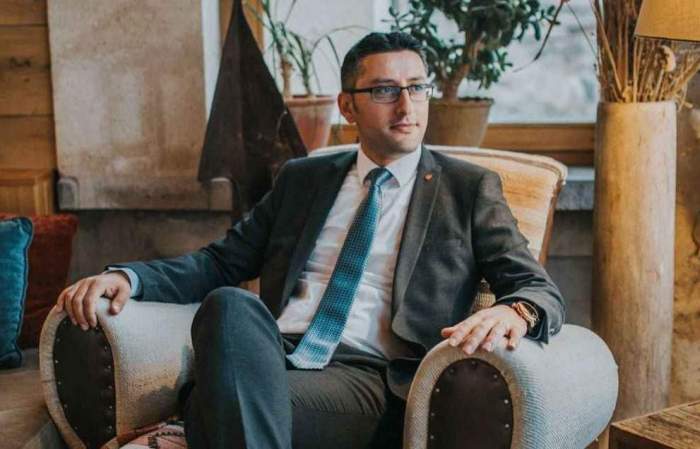
Photo: Ferit Temur
Turkish political analyst Ferit Temur, an expert on Russia and Eurasia , shared in an interview with News.az an in-depth analysis of Russian military bases in Syria, the evolving geopolitical landscape, and recent developments in the region. He examined the legal foundations and potential renewal of military agreements between Syria and Russia, while also assessing the role of key power players—including the United States, Türkiye, and Iran—in shaping these agreements.
-The legal framework for the deployment of Russian military bases in Syria originates from the following documents: 1) the “Treaty of Friendship and Cooperation between the Union of Soviet Socialist Republics (USSR) and the Syrian Arab Republic (SAR),” dated October 8, 1980; 2) the “Treaty between the USSR and the SAR dated June 2, 1983, on the use by Soviet warships and transport vessels of the territorial waters and ports of the SAR, as well as on the establishment of a logistics support facility in the port of Tartus.”
This military cooperation, established during the Cold War and giving Russia (as the successor to the USSR) an extremely important advantage in the Eastern Mediterranean from a maritime strategy perspective, was renewed following Russia’s direct intervention in the Syrian internal conflict. In this context, on January 18, 2017, the “ Agreement between the Russian Federation and the Syrian Arab Republic on expanding the territory of the logistics support facility of the Russian Navy in the port of Tartus and on the admission of Russian warships into the territorial and internal waters, as well as the ports, of the Syrian Arab Republic” was signed. Thus, based on a 49-year lease, Russia extended its right to use the Khmeimim Air Base in Latakia and the Naval Base in Tartus. In addition, there are supplementary protocols that allow Russia to increase its military presence and expand the infrastructure of its bases.
However, as of December 8, 2024, with the fall of the Assad regime in Syria, the future of Russia’s existing military agreements has been called into question. Recently, the head of the Tartus Customs Authority, Riyad Judi, stated that “the investment agreement on the port of Tartus with a Russian company has been annulled, and all revenue from port activities will now be used in the interests of the Syrian state.” This announcement heightened suspicions that Russia’s privileges may come to an end.
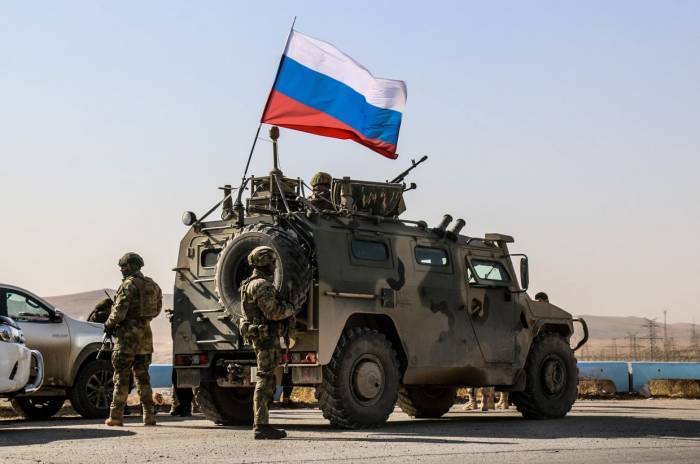
- How great is the pressure from other countries, such as the United States, Türkiye, and Iran, regarding the Russian military presence in Damascus, and can this pressure affect the agreements reached?
-From the viewpoint of the United States, Syria is seen as an important country in a vast Eurasian “rear space,” where Washington seeks to weaken China’s growing geopolitical initiatives (“ One Belt, One Road ”) and Iran’s so-called “Shia Crescent.” American policy in Syria, shaped within what could be termed a self-interested foreign policy approach, evolved after the events of September 11, 2001, as a continuation of the “Greater Middle East Project,” which followed the invasion of Iraq. As in Iraq, one of the main goals of the U.S. in Syria was to undermine the central government and accelerate ethnoconfessional fragmentation. Israel is the key ally of this American Middle East policy. Although during the Syrian Civil War, Russia and the United States supported opposing factions, both sides avoided military steps that could cause serious harm to one another. Nevertheless, ending Russia’s permanent military presence in Syria would be highly advantageous to Washington.
For Iran, which pursues its national interests, Russia’s military presence in Syria was of particular importance. In the context of proxy wars spread across the modern Middle East, coordinated engagement with the allied Russian army was vital to keeping the Assad regime in power and containing opposition forces when Iran’s own resources proved insufficient. However, the armed attacks carried out by Hamas against Israel on October 7, 2023, triggered a process that seriously weakened Iran’s influence in the region. As a result, these events significantly strengthened Israel’s regional position and paved the way for the fall of the Assad regime in 2024. Subsequently, Russia’s military presence in Syria—part of Iran’s “defensive perimeter”—also lost stability.
In this matter, Türkiye maintains a more complex and uncertain position compared to the United States or Iran. Under normal circumstances, Türkiye’s priority, based on its national interests, is to preserve the territorial integrity of Iraq and Syria at any cost. This is because U.S. and Israeli foreign policy in the Middle East envisions a large-scale geopolitical restructuring, one of the key pillars of which is the creation of a Kurdish state fully dependent on them. For Ankara, this would pose a serious threat to national security; hence it would be logical to form a kind of “resistance front” in alliance with Russia, Iran, and the central governments of regional countries. Potentially, the United Kingdom, whose interests are also significantly undermined by the unilateral Middle East policy of the United States, might indirectly join such a front. However, despite periodic verbal protests against the militarization of Iraqi and Syrian Kurdish movements, Türkiye has not taken sufficient measures to stop it. Moreover, at certain times, Ankara’s actions actually contributed to the weakening of Iraq’s and Syria’s central governments, opening the way for their potential collapse.
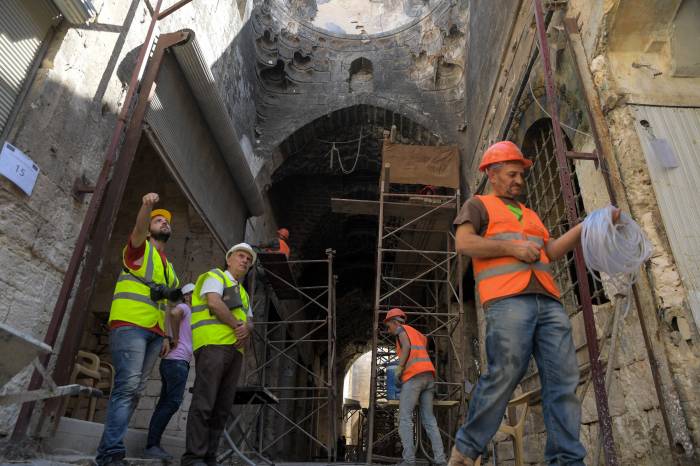
- What is Russia’s plan for participating in the reconstruction of Syria? Is this expected to be purely financial assistance, or are there specific infrastructure and humanitarian projects under consideration?
-Under normal conditions, if the Assad regime had remained in power, Russia planned to participate in Syria’s reconstruction in line with its strategic and economic interests. This included projects in the energy, infrastructure, and transportation sectors. Russian companies signed contracts for the development of oil and gas fields and initiated projects to rebuild highways, ports, and power stations. However, following the regime change in December 2024 in Damascus, Russia was forced to reevaluate its plans for post-war reconstruction in Syria. Under these new circumstances, Moscow is, on one hand, trying to establish dialogue with the new leadership, and on the other hand, waiting to see how the international community will address the status of separatist Kurdish forces in northern Syria.
-What is the amount of compensation that Russia has agreed to pay Syria, and what losses or obligations does it cover?
-There is currently no official information confirming any direct payment of compensation to Syria by Russia. However, during the visit of a Russian diplomatic delegation to Damascus on January 28, led by Russian Deputy Foreign Minister Mikhail Bogdanov, there were reports that Russia was prepared to provide certain concessions as compensation for damage to Syrian infrastructure caused during military operations. Yet, the exact figures and details of these agreements have not been officially disclosed, so no reliable, confirmed data on this topic is available at this time.
-What are Russia’s long-term goals in maintaining its military bases in Syria, and can this be seen as part of its global strategy in the region?
-By maintaining its military bases in Syria, Russia aims to establish a long-lasting military and diplomatic sphere of influence in the Middle East. The naval base in Tartus is the only Russian naval facility in the Mediterranean Sea, providing the Russian Navy with global operational deployment capabilities. Similarly, the Khmeimim Air Base serves as a strategic aviation hub for Russian operations in the region. This presence can be viewed as part of a strategy to balance the influence of NATO and the United States in the Middle East.
For Russia, its military presence in Syria is an integral part of its aspirations to act as a global power. If Russia were to lose its military foothold in Syria, especially amidst possible geopolitical shifts, its international weight could be reduced to a regional level.
-How will Syria balance Russia’s presence within the “triangle” of Türkiye–Iran–Israel? What is the position of Türkiye, Iran, and Israel regarding this presence?
-It remains unclear what vision the new Syrian authorities will adopt in determining the country’s foreign policy. As the internal balance of power in Syria takes shape, Damascus’s position will become clearer, allowing for more accurate predictions of its future course. The country that gained the most from the Syrian conflict and the subsequent overthrow of the Assad regime is Israel, which, thanks to its significant military superiority, has strengthened its position in the Middle East. Today, Israel has expanded its capacity to conduct military and intelligence operations as far as the Iranian border. Although in official rhetoric Iran and Israel view each other as enemies and engage in a “shadow war,” the latest attacks by Hamas and the regime change in Syria have given Israel a marked moral and operational advantage.
Israel’s attitude toward Russia, unlike its stance toward Iran, cannot be described as openly hostile: there is no clearly defined strategy in Russian foreign policy that labels Israel an “enemy” and seeks to limit its power.
From Türkiye’s perspective, Russia’s presence in Syria can be a cause for concern, rooted in historical rivalries and geopolitical calculations. “If even Russia’s presence in the Black Sea has traditionally caused anxiety, its presence in the Mediterranean may be perceived as an even greater worry.” However, foreign policy should be determined by long-term national interests. An objective view should begin with understanding the reasons behind Russia’s deployment in Syria. The previous Syrian leadership, opposed by groups supported by the U.S., Israel, and a number of Middle Eastern countries, initially relied on Iranian assistance, but when that proved insufficient, it turned to Russia.
Today, even after the regime change in Syria, the north of the country is still home to separatist forces that, during the civil war, effectively turned into an independent regular army with heavy weaponry. Türkiye has yet to take adequate steps to prevent the emergence of a full-fledged “Kurdish state” along its border, which could serve as a conduit for U.S. and Israeli policies in the region. Given its limited independent capabilities, it would be more logical for Ankara to form a unified stance with the new Syrian leadership, as well as with Russia and Iran, on preserving Syria’s territorial integrity. From this perspective, allowing Russia to remain in the Middle East under controlled conditions could, for a time, be beneficial both for the new authorities in Damascus and for Türkiye in countering American and Israeli plans.


Similar news