Will Russia be able to keep its military bases in Syria?


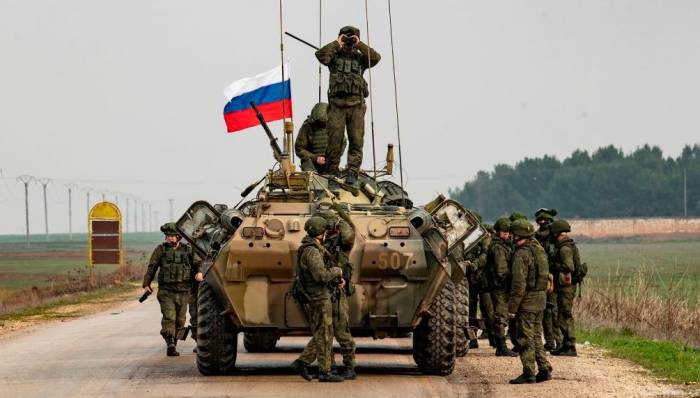
Photo: Middle East Institute
The Middle East is one of the key hotspots in the world today, attracting attention, demanding action, and influencing the fate of the world. And within the Middle East itself, one of the most important and critical points is Syria. Syria has long been a volatile state, influencing regional dynamics even before. However, after the change of the ruling regime as a result of the precipitous fall of the Al-Assad dynasty and President Bashar al-Assad’s departure and flight to Russia, the situation has become highly complex, multifactorial, and in many ways unpredictable.
The word “Russia” in this case is very important. Since Soviet Union times, Syria has been one of the key countries through which the USSR, and later Russia, implemented its policy in the region, promoted its interests, and influenced the situation. We can dive into history here for a long time, but let us not get distracted. Let us assess what is happening today from the point of view of Russia's presence in Syria and the region, defending of its interests, and possible actions of Russia for this purpose.The regime of Bashar al-Assad has always relied on Russia , and Russia has seriously helped him. This was realized in Russia's supplies of weapons and ammunition to Syria, training of the Syrian military, and even the participation of Russian military and private military companies in combat clashes with Assad's opponents. There were other areas of Russian assistance to Syria —financial, technological, political.

Syria, for its side, acted accordingly, helping Russia to promote its interests in the region. There were many different areas of interaction, but let us focus only on what is now key for Russia, and not only for Russia. Specifically, Russia's military bases on the territory of Syria. Let us recall that we are talking about the naval base in the port of Tartus and the Hmeimim Air Force Base.
Tartus has a long history of Russian (Soviet) presence. Since 1971, Tartus has served as a base for the Soviet and then Russian Navy. And in 2017, Russia and Syria concluded an agreement on Russian ownership and development of the base for 49 years with the possibility of extension.
Tartus served as the main hub for supplying the Russian military contingent in Syria. Submarines and warships can also be based here. It is clear that Tartus is a key point for monitoring the situation in the region and for supporting Russian operations in the Mediterranean Sea.
Hmeimim Air Force Base is located near the city of Latakia, in western Syria. Since it became operational in 2015, Hmeimim has become the center of Russian air operations in Syria. The airbase holds and operates Russian aircraft, including fighter jets, attack aircraft, bombers—including strategic bombers—as well as helicopters.

During the fall of the Assad regime and the Syrian opposition groups taking power, both military bases were hit, attacked, and shelled. And not just by the Syrians. In particular, the port of Tartus was hit by Israeli air strikes. Vessels and port infrastructure were destroyed and damaged. It was officially claimed that Russian facilities were not damaged or targeted, but the very fact of the strike makes sense.
And just recently, the new Syrian authorities announced the termination of a 49-year agreement with Russia on its ownership and management of the Tartus base. And this certainly means a lot for Russia and for Syria, but also for Türkiye, Iran, and Israel. And it is clear that this is much more important for Russia than for others.
It is not even a question of losing the considerable financial resources spent on modernizing and operating this base. The point of Russia's military and political presence in the region is clearly being lost. This is something that today's Russia cannot allow. That is why Russia immediately began to act decisively. These actions consist both in numerous statements of the Russian authorities that “Russia intends to build mutually beneficial cooperation with Syria and its new authorities”. And also in real steps to resolve the situation—in Russia's favor. In particular, the other day a Russian official delegation consisting of Russian Deputy Foreign Minister Mikhail Bogdanov and the Russian President's Special Representative for Syria Alexander Lavrentiev, arrived in Syria for the first time since the change of government.
And it is clear that the purpose of the visit and the subject of the negotiations were the military bases of Tartus and Hmeimim. It should be noted that at the moment, just as before the delegation's visit, the status of these bases was, and still is, officially unclear.
The point is that the new Syrian authorities have not yet decided on the fate of these bases, the conditions for their retention by Russia, or their complete abandonment. And there are several reasons for that.

Ahmed al-Shara, the leader of the rebel coalition that ousted Bashar al-Assad, called Russia “an important country” in one interview last month. He also noted that Syria depended on Russia for all its weapons and to manage many of its power plants.
The result of the talks between the Russian delegation and the Syrian leadership at the moment is as follows—according to Russian sources and official media: the issue of preserving the bases in Tartus and Hmeimim requires further discussion, and it may be possible to find “some mutually acceptable options”. So far, the status of the bases has not changed, and negotiations will continue.
At the same time, there is information that the negotiations have “reached an impasse”, and no agreement has been reached yet.
It should also be noted that Türkiye will definitely resist Russia's military presence in Syria, since it is Türkiye that intends to be present and dominant there. Especially in terms of the Hmeimim Air Base .

Based on this, we can assume with a high probability that Russia will at least lose the Hmeimim base. And we are not even talking about the fact that the evacuation of equipment and part of the personnel from there is already underway. But it is because of the presence of other “players” in the Syrian political and military space that will put strong pressure on the new Syrian authorities, even if they were intent on allowing Russia to continue its presence in Syria.
The same applies to the Tartus base and port, but it is quite likely that Russia will strongly resist and try to remain there—even under new conditions. And it is certain that conditions will be an important factor in resolving this issue. It is quite possible that the new Syrian authorities are ready to allow Russian ships and warships to be serviced and refueled in Tartus, but it is certain that in exchange for this, the Syrians will demand such conditions—first of all, financial ones, which will be clearly unacceptable for Russia in the current situation.
Taking into account all the factors discussed above, it is highly likely that in the coming weeks, Russia will withdraw from the Hmeimim Air Force Base in Syria. This withdrawal will take place without any form of compensation, marking a significant shift in Russia’s military presence in the region.

As for the Tartus naval base, the situation remains uncertain and subject to intense negotiations. Russia is expected to delay the final resolution of this issue for as long as possible, utilizing diplomatic channels in Damascus, Moscow, Abu Dhabi, Qatar, Riyadh, and even Ankara. The reason behind this strategy is simple: as long as negotiations continue, Russia retains operational control over the base, maintaining its strategic foothold in Syria.
However, despite these diplomatic maneuvers, it is highly probable that Russia will eventually withdraw from Tartus within the year. The pressure from Türkiye, Israel, and the United States, under their new powerful and unique President, will be relentless. These actors will not allow Russia to maintain a dominant position in the Middle East. The region has long been their strategic domain, and they are unlikely to relinquish it to Moscow under any circumstances.
Thus, while Russia may seek to prolong negotiations and explore alternative arrangements, the ultimate outcome appears inevitable. The Russian withdrawal from Syria, first from Hmeimim and then from Tartus, is a matter of time. The only question that remains is how long Russia can delay the inevitable.
(If you possess specialized knowledge and wish to contribute, please reach out to us at opinions@news.az).


Similar news