From “Star Wars” to “Golden Dome”: New U.S.–Russia arms race



Editor's note: Russian military-political analyst, expert in the field of strategic security, specialist in the Middle East and Africa Vladimir Bekish. The article expresses the personal opinion of the author and may not coincide with the view of News.Az.
The world, despite Trump’s claims of having stopped nearly a dozen wars, continues to fight and prepare for future conflicts. Wars, as well as preparations for them, are impossible without arms production. This is logical—if you have nothing to fight or defend yourself with, your fate is sealed. In such a case, surrender and retreat become the only options, however shameful and tragic that may be.
Today, almost all countries located in active or potential war zones refuse to accept defeat. Instead, they escalate the arms race, developing and producing more weapons and spending enormous sums of money. This is not a new phenomenon. Historically, the leaders of the global arms race have always been the same—Russia and the United States.
Russia, formerly the Soviet Union, has always been ready to develop and mass-produce weapons. In the 20th century, the arms race defined the relationship between the USSR and the USA. Many factors contributed to the eventual collapse of the Soviet Union, but one of the key reasons, in my opinion, was this very race with America.
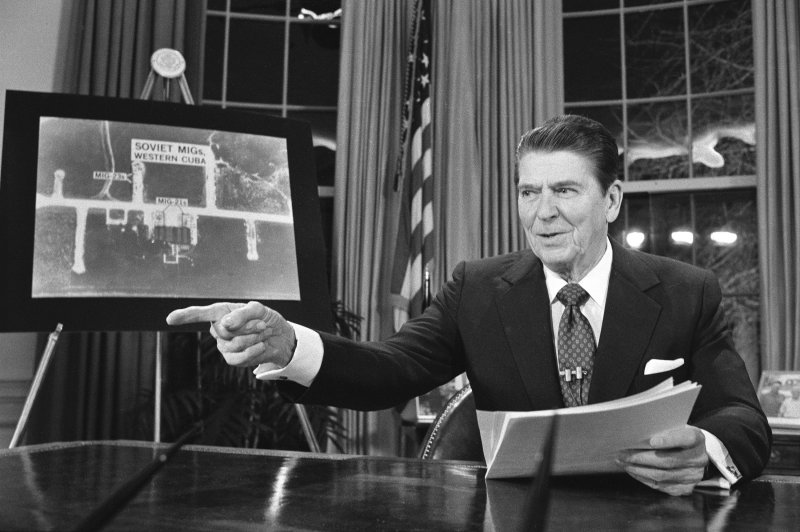 President Ronald Reagan announced his plans for the Strategic Defense Initiative in a speech in the Oval Office on March 23, 1983. Photo: White House
In the mid-1980s, U.S. President Ronald Reagan announced a program publicly known as “Star Wars.” In reality, it was a proposal to deploy a space-based anti-ballistic missile defense system. The idea involved satellites equipped with nuclear-pumped lasers. Upon detonating a nuclear device, the satellite would release a powerful laser pulse to destroy Soviet ballistic missiles outside the Earth’s atmosphere. Although the satellite would self-destruct, the Soviet missile would be neutralized. If this system had been implemented, the USSR would have had no chance of winning a nuclear war, as it would be unable to inflict catastrophic damage on the United States with either a preemptive or retaliatory strike.
The Soviet leadership could not accept this strategic imbalance. As a result, an urgent effort began to develop countermeasures. Virtually the entire Soviet military-industrial complex—enterprises, research institutes, and design bureaus—was mobilized for this task. Massive funds were allocated to create new systems, including rail-based missile complexes, air-launched ballistic missiles using IL-76 aircraft, deployment of strategic missiles on fishing vessels in the Caspian Sea, and even hiding missiles in standard freight containers. New technologies were also pursued, such as a ballistic missile that never left the atmosphere and hypersonic glide vehicles capable of penetrating U.S. defenses. The USSR even began developing combat satellites designed to destroy American satellites with lasers.
This colossal effort drained the Soviet economy. By the late 1980s, some estimates suggest that military spending consumed far more than 40% of the state budget. No economy could withstand such a burden, and the inevitable collapse of the Soviet Union followed soon after. Ironically, Reagan’s “Star Wars” plan was never technologically feasible at the time. It was largely a strategic bluff—but the USSR believed it and paid a devastating price.
To make matters worse, the U.S. maintained just three types of intercontinental ballistic missiles, while the USSR deployed over fifteen. Maintaining such a complex and diverse arsenal was enormously expensive. And this was only part of the equation: both nations also competed in producing cutting-edge aircraft, tanks, and submarines. The U.S., with its advanced and resilient economy, could afford it. The Soviet Union could not, and it crumbled under the strain.
Fast forward to today. In its war with Ukraine, Russia has again ramped up arms production to staggering levels. As President Vladimir Putin recently stated:
“...For certain types of weapons, our production has not just increased by a percentage, but by multiples: two, three, ten, fifteen times—and for some items, even thirty times.”
These figures are astonishing. Much of this surge is focused on unmanned aerial vehicles (UAVs). According to intelligence reports, Russia launched over 1,000 UAVs against Ukraine in just one month. Since the beginning of 2025, a total of 34,000 drones have been deployed. However, not everything is perfect in the Russian defense industry. Many of these drones are Iranian designs assembled with Iranian components. Chinese parts and ammunition are also widely used, and there are reports of weapons shipments and even troops coming from North Korea.
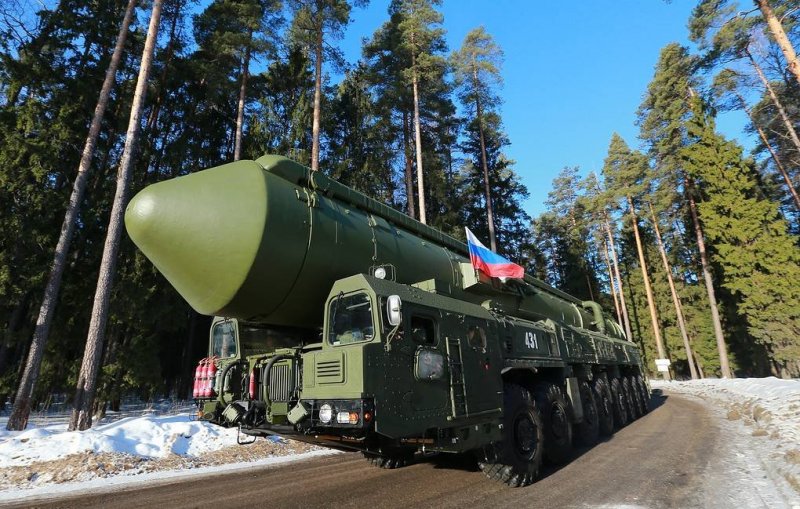 Yars mobile intercontinental ballistic missile launcher. Photo: TASS
Where does this lead the world? History suggests a familiar outcome. Nations pouring endless resources into weapons are not investing in civilian needs like infrastructure or consumer goods. Such spending yields no profit—only destruction. As Putin himself has declared, Russia’s military buildup will not stop after the end of the current conflict:
“I hope and expect that the events related to the special military operation will pass, but the demand for modern armed forces will not end there. On the contrary, we will continue to develop the armed forces, making them modern, compact, and powerful.”
Meanwhile, the United States is also innovating. It is developing a new missile defense initiative—nicknamed the “Golden Dome”—and has successfully tested a laser system to destroy UAVs. This system is reportedly far more cost-effective than traditional air defense.
Other nations are following suit. Europe, South Korea, Türkiye, and especially China are all expanding their military capabilities. Weapons production is becoming a dominant force in the global economy and geopolitics. And history teaches us a sobering truth: weapons built in vast numbers will eventually be used. The question is not if they will be fired, but when.
(If you possess specialized knowledge and wish to contribute, please reach out to us at opinions@news.az).


Similar news