Stalin: Demonization or rehabilitation?


Editor's note: Russian military-political analyst, expert in the field of strategic security, specialist in the Middle East and Africa Vladimir Bekish. The article expresses the personal opinion of the author and may not coincide with the view of News.Az.
A tragic, symbolic, and historic date marks the beginning of the Great Patriotic War, when Nazi Germany launched its invasion of the USSR.
We all know how that war ended — with the Soviet Union’s victory and Germany’s defeat. And we all know that this war is inseparably linked to the figure of Joseph Stalin.
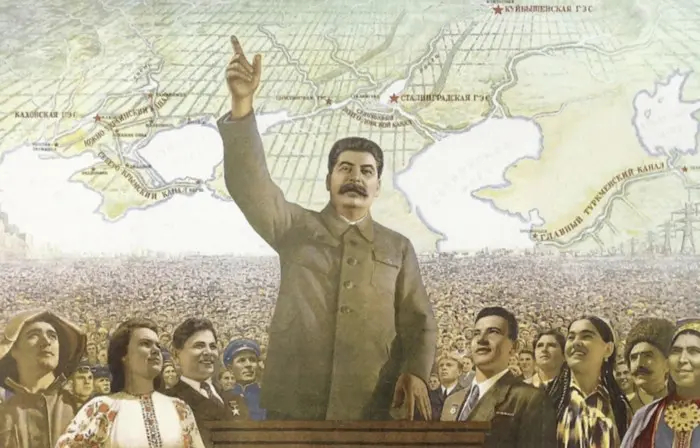
Stalin’s legacy remains one of the most controversial and polarizing in Soviet and Russian history. There was a time when almost the entire Soviet population idolized him, showing unwavering devotion and readiness to carry out any of his orders. And they did so willingly. Later, a new period began, during which the Soviet authorities denounced Stalin as a tyrant, a dictator, a cruel despot. He was blamed for the deaths of tens of millions — not on the battlefields, but across the country, both before and after the war. These actions were seen as the result of his desire for absolute power and ideological dominance. While it was acknowledged that his leadership contributed to the USSR’s industrial development and military victory, the cost was seen as unjustifiably high.

Source: ANU Press - The Australian National University
In response, the Soviet government took deliberate steps to dismantle Stalin’s cult of personality. His portraits were taken down, monuments were destroyed or relocated, and his name was removed from cities, streets, and institutions.
But with time, public sentiment has shifted. In today’s Russia, attitudes toward Stalin are clearly changing — and arguably becoming more favorable.
It seems that Stalin is once again admired. According to polls, 38% of Russians had a positive view of him in 2011. That number rose to 51% in 2019. In 2023, the trend became even more striking: 48% in April and 68% in July expressed approval.
And now, Stalin is reappearing — literally — across the country. In 2022, a new statue was erected. In 2023, three more. In 2024, another five. In the first five months of 2025, six new Stalin monuments were unveiled. Statues of the Generalissimo appeared in Omsk, Mozhaisk, Ulan-Ude, Vologda Region, Melitopol, and Bashkiria, mostly timed to commemorate the 80th anniversary of Victory in the War.
There are now 124 Stalin monuments in Russia. After the collapse of the USSR, only around ten remained. More than a hundred new ones have been built during Vladimir Putin’s presidency — with a notable increase following the annexation of Crimea in 2014.
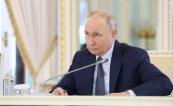
Putin’s public remarks about Stalin have never been fully laudatory, but neither has he strongly condemned him. In an interview with Oliver Stone, Putin said:
"Obviously, from 1924 to 1953, the country — led by Stalin — changed, transforming from an agrarian nation into an industrial one."
He added:
"Stalin’s rule certainly had positive aspects. However, they came at too high a cost. Repressions did take place — that’s a fact. Millions of our citizens suffered as a result."
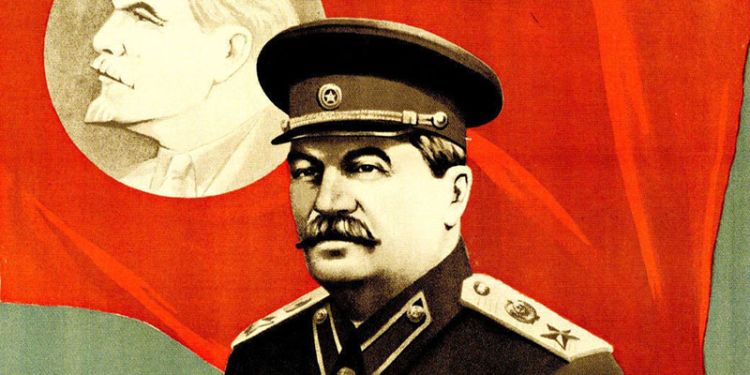
Source: leeds
Perhaps most revealing was Putin’s conclusion:
"It seems to me that the excessive demonization of Stalin is one of the ways — one of the paths — used to attack the Soviet Union and Russia. To suggest that today’s Russia bears some birthmarks of Stalinism. We all bear birthmarks — so what?"
“So what?” That seems to be the prevailing sentiment. And if someone today points out that under Putin’s rule, dozens or even over a hundred Stalin monuments have been built, the most likely response would be: “So what?”
Yet it’s hard to shake the feeling that this renewed glorification of Stalin — this revival through bronze and stone — reflects something deeper. It reveals not just nostalgia for Stalin, but a longing for the Soviet Union he built. Not just memories, but a vision of restoration.

Source: senecalearning
This is not speculation. Russian lawmakers and public officials have repeatedly stated that the USSR was dissolved illegally. Some have even claimed that the USSR still exists. If that claim is accepted, then the current war in and around Ukraine is considered an internal Soviet matter. In that framework, any foreign support for Ukraine becomes interference — and potentially invites retaliation.
This narrative has also made its way into school textbooks. Stalin, once depicted as a tyrant, now appears as the “Supreme Commander-in-Chief” of the war years, who planned military operations and "defended the country’s foreign policy interests."
Given this, it is no surprise that monuments to Stalin are rising once again. And as for the gulags and mass repression?
“So what?”
One final thought. Whenever I hear the phrase “Supreme Commander-in-Chief, leading the armed forces and defending national interests,” I hesitate. I pause before naming the person it describes. And I find myself deeply uneasy — afraid of confusing the past with the present.
(If you possess specialized knowledge and wish to contribute, please reach out to us at opinions@news.az).


Similar news