Gaza's future: Relocation, war and political traps


Editor's note: Prof. Zeev Khanin teaches at the Department of Political Studies and heads Post-Soviet Conflicts Research Program at the BESA Center for Strategic Studies, Bar-Ilan University. The article expresses the personal opinion of the author and may not coincide with the view of News.Az.
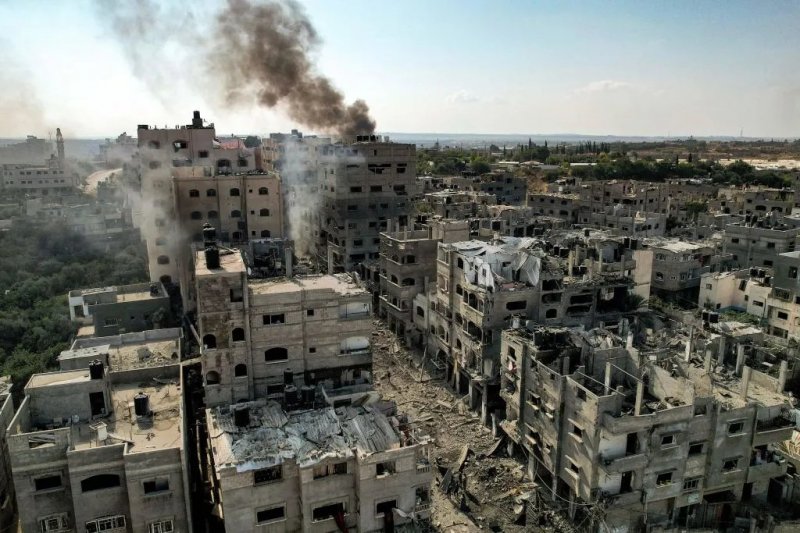
The idea of relocating the Arab population from Gaza is currently being widely discussed. One reason is that people are already leaving voluntarily—primarily those with foreign citizenship, of whom, as it turns out, there are quite a few. There are also many who have the financial means to leave. Before Hamas came to power, certain “feeding troughs” had been opened in Gaza, and many were granted access to them—to the extent that there are reportedly several dollar billionaires living in Gaza today.
The next question is: where exactly could these people go? At present, several hundred to around a thousand people are leaving Gaza each month. Officially, those permitted to exit are mostly patients seeking medical treatment or individuals with family members in neighboring countries or other regions. Egypt, however, is not enthusiastic about the idea of large-scale resettlement. Some form of agreement was only reached under intense pressure from the United States.
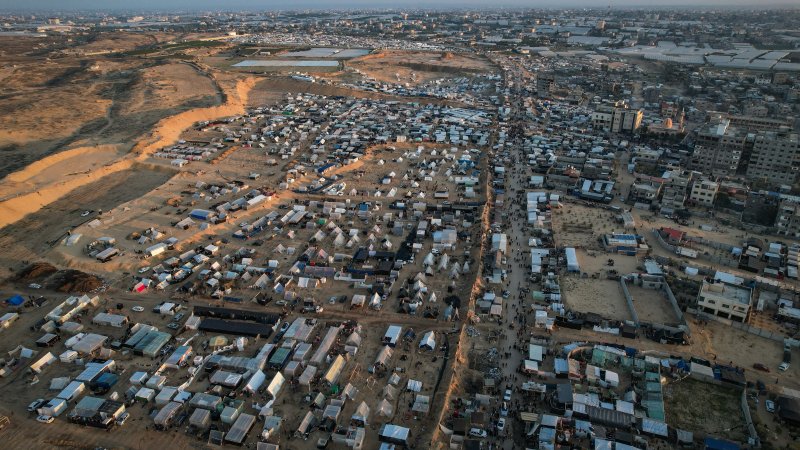
Photo credit: The Washington Post
Some talk about relocating 100,000 people, others mention half a million—but in all likelihood, the issue will not be resolved completely. Jordan has refused to accept any refugees. Even in Israel, not everyone is convinced that relocation is a good solution. There are concerns that stepping back in this way may simply lead to the emergence of a new platform for terrorist activity—slightly farther away, perhaps, but still dangerously close, whether in Egypt or Jordan.
As for the Gaza Strip itself—what will remain of it and what its future holds—this depends entirely on one fundamental question: who will control the territory? It seems increasingly likely that some form of international oversight will be required, as has already been suggested in various discussions.
There are currently two main narratives regarding the military operation in Gaza. The first is the official one, which calls for the total destruction of Hamas. However, there are skeptical voices within Israeli society who question the feasibility of this goal so long as Hamas continues to hold Israeli hostages. In this view, the objectives of freeing the hostages and eliminating Hamas are mutually exclusive. If that is the case, then the official stance—that negotiations with terrorists can take place only under fire—may simply serve as a smokescreen for abandoning the hostages to their fate. In any event, only about 30% of the Israeli public—perhaps slightly more or less—actually believes in the possibility of rescuing the hostages through military means.
There is also a more pessimistic perspective: roughly 50% of Israelis believe that the current military campaign is a limited operation, designed more to project power and serve the political interests of the current leadership than to advance strategic national goals. Take, for instance, the example of Ben-Gvir: he returned to the government promising to continue the war effort regardless of how many hostages might survive. On the other hand, some argue that the top priority should be saving Israeli lives, with all other issues to be dealt with afterward.
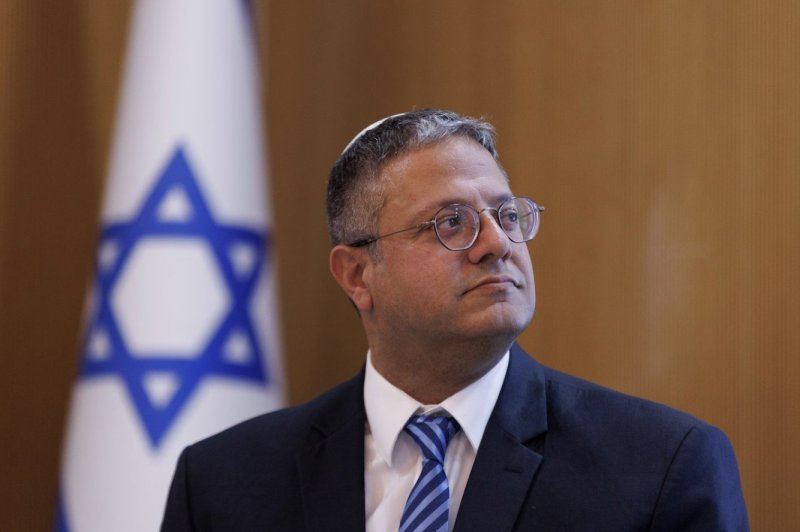
Israeli Minister of National Security Itamar Ben-Gvir. Photo credit: The Washington Post
In short, the situation is highly complex.
Finally, the internal political climate must not be overlooked. Israelis remain deeply concerned about the consequences of the so-called “judicial reform”—a package of proposals aimed at altering the country’s political system. These internal divisions have not disappeared, and against this backdrop, the war has become a major factor influencing public sentiment and political dynamics.
(If you possess specialized knowledge and wish to contribute, please reach out to us at opinions@news.az).


Similar news