Georgia’s battle for Europe: Protesters defy government's stance - VIDEO


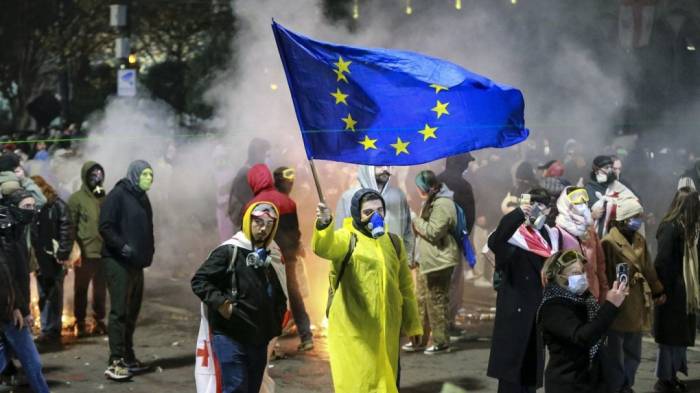
A protester waves an European Union flag during a rally outside the parliament to protest the government's decision to suspend negotiations on joining the European Union for four years in Tbilisi, Georgia, early Saturday, Nov. 30, 2024. (AP Photo/Zur
Georgia is gripped by a wave of protests following the government’s contentious decision to postpone negotiations for European Union membership until 2028.
The demonstrations, escalating in intensity, reflect the growing discontent among citizens over the country’s political trajectory and its aspirations for closer ties with Europe.For three consecutive nights, thousands of protesters have flooded the streets of Tbilisi, voicing their outrage against the delay in EU accession talks. This decision, announced by Prime Minister Irakli Kobakhidze, has sparked widespread condemnation from opposition parties, civil society groups, and ordinary citizens. Demonstrators are demanding an immediate reversal of the government's stance, which many view as a betrayal of Georgia’s longstanding European ambitions.
What began as peaceful demonstrations has descended into violent clashes between protesters and law enforcement. Police have employed water cannons, tear gas, and rubber bullets to disperse the crowds, while protesters have retaliated with fireworks and other projectiles. Over 100 people have been arrested, and tensions continue to escalate. Scenes of confrontation in the capital and other cities underscore the volatile political climate.
The protests come on the heels of a controversial parliamentary election held on October 26, which opposition groups have denounced as fraudulent. The ruling Georgian Dream party’s victory has intensified accusations of authoritarianism and a pivot away from European integration. Critics argue that the government's policies signal a disturbing trend towards closer alignment with Russia—a narrative that deeply resonates in a country with a history of Russian aggression and occupation.
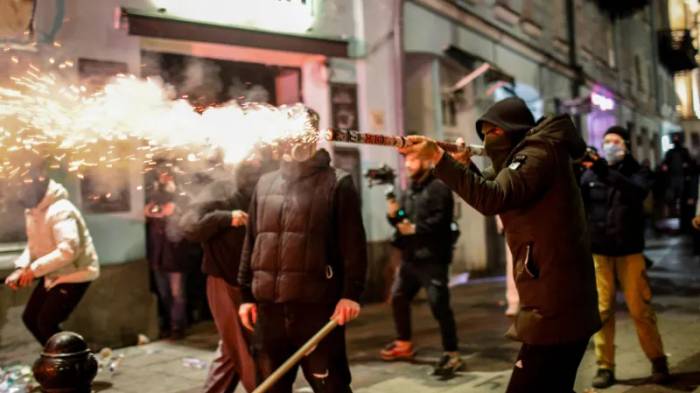
FOTO: BBC
Amid the turmoil, Prime Minister Kobakhidze has doubled down, accusing opposition leaders of instigating violence and alleging attempts to overthrow the government. His rhetoric has done little to calm public anger. In a rare rebuke, President Salome Zourabichvili has openly criticized the government, calling it "not legitimate" and expressing her solidarity with the protesters. The stark division between the executive branches of government highlights the severity of the crisis.
The international community has taken notice. The U.S. State Department condemned the Georgian government’s use of excessive force against peaceful demonstrators, urging restraint and respect for democratic principles. Washington reiterated that the Georgian people overwhelmingly support integration with Europe and warned that such actions could undermine Georgia’s aspirations for EU membership.
The protests in Georgia underscore the deep divisions within the country over its political future. On one side, there is a populace eager to embrace European values of democracy and freedom. On the other, a government accused of authoritarian tendencies and pivoting towards Moscow’s orbit. As demonstrations continue to sweep the nation, the stakes for Georgia's democratic future and its place on the European stage have never been higher.
The coming days will be critical in determining whether the government will heed the protesters’ demands or persist in its current course, risking further isolation from the international community and alienation from its citizens.
In #TbilisiProtests, special forces used water cannons to disperse protesters, and police used pepper spray gas capsules, local media reported
— News.Az (@news_az) December 1, 2024
Demonstrators shoot back with firecrackers. #GeorgiaProtests #Georgia pic.twitter.com/YzcXpMC5MB


Similar news