Has Russia left China on the sidelines in the North-South corridor?


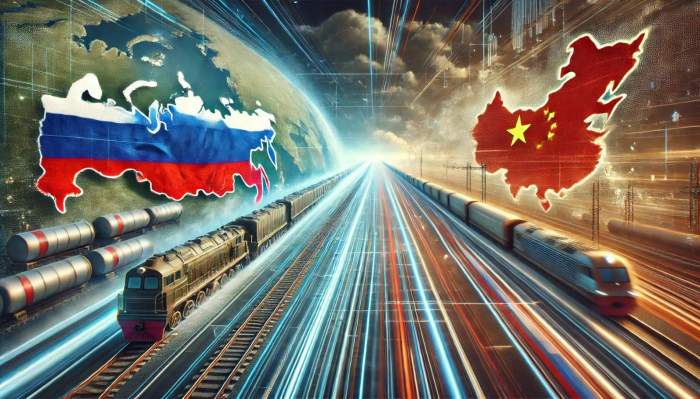
Source: chatgpt.com
Kazakhstan, Russia, and Turkmenistan are joining forces to create a unified operator to develop the North-South International Transport Corridor, marking a significant step in enhancing regional connectivity and trade. This ambitious initiative, announced by Kazakhstan’s Minister of Transport, Marat Karabayev, aims to streamline logistics and increase the economic potential of participating nations.
“Together with Russia and Turkmenistan, Kazakhstan will establish a single operator and introduce tariff discounts of up to 50% to boost transportation volumes from the current 10 million tons to 20 million tons annually,” Karabayev said during a government meeting at the Majilis. He added that most cargo transported along this route originates in Russia and is destined for Persian Gulf countries.To further strengthen the corridor’s potential, a synchronized development roadmap involving Russia, Turkmenistan, and Iran has been approved. The plan seeks to expand the corridor’s capacity from 23 to 33 trains per day, representing a significant 1.5-fold increase.
Highlighting the importance of infrastructure, Karabayev noted that the development of the North-South and Trans-Caspian International Transport Routes hinges on the functionality of the Aktau and Kuryk seaports. Container transportation will be a key priority, with plans to enhance the container-handling capacity of Aktau port from 140,000 to 550,000 containers within three years.
In collaboration with the Chinese company Lianyungang Port, construction of a container hub is already underway. Simultaneously, discussions are ongoing to create an additional terminal with a capacity of 300,000 containers, involving companies such as Germany’s Renus, the American firm Wondernet, and the French CMA CGM. Meanwhile, at the Kuryk port, a multifunctional Sarzha terminal is being constructed to further expand the region’s logistical capabilities.
Russian political analyst and journalist Dmitriy Rodionov in his interview to News.Az emphasized the transformative potential of this project, particularly as it pertains to the Eastern branch of the North-South International Transport Corridor. According to Rodionov, while the project holds immense promise, challenges remain, and its full capacity has yet to be realized.

Rodionov explained that the North-South Corridor includes three primary branches, each with unique opportunities and challenges. The Western branch traverses Russia, Azerbaijan, and Iran, but infrastructure deficiencies in Iran hinder seamless connectivity. The Trans-Caspian route, while vital, faces logistical hurdles such as limited port capacity and coordination issues. The Eastern branch, passing through Kazakhstan and Turkmenistan, also grapples with challenges related to outdated infrastructure that has not been significantly modernized since the Soviet era.
Despite these obstacles, Rodionov highlighted that the North-South Corridor offers a faster and more cost-effective alternative to traditional shipping routes such as the Suez Canal. He remarked, “This corridor not only reduces transit time but also saves costs, making it highly attractive to key global players like India and China.”
The vulnerabilities of the Suez Canal were brought into sharp focus during the Ever Given incident, where a massive container ship blocked the canal, causing widespread disruptions. According to Rodionov, such events underscore the need for alternative logistics networks that are less susceptible to geopolitical disruptions.
“This project is not merely about trade; it’s about geopolitical independence,” Rodionov noted. “By developing the North-South Corridor, countries like Russia and India signal their intent to reduce reliance on Western-controlled logistics and establish stronger ties within the BRICS framework.”
Rodionov also pointed out that the full realization of the Eastern branch could catalyze trade between India and Russia while boosting the economies of all participating countries. He concluded by saying, “If this initiative moves beyond declarations and into tangible action, it will represent a monumental leap forward for regional connectivity and economic cooperation.”
Adding to the discussion, Maxim Kramarenko, a political scientist and head of the Information and Analytical Center “Institute of Eurasian Politics” in Kokshetau, Kazakhstan, shared his thoughts with News.az. He described the initiative as a natural response to shifting geopolitical realities. According to Kramarenko, the West’s confrontation with Russia and its attempts to isolate the country economically have accelerated the search for alternative trade routes.
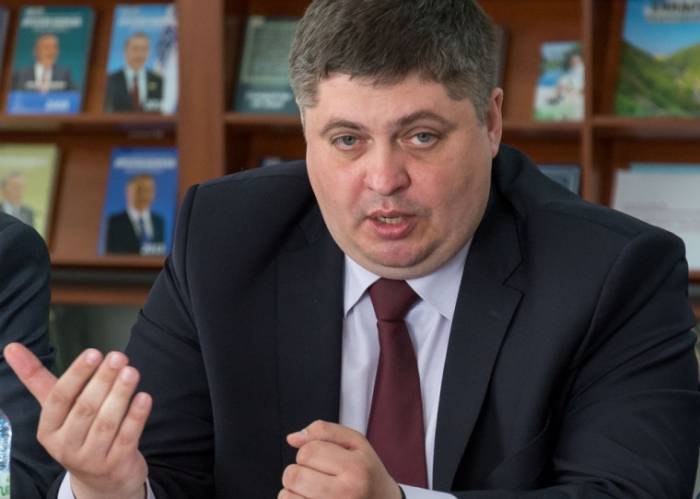
Kramarenko noted that unlike some other projects designed to bypass Russia, the North-South Corridor provides tangible economic benefits for all its participants. “This initiative brings much-needed investment into transport and port infrastructure, creates jobs, and fosters an increase in trade turnover among member states,” he explained.
For Russia, the development of this corridor also carries political advantages. Strengthening economic ties with countries in the region helps counter Western efforts to blockade Russian trade routes. Moreover, the corridor aligns with Russia’s broader strategy to deepen economic and political integration with nations in South and Southeast Asia, such as India, Pakistan, and Bangladesh.
“The corridor is a game-changer for regional economies,” Kramarenko emphasized. “It not only boosts trade but also sends a strong message of independence and resilience to Western powers. By advancing this route, Russia and its partners demonstrate that they are no longer willing to depend on traditional channels controlled by the West.”
Both Rodionov and Kramarenko agree that the North-South Corridor represents more than an economic initiative; it is a geopolitical statement. As Russia and India strengthen ties within the BRICS framework, the corridor offers a blueprint for alternative trade routes that prioritize efficiency, cost-effectiveness, and independence from Western control.
The initiative also reflects the growing importance of Eurasia as a hub for global trade. With its strategic location and rich resources, the region is poised to become a critical player in shaping the future of international logistics. The North-South Corridor serves as a key component of this transformation, promising economic growth and stronger regional integration.
As construction progresses and new partnerships are forged, the project’s potential to reshape global trade dynamics becomes increasingly evident. While challenges remain, the collective commitment of participating nations to overcome these hurdles underscores the strategic importance of this corridor in the evolving geopolitical landscape.
P.S. The eastern branch of the North-South Corridor, developed by Russia, Kazakhstan, and Turkmenistan, indirectly considers China's interests. The participation of the Chinese company Lianyungang Port in constructing a container hub in Aktau, as well as the potential for Chinese exports through this route, underscores its importance for China. However, the project lacks a direct focus on China's strategic priorities, such as alignment with the Belt and Road Initiative, which might suggest that Russia's ambitions in this corridor have left China somewhat on the sidelines. While the route facilitates China's goals of diversifying logistics pathways and strengthening trade links with South Asia and the Persian Gulf, it appears that Russia, along with its regional partners, is pursuing a more independent approach, potentially limiting China's influence over the project.


Similar news