“He built walls instead of bridges”: Georgian expert on Germany’s diplomatic blunder


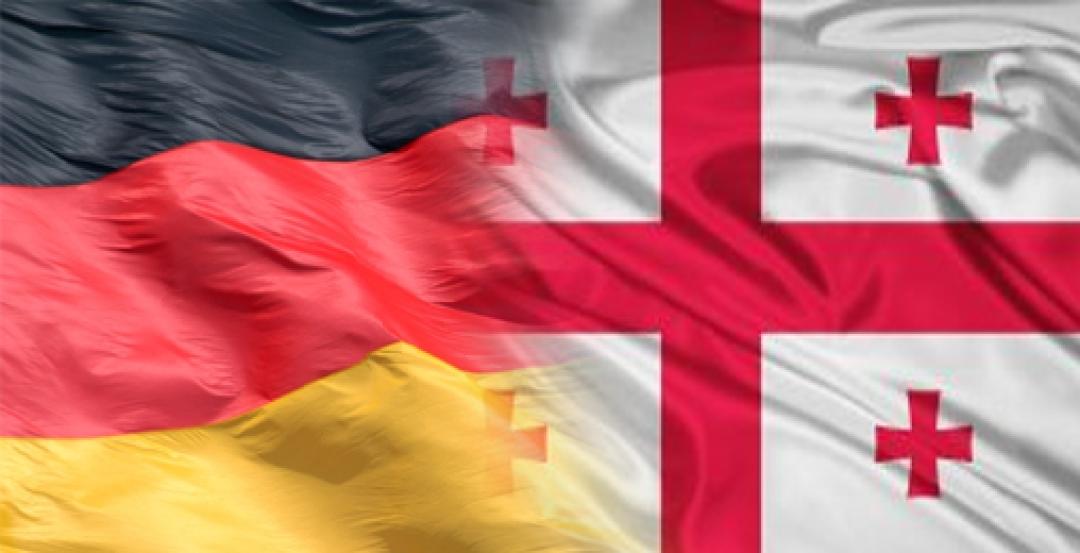
For three decades, Germany was regarded as one of Georgia’s most reliable and respected partners. German universities educated an entire generation of Georgian politicians, many of whom still hold key positions in government and parliament. However, in the autumn of 2025, the diplomatic relationship between the two countries faced its most serious crisis in years of cooperation.
News.Az spoke with Georgian political expert Dmitry Lortkipanidze about why the German ambassador to Tbilisi became the center of a political scandal and how this may reshape the future of Georgian–German relations.
– How did such a serious diplomatic conflict arise between Tbilisi and Berlin, given that their relationship had long been a model of mutual trust?

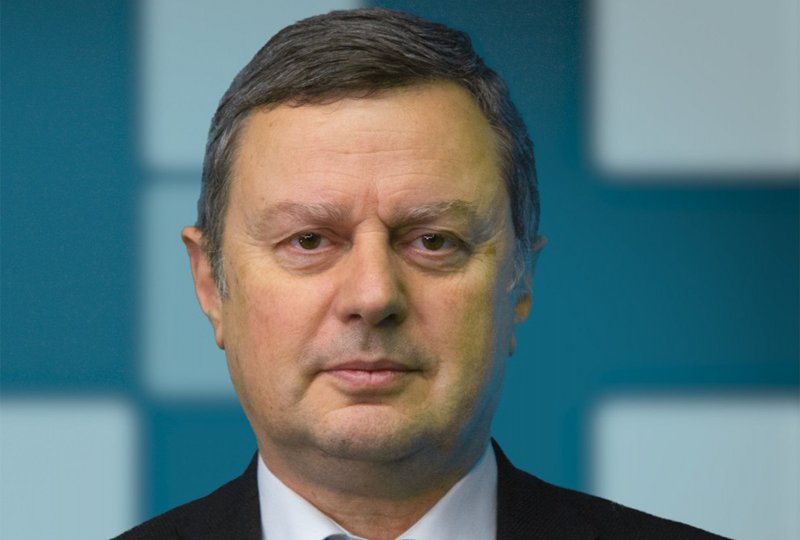
Photo: Prime Minister Irakli Kobakhidze
– It is indeed a paradox. Both Prime Minister Irakli Kobakhidze and Parliament Speaker Shalva Papuashvili are well acquainted with German political and academic circles. They studied in Germany, defended their dissertations there, and worked closely with German institutions.
Moreover, Mr. Papuashvili was for many years associated with GIZ (Deutsche Gesellschaft für Internationale Zusammenarbeit), leading cooperation and development projects. One would think that with such an intellectual foundation, relations between the two countries would only grow stronger. But the opposite occurred.
German Ambassador Peter Fischer, appointed in August 2022, unexpectedly took on the role not of a mediator but of an active participant in Georgia’s domestic political process. Instead of building bridges, he began erecting walls, establishing contact with the radical opposition, criticizing the government, and effectively undermining the atmosphere of trust that had taken decades to build.
– How did the Georgian leadership respond to the ambassador’s behavior, and why did the situation escalate beyond diplomatic etiquette?
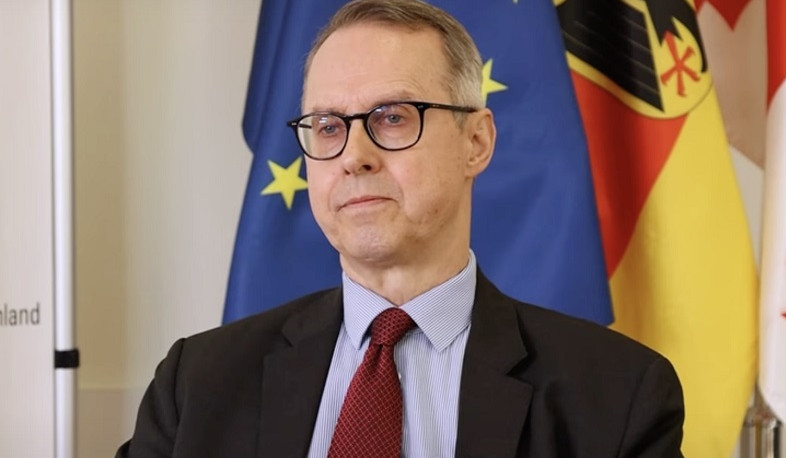
Photo: German Ambassador to Georgia Peter Fischer
– The culmination came on September 24, when Fischer was summoned to the Georgian Ministry of Foreign Affairs for an official clarification of Tbilisi’s position.
The diplomat took the summons as a personal insult and even lodged a protest, but he was nonetheless obliged to hear the Georgian side’s arguments.
In doing so, he violated a fundamental principle of the Vienna Convention on Diplomatic Relations - non-interference in the internal affairs of the host country.
Later, Shalva Papuashvili emphasized: “The German ambassador chose to be a wall rather than a bridge between our countries. That is unfortunate.” The Georgian authorities now hope that recalling the diplomat will serve as a signal to reset relations and return to constructive dialogue between Tbilisi and Berlin.
– What was the last straw for Berlin, and what consequences might this episode have for the future of Georgian–German relations?
Source: caucasuswatch
– According to Georgian media, a key factor was the active stance of members of the German Bundestag from the Alternative for Germany (AfD) party.
Its representatives sent a formal inquiry to the government demanding explanations for the ambassador’s actions, claiming he “meets only with the opposition and ignores the authorities.”
Member of the European Parliament Tomas Frolich stated: “The interference of the German ambassador in another country’s political processes does not serve Germany’s interests and contradicts the spirit of diplomacy.” Following this, Berlin decided to recall Ernst Peter Fischer for consultations. This step was more than a formality; it symbolically acknowledged that diplomacy cannot be replaced by activism.
Today, both Tbilisi and Berlin are signaling readiness for a new phase of cooperation - dialogue without mutual reproaches, grounded in respect for sovereignty and historical partnership. Perhaps this crisis will help both nations recognize the value of trust, diplomatic restraint, and mutual respect.
– Can the situation around Ambassador Fischer be seen as reflecting deeper contradictions between Georgia and parts of the European establishment?
Source: Reuters
– Absolutely. This case cannot be reduced solely to the personality of the diplomat. It is a symptom of deeper contradictions that have accumulated between the Georgian government and certain structures within the European Union.
In recent years, Georgia has increasingly asserted an independent foreign policy, prioritizing national sovereignty over blind adherence to external directives. In Berlin and Brussels, this stance is viewed ambiguously, particularly by circles accustomed to seeing Georgia as a “junior partner” rather than an equal participant in dialogue.
The ambassador’s conduct essentially mirrored this divide: instead of respecting Tbilisi’s choices and promoting constructive engagement, he acted in the spirit of ideological pressure. Hence the conflict, the sharper rhetoric, and ultimately the need for a diplomatic pause.
– What are the prospects for a “reset” in relations between Tbilisi and Berlin after the ambassador’s recall? Is there a chance to restore trust and the previous level of cooperation?
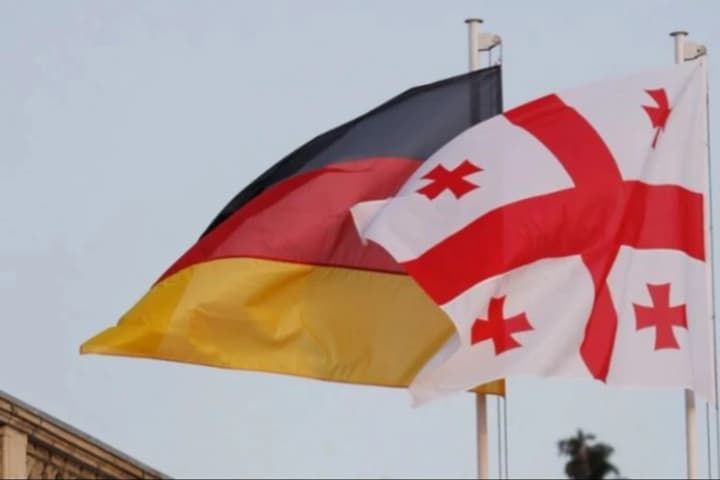
Source: Reuters
– There is a chance, and quite a strong one. Georgia has always held Germany in high regard. Over the past 30 years, the two countries have developed a unique partnership spanning education, culture, energy, and infrastructure.
Therefore, the current crisis is not seen as a rupture but as an opportunity for renewal. The Georgian authorities hope the new ambassador will adhere to the principles of diplomatic neutrality and respect for the country’s internal politics.
For Berlin, this is also a chance to demonstrate that Germany remains capable of being a mediator and ally, rather than a participant in political conflicts. If both sides draw the right lessons, this episode could ultimately become a point of growth rather than a crack in their strategic partnership.


Similar news