Andrejs Švedovs: Riga sees Baku as a key partner in a polarized world - INTERVIEW


.png)
Azerbaijan–Latvia political relations are strengthening, highlighted by President Edgars Rinkēvičs’s visit to Baku. Both post-Soviet states pursue similar development goals, enhancing cooperation within the EU–South Caucasus framework. Expanding trade, investment, and connectivity, including direct flights, is key to unlocking broader economic and strategic partnership potential.
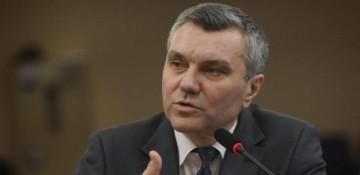
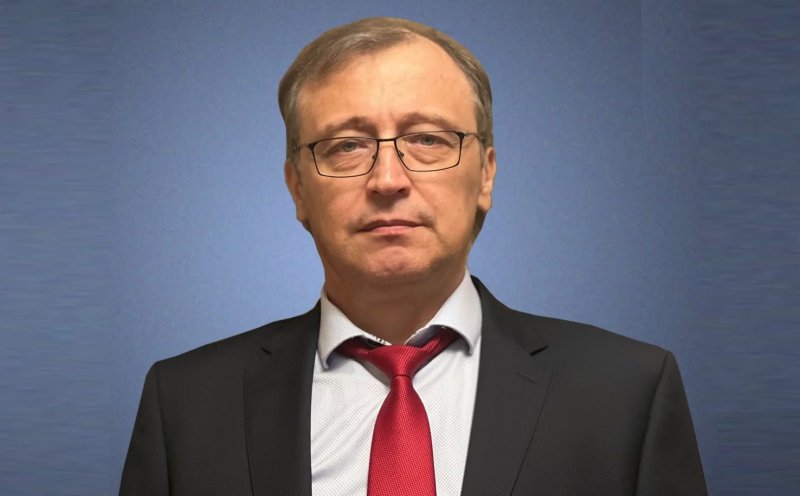
News.Az spoke with Andrejs Švedovs, a Latvian political commentator and editor-in-chief of the bb.lv portal, to gain insights into relations between the two countries.
– How do you assess the current state of political relations between Azerbaijan and Latvia, and what is the specific nature of this partnership within the framework of EU–South Caucasus interaction?
– In my view, the current state of political relations between our countries is excellent. This is evidenced by the official visit of the President of Latvia to Baku.
As for the specifics, Latvia and Azerbaijan, having emerged from the Soviet Union, are building modern, strong and independent states. Despite a shared past, they envision a more or less common future focused on prosperity, development and self-sufficiency. Despite geographical, economic and national differences, Latvia and Azerbaijan, along this strategic path, can and should exchange experience, supporting and assisting each other.
I would also highlight a positive aspect — in today’s polarized world, where countries and alliances are sharply divided, Latvia has a friend and partner in the South Caucasus.
– President Edgars Rinkēvičs visited Azerbaijan on an official visit. What is the political significance of this visit, and what concrete outcomes do you expect from his meetings with President Ilham Aliyev?
– First of all, I would like to see the development of economic relations. Cross-border trade and mutual investment would benefit both countries.
In addition, Latvia acts not only on its own behalf but also as a full member of the European Union. I believe that during the visit, opportunities for developing relations between Azerbaijan and the EU as a whole will be discussed.

Source: AzerTAG
Azerbaijan’s proximity to the conflict in the Middle East makes discussions on preventing further escalation and avoiding a broader regional conflict particularly relevant.
It is also clear that the parties will discuss support for Ukraine. In Riga, officials consistently emphasize that the war in Ukraine affects the entire world. The presidents of Latvia and Azerbaijan therefore have much to discuss in this context.
– How does Latvia, as a member of the European Union, influence the formation of EU policy toward Azerbaijan and the South Caucasus region as a whole?
– The EU’s position is formed by aggregating the positions of its member states, including Latvia. Our country and the European Union consistently advocate a peaceful settlement of the Karabakh conflict, supporting the sovereignty and territorial integrity of both Azerbaijan and Armenia.
Riga and Brussels also promote dialogue, adherence to the ceasefire, and the protection of the rights of the local population, while actively contributing to mediation efforts aimed at ensuring regional security and stability.
By the way, a meeting of the EU Foreign Affairs Council took place in Luxembourg yesterday. Participants discussed the situation in the South Caucasus, including EU support and involvement in the peace process between Armenia and Azerbaijan. A Latvian representative stated that the country is ready to provide expert support both bilaterally and within joint initiatives.
– Despite the positive dynamics, the volume of bilateral trade remains relatively small. What are the main structural barriers hindering the development of economic relations?
– The main barrier is geographical. First, we are separated by more than 3,000 kilometers; second, there is a war between us.
Nevertheless, the potential for economic cooperation is enormous.
This includes agricultural products, fisheries and the food industry, which Latvia can supply to the Azerbaijani market. At the same time, Azerbaijani fruits and vegetables are in demand among Latvian consumers.
Source: APA
The woodworking industry is also well developed in Latvia and may be of interest to Azerbaijan. This includes furniture production, the supply of forest seedlings, and wood-based construction technologies.
Latvian universities are well regarded across the post-Soviet space, meaning that cooperation in education is both possible and necessary.
Latvia could also share certain know-how with Baku in the field of information technology, particularly in the digitalization of public services.
Of course, given the crisis in the Strait of Hormuz, Latvia is interested in increased Azerbaijani oil production. The logic is simple — the greater the global supply of oil, the lower fuel prices in Latvia.


Similar news