Rasul Kospanov: "Any serious distancing from Moscow is unrealistic for Kazakhstan" - INTERVIEW



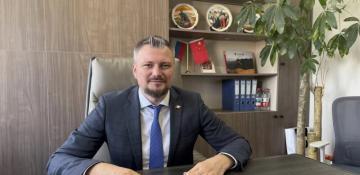
In this interview with News.Az, Rasul Kospanov, Senior Researcher at the National Analytical Center in Astana, provides an in-depth assessment of Kazakhstan’s evolving foreign policy and its multi-vector diplomatic approach amid shifting global dynamics.
He discusses recent high-level visits to Kazakhstan by the Czech and Israeli leaderships, outlines the strategic economic and technological interests underpinning these engagements, and examines Astana’s cautious stance on regional conflicts and humanitarian issues, including developments involving Iran and Palestine.
- Czech Prime Minister Andrej Babiš’s visit can be described as quite eventful and, in my opinion, productive. During the talks, both Kazakh President Kassym-Jomart Tokayev and Andrej Babiš emphasised the importance of further developing Kazakh-Czech relations.
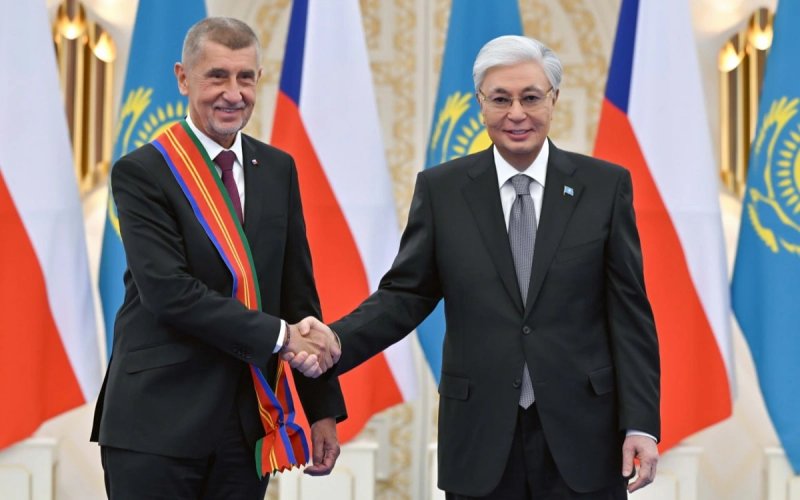
Trade turnover between our countries already exceeds $1.5 billion, which clearly demonstrates that Astana and Prague have a strong economic foundation for expanding cooperation. Many Kazakh citizens study in the Czech Republic, while Czech companies, including well-known brands such as Škoda Auto, operate in Kazakhstan. Therefore, the governments face the task not only of maintaining this level of cooperation, but also of elevating it to a new stage.
During the negotiations, the Czech side expressed strong interest in Kazakh uranium. As is well known, Kazakhstan is the world’s largest uranium producer, which is particularly important for the Czech Republic given its developed nuclear energy sector. Kazakhstan already supplies approximately one-third of the fuel requirements for the Temelín Nuclear Power Plant, the country’s largest nuclear facility. In addition, a seven-year contract was signed between Kazakhstan’s Kazatomprom and the Czech company ČEZ, confirming the long-term nature of cooperation in the nuclear sector.
RECOMMENDED STORIES
Kazakhstan is also actively purchasing Czech aircraft, primarily for the needs of the Armed Forces and the Ministry of Emergency Situations. Czech L-410 aircraft are well suited to Kazakhstan’s geography and natural conditions, as they can operate in remote areas and on short runways where mobility is essential. Therefore, Kazakhstan is interested not only in purchasing aircraft, but also in establishing a local maintenance service centre.
Overall, the Czech Republic is important to Kazakhstan as an industrial partner within the European Union. Since the Soviet era, the country has accumulated significant expertise in mechanical engineering, aviation, pharmaceuticals and the defence industry.
It is also noteworthy that before visiting Kazakhstan, the Czech delegation travelled to Baku and, after Astana, proceeded to Tashkent. This suggests that Prague views the Turkic states as a region with strong potential in energy, logistics and industry. I believe such partnerships are important for our countries, especially in today’s challenging global environment, as developing industrial and defence cooperation with such advanced players is crucial.
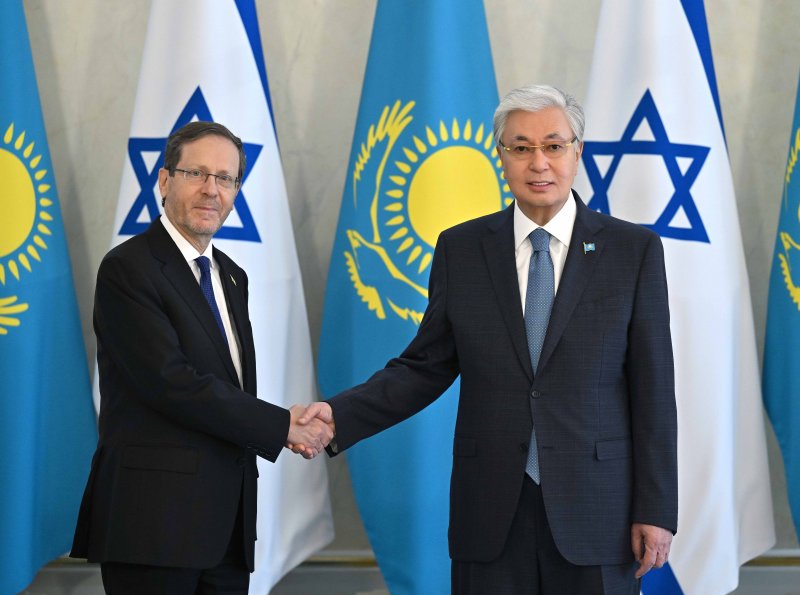
- Israeli President Isaac Herzog also recently visited Kazakhstan. What do you think was behind this visit?
- Indeed, just before the Czech delegation’s visit, Israeli President Isaac Herzog travelled to Astana. The visit generated mixed reactions both within Kazakhstan and in the international media, particularly given the tragic developments in the Middle East and the situation in Gaza.
However, the primary foreign policy objective of any serious state is to protect its national interests. For Kazakhstan, this means promoting a peace-oriented agenda, maintaining dialogue with different parties, and developing relations both with Muslim countries and with technologically and economically advanced states.
In this context, Kazakhstan has consistently called for an early end to the tragedy in Gaza and for the protection and humanitarian support of civilians. At the same time, joining the Abraham Accords does not mean Kazakhstan has adopted a pro-Israel position. On the contrary, Kazakhstan has provided significant humanitarian assistance to Palestine in recent years, including shipments of food, medicines, medical supplies, bedding and essential goods. Moreover, Kazakhstan has allocated more than 500 educational grants for Palestinian students to study at Kazakh universities.
I do not think many countries in the Islamic world can claim such a level of assistance to Palestine. However, every country pursues its own national interests. Kazakhstan condemns the use of force in Gaza and consistently supports the protection of civilians. At the same time, Astana has not severed diplomatic relations, because dialogue must be maintained even in the most difficult circumstances. Engagement with Israel does not mean approval of its actions; rather, it is a foreign policy tool that allows Kazakhstan to defend its interests, promote peace and maintain channels of communication with all sides.
From a practical standpoint, Israel is important to Kazakhstan because of its advanced technologies, particularly in agriculture, water management, medicine, IT and cybersecurity. Around 60% of Israel’s territory is desert, while much of the remaining land is rocky, yet Israeli farmers still manage to produce crops successfully. Kazakhstan has much to learn from Israel in the field of agriculture.
Israel also has a highly developed healthcare system and a strong IT sector. By joining the Abraham Accords, Kazakhstan is likely seeking to enhance knowledge exchange in these strategic areas.
It is also significant that President Tokayev and Isaac Herzog visited the Alem.ai International Artificial Intelligence Center in Astana. Kazakhstan itself has strong capabilities in artificial intelligence, and I believe both sides reached an understanding on further cooperation and joint development in this field.
- Kazakhstan is the only Central Asian country that has not sent humanitarian aid to Iran. How do you interpret this?
- Regarding humanitarian aid to Iran, it is true that other Central Asian countries have provided significant assistance to the Iranian people. Kazakhstan, however, is taking a more cautious, wait-and-see approach.
At the beginning of the conflict, Kazakhstan condemned Iran’s strikes and attacks on Gulf Arab states. It should also be noted that Qatar and the United Arab Emirates are major investors in Kazakhstan’s economy, having invested in a large number of projects. President Tokayev maintains strong relations with the leadership of these countries.
At the same time, Kazakhstan is actively developing relations with the Trump administration, as what many see as a potential “window of opportunity” is currently emerging.
However, Kazakhstan is not severing ties with Iran. It has even offered to facilitate de-escalation talks in Turkestan, which is also an important diplomatic initiative.
It appears that Astana distinguishes between humanitarian aid to Palestinian civilians and aid to Iran, which is involved in a complex military escalation involving major external actors. Kazakhstan does not want to be misunderstood and is therefore acting cautiously.
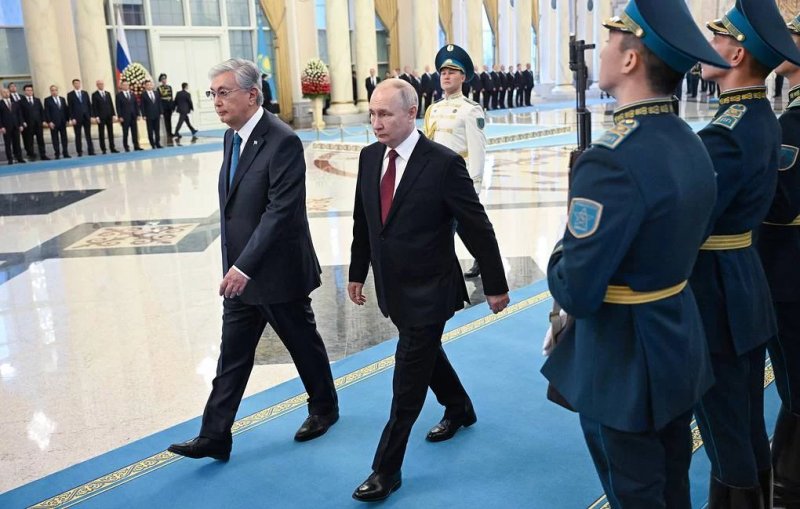
- Russian President Vladimir Putin is expected to visit Kazakhstan. What are the expectations? How do you assess Kazakhstan-Russia relations?
- Yes, according to available reports, Russian President Vladimir Putin is expected to visit Kazakhstan at the end of May. The Supreme Eurasian Economic Council summit, with his participation, is scheduled to take place in Astana on 28–29 May.
The Eurasian agenda will naturally be the central topic, but there is also a wide range of bilateral issues between Kazakhstan and Russia.
Russian Foreign Minister Sergey Lavrov recently visited Astana. As is often the case, high-level presidential visits are preceded by meetings between foreign ministers. From the statements made by Yermek Kosherbayev and Sergey Lavrov, it is clear that discussions will likely include both the Eurasian agenda and joint nuclear energy projects.
One key project is the construction of the Balkhash Nuclear Power Plant near the village of Ulken in the Almaty region. This is an important strategic project for Kazakhstan, and President Tokayev entrusted Russia with building the country’s first nuclear power plant.
Another important issue is the gas pipeline project from Russia through North Kazakhstan to the northern regions. Supplying gas to northern Kazakhstan from Russia would be economically more efficient, as Kazakhstan’s own gas reserves are insufficient, while imports from Turkmenistan are mainly feasible for the western and southern regions.
This infrastructure project could significantly improve living conditions in northern settlements. The difficult situation surrounding the Caspian Pipeline Consortium, which transports more than 80% of Kazakhstan’s oil exports and was affected by a Ukrainian drone strike, will also be discussed.
In addition, the Druzhba pipeline has suspended deliveries of Kazakh oil to Germany, which is a sensitive issue for Kazakhstan. Russia, in turn, is sometimes accused of using infrastructure as leverage in geopolitical negotiations.
There are various interpretations of these developments. One theory suggests that Moscow may be attempting to redirect part of Kazakhstan’s oil, previously supplied to Germany, to the port of Ust-Luga in the Leningrad region. In such a case, Kazakh oil effectively becomes a form of geopolitical leverage. Ukrainian attacks on infrastructure affect not only Russian but also Kazakh interests, as well as Western companies operating in Kazakhstan.
This places Astana in a difficult position, as it must explain to its partners that such disruptions affect Kazakh crude exports and threaten export stability.
Overall, Russia remains Kazakhstan’s most important trading partner, with trade turnover exceeding $27 billion last year. No other country in the world has a deeper or broader relationship with Kazakhstan than Russia, including in sectors such as space cooperation.
For example, a major joint project between Kazakhstan and Russia was recently completed. Kazakhstan has strengthened its position in space cooperation by building a launch pad at the Baikonur Cosmodrome called Baiterek. Together with Russian partners, a new rocket named Sunkar has also been developed.
This is a significant milestone for Kazakhstan’s space industry and clearly demonstrates the depth of bilateral ties.
International issues will also be discussed. During Lavrov’s visit, the parties addressed attacks on the port of Anzali in Iran, which affect the North–South transport corridor — a route of strategic interest to all Caspian states. Kazakhstan is interested in a swift stabilisation of the situation in Iran. Whether under the current government or in a post-regime scenario, Kazakhstan needs a stable Iran for trade and transit routes towards South Asia, the Middle East and Africa.
In conclusion, Kazakhstan and Russia are connected by thousands — indeed millions — of economic, cultural and political ties, and they share the world’s longest continuous land border.
Kazakhstan is pursuing a balanced diplomatic policy, but any serious distancing from Moscow is unrealistic. If Kazakhstan seeks economic development, maintaining stable relations with Russia remains essential. As the Kazakh historical figure Ospan Batyr once said, he was ready to “make a deal with the devil” for the sake of his people.
Ultimately, Kazakhstan always acts on the basis of its national interests. If maintaining diplomatic and economic relations with Russia serves those interests, then that is the course it will follow.


Similar news